
Last Updated: November 19, 2026
Quick Summary
Should guitars be stored standing up? Yes, but only when the guitar is properly supported, because an unsupported upright guitar puts steady stress on the neck-to-body joint. Use a quality stand with a wide neck yoke and firm body cradle, or a wall hanger rated for the guitar's weight and screwed into a stud.
- Flat storage is the safer default for long-term preservation and vintage instruments.
- A wall hanger holds the neck, which supports the headstock well.
- Leaning a guitar against a wall or amp is the most common cause of headstock breaks.
- Check a hygrometer weekly and keep the guitar away from exterior walls and heat sources.
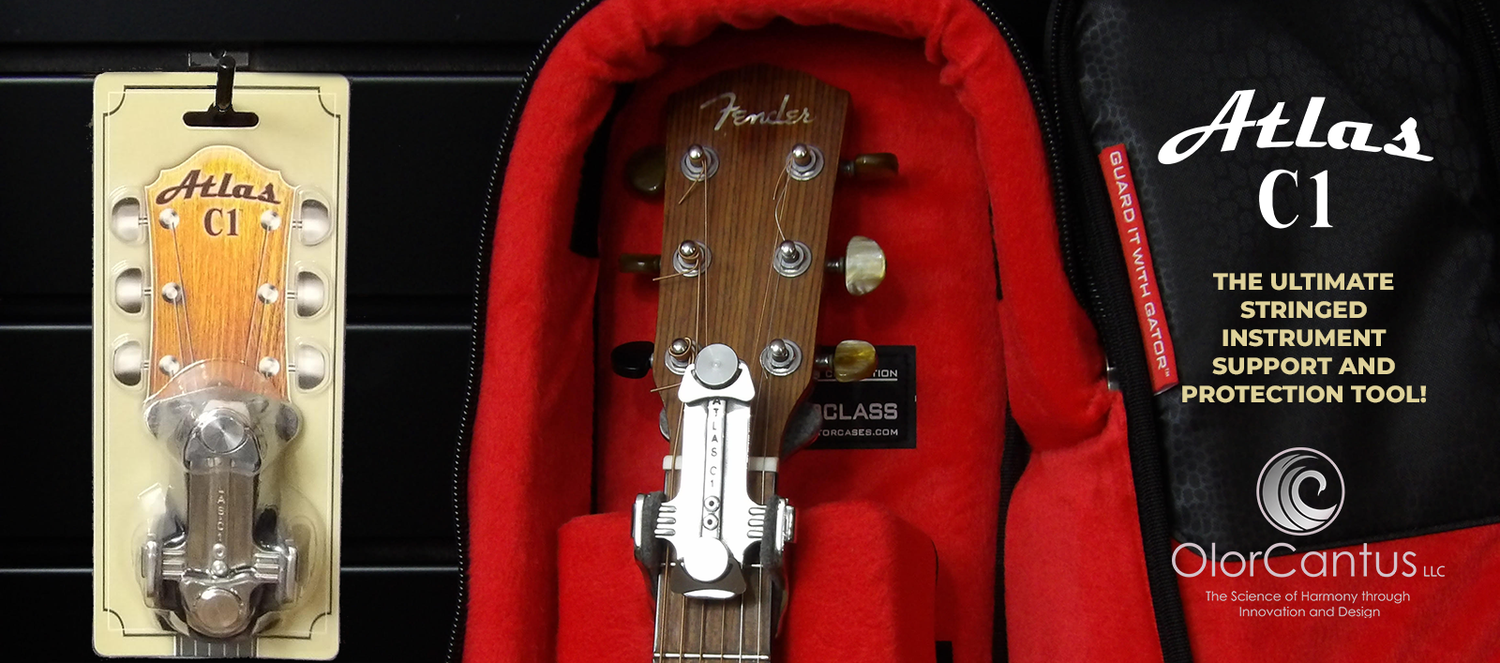
- The Atlas-C1 supports the headstock-neck junction and fits 3 on 3 tuning machine designs.
Table of Contents
- Why Guitar Storage Position Changes Everything
- Should Guitars Be Stored Flat or Upright?
- Vertical vs. Horizontal Orientation: The Physics of Gravity on Your Neck
- Is It Better to Keep a Guitar in a Case or on a Stand?
- Temperature, Humidity, and the Hygrometer Habit
- How to Store a Guitar in a Soft Case Without Inviting Damage
- How to Store a Guitar Without a Case or Stand
- Protecting the Neck and Headstock: The Weak Point Every Guitar Shares
- Guitar Storage for Small Rooms and Tight Apartments
- Choosing Your Headstock Protection Before the Next Trip
- Frequently Asked Questions
Why Guitar Storage Position Changes Everything
Should guitars be stored standing up? The short answer is yes, but only when the guitar is properly supported. A guitar left upright without support puts steady stress on the neck-to-body joint, and that stress adds up over months and years.
At Atlas C1, we think about this problem constantly. We build tools that protect the headstock, the most fragile part of any guitar. Storage position is where most damage quietly begins.
Here's the core tension. Gravity never stops pulling on a guitar. Standing a guitar up feels natural because it saves space and keeps the instrument within reach. But an unsupported upright guitar leans its full neck weight against one contact point. Change that one variable and you change everything.
Below, we break down the physics, the case-versus-stand debate, and the storage rules that actually protect your instrument.
Should Guitars Be Stored Flat or Upright?
Storing a guitar flat is the safer default, but upright storage works well when the guitar sits in a proper stand or case with neck support. The right choice depends on your space, your climate, and how often you play.
Flat storage spreads weight across the body and neck. Nothing leans. Nothing hangs. For long-term preservation, that even distribution is hard to beat.
Upright storage wins on access and floor space. A guitar on a stand gets played. A guitar buried in a closet often doesn't. Many players find that easy access matters more than perfect theory.
So the honest answer to "should guitars be stored flat or upright" is: both can work. The mistake is upright storage without support.
- Flat storage: best for long-term preservation and vintage instruments
- Upright storage: best for daily players and small rooms, with a quality stand
- Never: leaning a guitar against a wall or amp with no support
Here's the short version of which storage position suits which situation.
| Storage position | Best for | Key point |
|---|---|---|
| Flat storage | Long-term preservation and vintage instruments | Weight spread across body and neck; nothing leans or hangs |
| Upright storage | Daily players and small rooms | Works with a quality stand with neck support |
| Leaning against a wall or amp | Never | Unsupported upright storage stresses the neck-to-body joint |
Vertical vs. Horizontal Orientation: The Physics of Gravity on Your Neck
Gravity acts on a guitar's neck every second it stands upright. In a vertical position, the neck carries its own weight plus string tension. Over time, that load can affect neck relief, the slight forward bow that keeps strings playable.
A guitar's truss rod exists to counter string tension.
String tension pulls the headstock toward the bridge, creating a forward bow, and the truss rod counteracts that pull by applying backward pressure inside the neck.
Horizontal storage removes gravity from the equation. The neck rests instead of hangs. In a well-padded case, the neck is supported along its length.
If you store upright, a stand that cradles the neck near the headstock shares the load and keeps the geometry stable. Look for a stand with a wide neck yoke and a firm body cradle. A wall hanger also works because it holds the neck, but make sure the hanger is rated for the guitar's weight and screwed into a stud.
For a deeper look at this, see our guide on preventing neck tension damage during storage.
Is It Better to Keep a Guitar in a Case or on a Stand?
A case is better for protection and climate stability. A stand is better for daily access and display. Most players benefit from using both, matching the storage method to the season and the instrument's value.
Hard-shell cases block bumps, dust, and sudden temperature swings. A sealed case holds whatever air you closed inside it, good or bad.
Gig bags travel well but offer thin padding. They're fine for a short trip to a friend's house, less fine for a basement with a shifting climate.
Floor stands and wall hangers keep a guitar playable and visible. A wall hanger holds the neck, which actually supports the headstock well. A floor stand needs a neck cradle, or the guitar leans.
If finish damage worries you, read our article on protecting guitar finish from stand contact. Foam and rubber pads can react with certain finishes over time.
- Vintage or high-value guitar: hard-shell case, climate controlled
- Daily player: quality stand with neck support
- Travel: hard case or a padded gig bag plus headstock protection
Temperature, Humidity, and the Hygrometer Habit
Wood moves when humidity moves. Solid wood tops and necks swell in damp air and shrink in dry air, and that movement is where cracks and warping start. A hygrometer is the cheapest insurance you can buy for any guitar.
Aim for a stable room rather than a perfect number. Stability matters more than any single reading. Rapid swings do more harm than a steady, slightly imperfect environment.
Here's what to watch:
- Dry air: fret ends sprout, tops can crack, glue joints dry out
- Damp air: wood swells, action rises, finish can cloud
- Heat sources: radiators, vents, and sunny windows are the enemy
- Cold transport: let a guitar warm up in its case before opening it
Different wood types respond differently. For shipping and seasonal moves, our guide on protecting a guitar from humidity damage in shipping covers the details.
Check the hygrometer weekly and adjust.
How to Store a Guitar in a Soft Case Without Inviting Damage
Storing a guitar in a soft case is safe if you control three things: support, pressure, and placement.
Follow these rules:
- Support the neck. Add a folded towel or foam block under the neck so the headstock never bears load.
- Keep the case upright or flat, never leaning. A leaning soft case bends the guitar inside it.
- Never stack anything on top. Stacking weight is how soft-case storage goes wrong.
- Store away from exterior walls and floors. Both run cold and damp.
- Loosen nothing, but check tuning monthly. Stable string tension is fine; wild swings are not.
The headstock is the weak point in a soft case. There's little padding at the top, and a drop lands right on the neck junction. For the full method, see prevent guitar headstock damage soft case.
How to Store a Guitar Without a Case or Stand
You can store a guitar safely without a case or stand by using a padded, stable surface and keeping the instrument away from traffic and heat. Improvising works, as long as you respect the neck and the load path.
Small spaces force trade-offs, but they don't have to cost you a neck. The trick is going vertical with support rather than going vertical with hope. Here are safe, space-saving vertical storage hacks for apartment dwellers and tight rooms:
- Wall-mounted hook rated for the guitar's weight. Screw it into a stud or use heavy-duty drywall anchors rated for the guitar's weight, and pad the hook with felt or cork to protect the finish.
- A padded shelf at waist height. Cut a foam block or rolled towel to cradle the neck, and place the guitar body against a wall with a nonslip pad underneath. This keeps the guitar off the floor and out of foot traffic.
- A closet shelf with a neck support. Lay the guitar flat on a shelf and add a foam block under the neck so the headstock never bears load. Keep nothing stacked above it.
- Under-bed storage in a padded bag. Use a hard case or a well-padded gig bag, and keep it off a cold floor by placing it on a foam mat or a low shelf.
- A corner stand with a neck cradle. These fit in tight spots and keep the guitar ready to play. Look for a stand with a wide neck yoke and a firm body cradle.
Watch out: leaning a guitar in a corner or against a speaker cab is the single most common cause of headstock breaks. One nudge and it falls. Never lean a guitar without a stand or case.
For small rooms, climate control is easier than you'd think. One room humidifier and a hygrometer cover most apartments. Keep the guitar off exterior walls and away from windows. If you use a wall hanger, check the wall for cold spots, exterior walls run colder and damper.
A common pattern is to rotate between a wall hanger for daily playing and a hard case for longer storage. That gives you access without sacrificing protection.
Protecting the Neck and Headstock: The Weak Point Every Guitar Shares
The headstock-neck junction is a vulnerable point on many guitars.
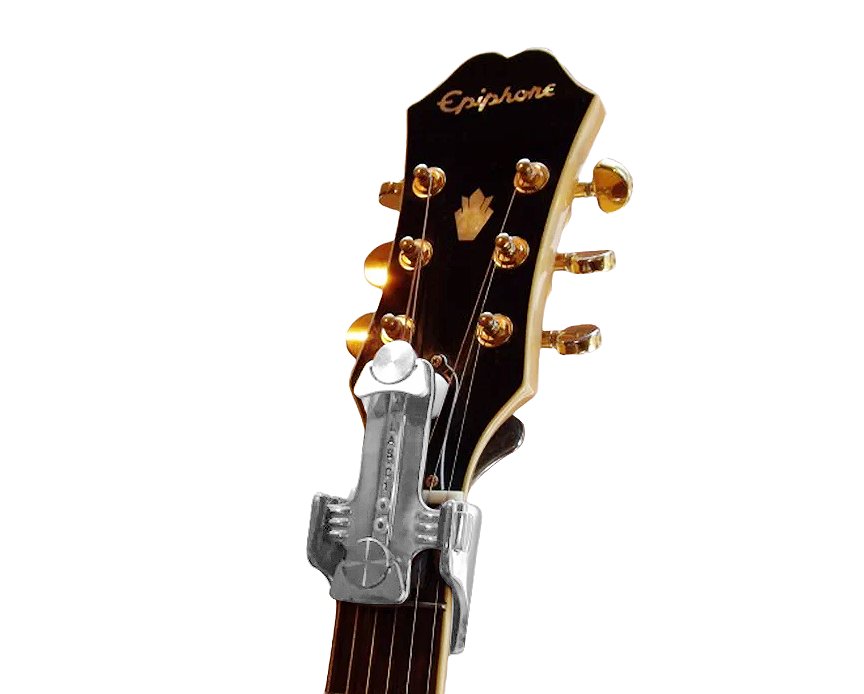
That's exactly what the Atlas C1 headstock support and protection tool does. It's a patented, universal tool that supports the headstock-neck junction during travel, shipping, and storage. It also works as a pre-aligned repair jig for a previously broken headstock awaiting repair.
At Olor Cantus LLC, we designed the Atlas-C1 to counteract the constant pull of string tension. The Atlas-C1 comes with an unlimited transferable lifetime warranty. Before you buy, check that your guitar has a 3 on 3 tuning machine headstock design.
Guitar Storage for Small Rooms and Tight Apartments
Small spaces force trade-offs, but they don't have to cost you a neck. The trick is going vertical with support rather than going vertical with hope.
Try these approaches:
- Wall hangers free up floor space and hold the neck, which supports the headstock
- A corner stand with a neck cradle fits in tight spots and keeps the guitar ready
- A hard case under the bed protects a second guitar without using visible space
- A closet with a shelf keeps instruments out of foot traffic
Avoid high-traffic areas. Doorways, hallways, and the path between the couch and the kitchen are where guitars get knocked. Keep instruments out of walkways and away from pets and kids.
Climate control in a small room is easier than you'd think. One room humidifier and a hygrometer cover most apartments. Keep the guitar off exterior walls and away from windows.
Choosing Your Headstock Protection Before the Next Trip
Storage position is a choice you make once and live with for years. Standing a guitar up is fine, even good, as long as the neck and headstock get real support. Flat storage is safer for long-term preservation. Both beat leaning a guitar against a wall.
The headstock is where the risk concentrates. Protect it at home, and protect it on the road.
That's the job the Atlas-C1 was built for. It supports the headstock-neck junction during storage and travel, doubles as a repair jig for broken headstocks, and counteracts the constant pull of string tension. It's U.S. patent-protected, comes with an unlimited transferable lifetime warranty, and is available at Guitar Center. Check your headstock layout first: the Atlas-C1 fits 3-on-3 tuning machine designs. And when you order, you can take advantage of a 10 % product discount along with free shipping.
Get started with Atlas C1 and give your guitar the support it deserves, at home and on the road.
The Science of Harmony through innovation and design
Long Live the Six String TM
Frequently Asked Questions
Is it better to store a guitar upright or flat?
Both work if the guitar is fully supported. Upright storage in a fitted case or a stable stand keeps the body off the floor and saves space, but the neck must not carry the instrument's weight at an angle. Flat storage spreads load across the back of the body and is the safer default for vintage or solid wood instruments. Whichever you pick, keep the guitar out of high-traffic areas and away from exterior walls where temperature swings fastest.
Is it bad to leave a guitar on a stand?
A stand is fine for a guitar you play daily, provided it is a floor stand with a neck yoke and the instrument sits in a low-traffic corner away from sunlight, radiators, and air vents. The risks are cumulative: dust, accidental knocks, and dry indoor air pulling moisture from an unfinished fretboard. If the guitar will sit untouched for weeks, move it into a case. For guitars with angled headstocks, a stand offers no protection at the neck junction if the instrument tips.
Can you store a guitar in a soft case long term?
A gig bag protects against dust and light knocks, not humidity swings or stacking weight. For long-term storage in a soft case, loosen string tension slightly, add a desiccant pack in humid months, keep the bag upright rather than buried under other gear, and never stack anything on top. Check the guitar every few weeks for finish damage or a shifting neck. For valuable instruments or months-long storage, a hard-shell case is the better home.
How do you store a guitar without a case or stand?
Lay the guitar flat on a clean, padded surface at waist height or lower, never leaning against a wall or resting on its headstock. Support the neck along its length with a rolled towel or foam so the headstock carries no weight, and keep the body away from exterior walls, floor vents, and direct sun. Loosen the strings a half step if the guitar will sit for more than a few weeks. Check tuning and neck relief when you bring it back into rotation.