
Last Updated: November 17, 2026
Quick Summary
Protecting guitar finishes from sunlight means blocking UV before it reaches the instrument: add UV-rated window film or blackout curtains, move the guitar to an interior wall out of the direct beam, and keep it in a closed hard case when not playing. Sunlight fades color, ambers nitro, and breaks down clear coats, so prevention is the only real fix.
- UV window film keeps rooms bright while cutting the rays that fade a finish.
- Sheer curtains and open blinds block visible light but still let UV through.
- A closed hard case blocks essentially all light and is the strongest defense.
- Late-afternoon sun at a low angle can be more damaging than midday light.
- Nitro finishes amber and can check, while polyurethane fades and goes dull.
Table of Contents
- Why Sunlight Is One of the Fastest Ways to Ruin a Guitar Finish
- How to Protect Your Guitar From UV Damage at Home
- Guitar Finish Fading: What It Looks Like and Why It Happens
- Guitar Storage Away From Sunlight: A Step-by-Step Setup
- Guitar Case UV Protection: What Cases Really Block
- How to Tell UV Damage Apart From Heat or Chemical Damage
- Safe Cleaning and Product Compatibility for Sun-Exposed Finishes
- Common Mistakes That Speed Up Sun Damage
- Choosing Headstock Protection for Guitars That Travel and Display
- Frequently Asked Questions
Why Sunlight Is One of the Fastest Ways to Ruin a Guitar Finish
Sunlight is one of the fastest ways to ruin guitar finishes, and the harm starts long before you notice it. Ultraviolet light breaks down the clear coats and color layers that protect the wood, while the heat that comes with direct sun dries and stresses the same materials. This guide covers how to protect guitar finishes from sunlight, from window setup to case choice to cleaning.
Most players worry about dents and scratches. The real threat is quieter. A guitar left near a bright window can fade, yellow, or crack while it sits untouched. Below, we'll show you exactly how to spot the damage and stop it.
But first, here's what most guides get wrong: sunlight damage is not always obvious until it is permanent. A finish that looks fine in dim light can already be aging under the surface.
How to Protect Your Guitar From UV Damage at Home
The best way to protect a guitar from UV damage at home is to block the light before it reaches the instrument. You do not need a special room. You need the right window coverings, a sensible spot for the guitar, and a realistic understanding of what each option actually blocks.
Sunlight fades finishes through glass. Standard window glass blocks some UV, but a meaningful share still gets through. That is why a guitar near a sunny window ages faster than one in a shaded corner. The fix is not one product. It is a layered setup: reduce the light at the glass, move the guitar out of the direct beam, and cover the instrument when it is not being played.
Window Films, Blinds, and Curtains That Actually Block UV
Not all window coverings block UV equally. Some cut the visible light but let the harmful rays through. Here is how the main options compare on effectiveness, installation, and trade-offs.
| Covering | UV Blocking | Installation | Trade-offs |
|---|---|---|---|
| UV window film | High when rated for UV | Adhesive film applied to glass; removable but fussy | Keeps the room bright; film can bubble or peel over time |
| Blackout curtains | High | Hangs on a rod; easy to install and remove | Darkens the room and traps heat against the glass |
| Cellular shades | Moderate to high | Mounted in the window frame | Good light control; cells can trap heat if closed tight |
| Sheer curtains | Low | Hangs on a rod | Softens glare only; UV passes through |
| Standard blinds | Partial | Mounted in the frame | Helps with direct sun but leaves gaps between slats |
| Exterior shade or awning | High | Mounted outside the window | Blocks sun before it hits the glass; best heat reduction |
UV window film is the pick for most homes. It keeps natural light while cutting the rays that fade a guitar finish. Choose a film labeled for UV reduction rather than one sold only for privacy or glare. Blackout curtains win for a dedicated music room where light does not matter. Cellular shades are a middle path when you want daylight without a dark room.
Watch out: a covering that blocks visible light is not automatically blocking UV. Sheer curtains and open blinds can leave a guitar in bright light that still carries UV, so check the product's UV rating rather than judging by how dim the room looks.
Distance, Duration, and Light Intensity: The Variables That Matter
Three things decide how fast sun damage happens: distance, duration, and intensity. Move a guitar a few feet back from a sunny window and you cut the exposure. Keep it out of the direct beam and you cut it further. Intensity rises when the sun is low and shines straight through the glass, which is why late-afternoon light can be more damaging than the softer light at midday.
Duration is the sneaky one. A guitar that sits in the same bright spot for months collects damage the way a suntan builds. Short, indirect light is far safer than long, direct exposure. There is no universal safe-time limit, because risk depends on the light intensity, the distance from the glass, the finish type, and how many months the guitar sits in the same spot. If a guitar must live in a bright room, rotate its position, keep it out of the direct path of the sun, and cover it when it is not being played.
A practical test is to watch the sun's path across the room over a day. If a beam lands on the guitar at any point, that spot is a risk even if the room feels shaded most of the time. Move the guitar to an interior wall, add film or curtains to the nearest window, and close the case lid when the instrument is not in use.
Guitar Finish Fading: What It Looks Like and Why It Happens
Guitar finish fading shows up as color loss, yellowing, or a dull, chalky top layer. The sun attacks the finish in two stages. First it bleaches the color. Then it breaks down the clear coat that gives the guitar its shine.
Discoloration often appears first on the parts facing the window. A sunburst finish may lose its deep reds and browns. A blonde finish can turn patchy and uneven. Plastic parts like the pickguard and cover plates may yellow or turn brittle at the same time.
Nitrocellulose Aging and Ambering vs. Polyurethane Breakdown
Finish type changes how sunlight damage looks. Nitrocellulose and polyurethane age in very different ways.
Nitrocellulose, often called nitro, ages and ambers. A nitro finish slowly turns warm and golden over time, and sunlight speeds that up. Some players love the look. The catch is that nitro also gets brittle and can check, meaning fine cracks in the surface.
Polyurethane is tougher and resists checking better. But polyurethane can still fade, cloud, and lose gloss under long UV exposure. It tends to fail by going dull and patchy rather than turning golden.
Knowing your finish type tells you what to watch for. Check the maker's specs if you are unsure which finish a guitar has.
Guitar Storage Away From Sunlight: A Step-by-Step Setup
Safe guitar storage away from sunlight comes down to one rule: control the light and the heat before they reach the instrument. Here is how we would set up a storage spot.
- Pick an interior wall away from windows, not an exterior wall that heats up.
- Add UV film or blackout curtains to any nearby window.
- Keep the guitar out of the direct beam at all hours, not just midday.
- Store it in its case when not in use, and close the case lid.
- Rotate display guitars so no single side faces the light for months.
- Check the spot seasonally as the sun's angle shifts through the year.
For a deeper look at safe storage practices, see our guide on safe guitar storage for collectors. If you display guitars at home, our tips on protecting guitar finish from stand contact cover the contact points that cause wear.
Guitar Case UV Protection: What Cases Really Block
Guitar case UV protection depends on the case. A closed hard case blocks essentially all light, which makes it the strongest defense against sun damage. A gig bag blocks some light but is thinner and lets more through over time.
Here is the practical breakdown:
- Hard cases: Best light block. Keep the lid closed and the guitar is fully shaded.
- Gig bags: Good for short trips, weaker for long-term storage in bright rooms.
- Display stands: No light protection at all. A stand in a sunny room is the worst setup.
The lesson is simple. When a guitar is not being played, a closed case is the safest place for it. For a full comparison of protection levels, read flight case vs gig bag: protection differences explained.
How to Tell UV Damage Apart From Heat or Chemical Damage
Sun damage, heat damage, and chemical damage can look alike, but they leave different clues. Telling them apart helps you fix the right problem instead of guessing. This is the diagnostic step most guides skip, and it is the one that decides whether you need a curtain, a case, a new cleaning routine, or a repair professional.
A Simple Inspection Checklist
Work in soft, indirect light and look at the guitar from several angles. A bright lamp can hide the very fading you are trying to find.
- Compare the top, sides, and back. Fading that is worse on one side usually points to a light source.
- Look at the plastic parts. Yellowed or brittle pickguards and cover plates often follow UV exposure.
- Check the edges and seams for lifting or softening, which points to heat.
- Look for cloudy or sticky patches that follow a wiping pattern, which points to a chemical.
- Note whether the dullness is broad and even or patchy and localized.
- Photograph the guitar in the same spot and light each time so you can compare over months.
What Each Damage Type Looks Like
- UV damage: Fading and color loss, often uneven and worse on the side facing the window. Ambering on nitro finishes. Plastic parts yellow or turn brittle.
- Heat damage: Lifting seams, softened glue, and finish that feels tacky. Often follows a hot car or a spot near a heater or a window that traps heat.
- Chemical damage: Cloudy or sticky patches where a cleaner, sweat, or sunscreen sat on the surface. The pattern follows where the product was applied.
A common mistake is blaming the sun for damage that came from a harsh polish. If the dullness is patchy and follows where you wiped, suspect the product, not the light. If fading is broad and follows the window, it is UV. If seams are lifting after a hot day, it is heat.
Finish-Specific Clues
Finish type changes what you should watch for. Nitrocellulose tends to amber and can check, meaning fine cracks in the surface, and sunlight speeds that up. Polyurethane is tougher and resists checking better, but it can still fade, cloud, and lose gloss under long UV exposure, failing by going dull and patchy rather than turning golden. Polyester and oil finishes each respond in their own way, so check the maker's specs if you are unsure which finish a guitar has. No finish is completely sunproof, so the goal is to slow the damage rather than assume one type is immune.
When to Escalate
If you find lifting seams, a tacky finish, or checking that is spreading, stop cleaning and stop exposing the guitar to light and heat. Document the damage with photos and notes on when it appeared. For structural concerns, consult a qualified guitar repair professional rather than trying a home fix. For fading alone, the practical response is prevention: move the guitar, cover the window, and store it in its case.
Safe Cleaning and Product Compatibility for Sun-Exposed Finishes
Cleaning a sun-exposed finish needs care, because a weakened coat reacts badly to harsh products. Stick to a soft microfiber cloth and a cleaner made for your finish type. Wipe down after playing to remove sweat and oils before they set.
A few rules we follow:
- Avoid cleaners with strong solvents or abrasives on nitro finishes.
- Test any new product on a hidden spot first.
- Keep sunscreen and bug spray off your hands before you play.
- Wipe down after outdoor gigs to remove dust and sweat.
What most guides miss is that a finish already weakened by UV is more fragile. Be gentler with a guitar that has spent years in a bright room. Our article on storing vintage guitars in dry climates covers how environment and light work together.
Common Mistakes That Speed Up Sun Damage
The biggest mistakes are easy to fix once you see them. Most sun damage comes from a handful of habits, not bad luck.
- Leaving a guitar on a stand next to a sunny window for months.
- Using sheer curtains and thinking the light is blocked.
- Storing a guitar in a gig bag in a bright room long term.
- Ignoring the shifting sun angle across seasons.
- Cleaning a faded finish with a harsh polish that makes it worse.
Watch out: a guitar left in a hot car is hit by both heat and light at once, and that combo can lift seams and crack a finish fast. If you travel or display guitars often, the setup you choose matters as much as the products you use.
Choosing Headstock Protection for Guitars That Travel and Display
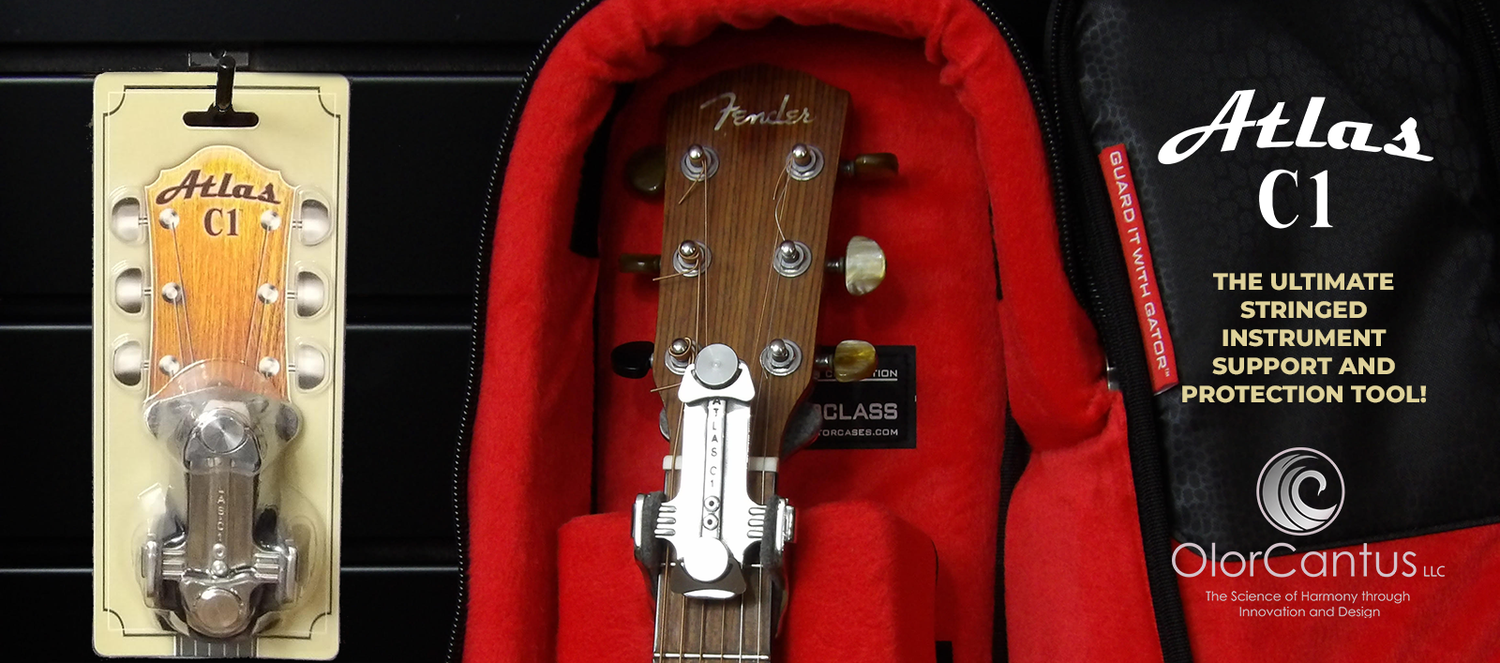
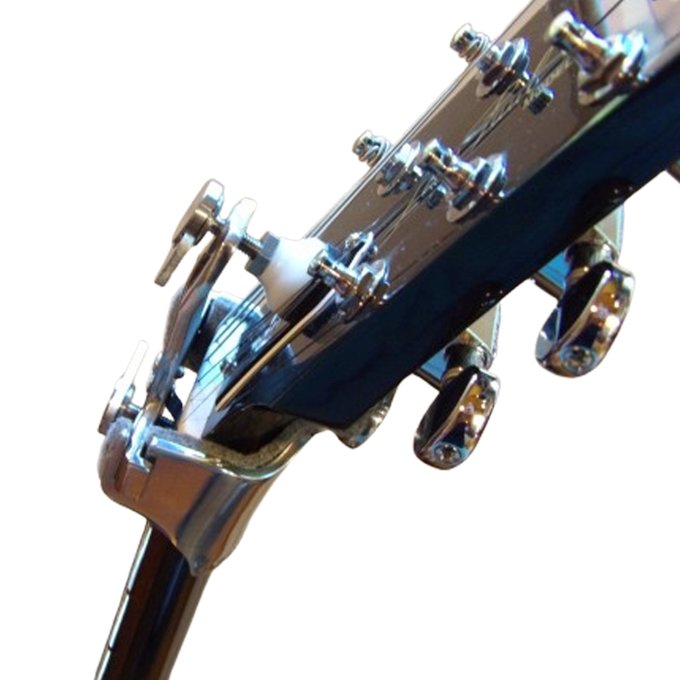
Travel and display both expose a guitar to risk beyond sunlight, and the headstock is the most fragile part. The neck-to-headstock junction takes the full pull of string tension, so a knock in a case or a fall from a stand can snap it. That is where Atlas C1 comes in.
The Atlas-C1 is a patented headstock support, protection, and repair tool. It supports the vulnerable headstock-neck junction during travel, shipping, and storage. It also doubles as a pre-aligned repair jig for a headstock that has already broken and is waiting on a fix.
Before you buy, check that your guitar has a 3 on 3 tuning machine headstock design. For players who travel or display guitars, it is a small tool that guards against a costly repair. You can see the full range of headstock protection tools to compare options, and new customers can take advantage of a 10 % product discount along with free shipping to make protecting that fragile junction an easy first step.
Sunlight and travel both put a guitar at risk, and the headstock is where a small knock turns into a big repair bill. At Olor Cantus LLC, we built the Atlas-C1 to support that fragile junction with a U.S. patent-protected design that doubles as a repair jig, backed by an unlimited transferable lifetime warranty. Olor Cantus LLC designed the Atlas-C1 to be affordable for stringed instrument owners anywhere in the world, and it is a lifetime-use tool for protecting a valuable instrument. Get started with Atlas C1 and keep your guitar safe in the case, on the road, and on display.
The Science of Harmony through innovation and design
Long Live the Six String TM
Frequently Asked Questions
Can direct sunlight damage a guitar finish?
Yes. Direct sunlight combines UV radiation and heat, and both attack guitar finishes. UV exposure breaks down the chemistry of nitrocellulose and polyurethane over time, causing fading, discoloration, and ambering. Heat softens and dries the finish, which can lead to checking and cracking. The damage is cumulative, so even a few hours a day in a sunny window adds up over months and years. Keep guitars out of direct sun and use shade, blinds, or a case to limit exposure.
How can I protect my guitar from UV damage without hiding it away?
You can display a guitar safely with a few changes. Move the stand or wall hanger out of direct sun paths, add UV-blocking window film or lined curtains to the room, and rotate which instruments sit out. Keep the room's light indirect and monitor how the finish looks every few months. For instruments you play less often, store them in a case with a UV-blocking cover. These steps protect guitar finishes from sunlight while still letting you enjoy having the instrument on display.
Does a guitar case protect against sunlight?
A closed hard case blocks essentially all UV light and most heat gain, which is why it is the simplest guitar case UV protection you can use. Gig bags vary widely: thick padded bags block light but offer less heat insulation, and thin bags left in a hot car still let temperatures climb inside. Never store a cased guitar in a trunk or a sun-baked vehicle. For travel days, a case plus a light-colored outer cover keeps the interior cooler.
How do I know if my guitar's finish is fading from sun or something else?
UV fading is usually uneven: the guitar top and the side facing the window lighten or yellow while areas under the pickguard, cover plates, or a strap stay original. Heat damage tends to show as checking, cloudiness, or softened lacquer near the neck joint and edges. Chemical damage from sweat, sunscreen, or harsh cleaners often appears as hazy patches where skin contacts the body. Comparing hidden and exposed areas is the quickest way to identify sun-related guitar finish fading.