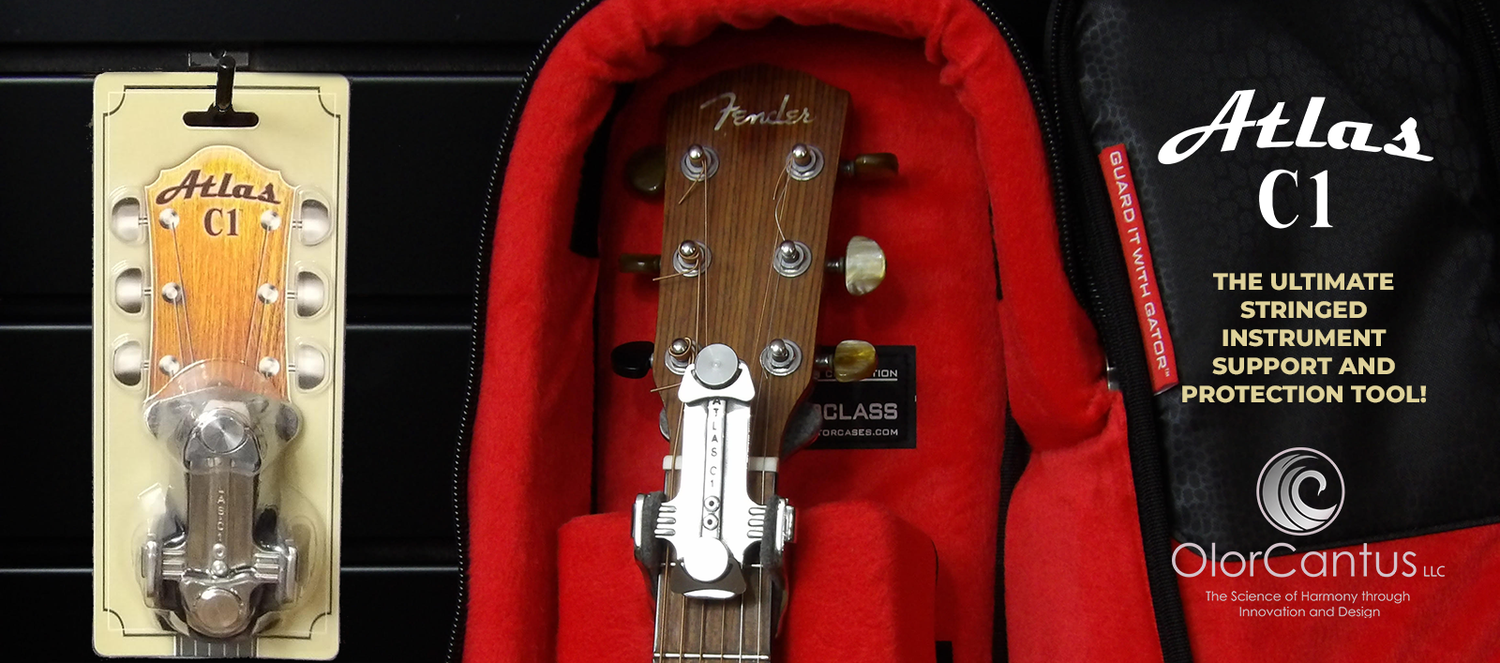

Last Updated: November 18, 2026
Quick Summary
To use an Atlas C1 for angled headstock support, place the tool against the back of the headstock, aligned with the neck-to-headstock junction, where the joint carries the most stress. Confirm it sits flat and does not rock before traveling, shipping, or storing the guitar. Check the headstock for existing cracks first, since a support placed over damage can hide it.
- Angled headstocks break most often at the neck-to-headstock junction because string tension loads that spot.
- Confirm your guitar has an angled headstock before fitting the Atlas C1, since flat or scarf-jointed designs are not a fit.
- Position the support so it contacts the headstock, not the tuners or strings.
- Check that the case lid does not press on the support, and pad the headstock so it cannot move.
- Recheck the tool's fit after any movement and before each trip or storage session.
Table of Contents
- Why Angled Headstocks Break at the Neck Joint
- What the Atlas C1 Headstock Support Tool Does
- Before You Start: Checking Your Guitar's Headstock Design
- Step-by-Step: Fitting Angled Headstock Support with the Atlas C1
- Protecting a Guitar Headstock During Shipping and Air Travel
- Using the Atlas C1 as a Repair Jig for a Broken Headstock
- Pros and Cons: Atlas C1 Versus Padding and Other Support Methods
- Common Mistakes When Using an Angled Headstock Protector
- Start Protecting Your Guitar's Headstock Today with the Atlas C1
- Frequently Asked Questions
Angled headstocks are among the most vulnerable parts of a guitar. The Atlas C1 gives you a practical way to support that joint during travel, shipping, storage, and repair. This guide walks you through how to use it, step by step.
Most guitar owners never think about the neck-to-headstock junction until something goes wrong. The tool is built to help prevent that problem, and it can also serve as a repair jig when a break has already happened.
Why Angled Headstocks Break at the Neck Joint
Angled headstocks break at the neck joint because that spot carries the most stress, and any angled headstock support has to absorb the force of strings pulling the headstock backward every time the instrument is moved, bumped, or stored.
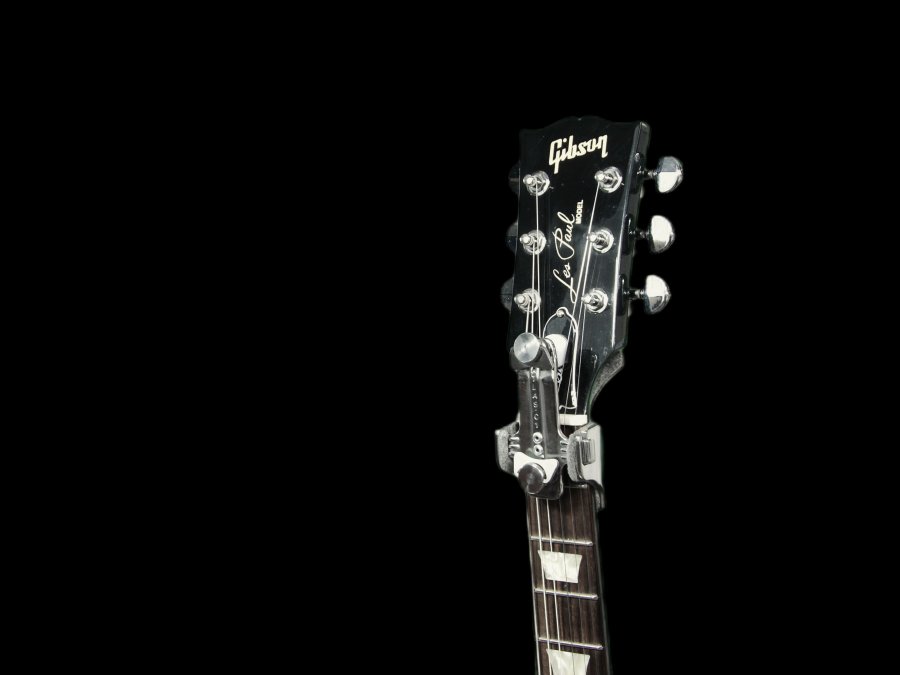
The tension forces acting on the headstock
Strings pull on the headstock constantly, even when the guitar is sitting still. The angle of an angled headstock means that pull creates a use effect at the joint. The heavier the string gauge and the higher the tuning, the more force the joint must resist.
Sudden movement makes things worse. A drop, a hard bump in a car trunk, or rough handling in an airport can add force on top of normal string tension.
Why the neck-to-headstock junction is the weak point
The neck-to-headstock junction is where the wood is thinnest and the grain can run across the stress line. That makes the joint more likely to crack than the body or the neck itself.
Once a small crack forms, it can spread under string tension. Many owners only notice the damage when the headstock starts to shift or the tuners feel loose.
What the Atlas C1 Headstock Support Tool Does
The Atlas C1 is designed to support the headstock at the neck-to-headstock junction.
The tool is a U.S. patent-protected design, and it works as a universal multi-function device. It can help protect the instrument during travel or storage, and it can also act as a pre-aligned repair jig if the headstock has already broken.
Before You Start: Checking Your Guitar's Headstock Design
Before you buy or fit the tool, confirm that your guitar has an angled headstock. The Atlas C1 is built for this style, and it is the design where the joint is most exposed.
Reading the headstock angle and break angle
An angled headstock is tilted back from the neck plane so the strings break downward across the nut. The tilt is what gives the guitar its sustain and tuning stability, and it is also what loads the neck-to-headstock junction. When you inspect a guitar, sight down the neck from the body toward the nut. If the headstock drops away from the line of the fretboard, you have an angled design. If it continues in the same plane, it is a flat or scarf-jointed style and the Atlas C1 is not the right fit.
Headstock shapes you are likely to encounter
Fit depends on the outline of the headstock, not just the angle. A few common patterns matter:
- Single-cutaway solid bodies with a three-per-side tuner layout. These typically have a pronounced back angle and a relatively narrow headstock face. The support needs to sit against the flat of the back without pressing on the tuner posts.
- Double-cutaway solid bodies with a three-per-side layout. The angle is similar, but the headstock outline is often wider near the nut. Check that the support does not overhang the edge, where it can rock.
- Set-neck and bolt-on designs with a scarf joint. The joint line sits lower on the back of the neck. Position the support so it bridges the joint rather than sitting entirely above or below it.
- Acoustic guitars with a volute or diamond carve. The raised carve at the back of the headstock changes the contact surface. A support that sits flat on a plain headstock may only touch the peak of the volute, which concentrates load instead of spreading it.
- In-line six-on-a-side layouts. The narrow profile leaves less flat area on the back. Confirm the support makes full contact before you rely on it.
Tuner layout and hardware clearance
Look at the tuner arrangement next. The fit depends on how the headstock is shaped around the tuning machines. On three-per-side layouts, the posts and bushings sit close to the edge, so the support must clear them. On in-line layouts, the tuners run along one edge and leave the opposite side flatter. Check that no part of the tool presses on a tuner post, bushing, or truss rod cover. Pressure on hardware transfers load into the wood in the wrong direction.
Inspecting for existing damage before you fit anything
Inspect the headstock before you begin. Look for hairline cracks, loose joints, or any sign the neck has shifted. Run a fingernail across the finish along the joint line; a crack will catch where the finish is smooth. Check the tuners for play and the nut for movement. Do not fit a support over an existing break without first assessing it, and consider a luthier's opinion if you see damage. A support placed over a crack can hide the problem until it gets worse.
Step-by-Step: Fitting Angled Headstock Support with the Atlas C1
Set the guitar on a stable, padded surface. A workbench with a towel or soft cloth works well. Keep the instrument flat and steady so the headstock is not under unexpected strain while you work.
Positioning the support against the headstock
Place the Atlas C1 against the back of the headstock, aligned with the neck-to-headstock junction. The support should sit where it can take load from the headstock, not from the tuners or the strings.
Check the orientation before you move on. A misaligned support can push on the wrong area and add stress instead of relieving it.
Checking that the support is seated securely
Once the tool is in position, gently test that it sits flat and does not rock. The support should feel firm against the headstock with no gaps.
Recheck the fit after you move the guitar. If the tool shifts, reposition it before storing or transporting the instrument.
Protecting a Guitar Headstock During Shipping and Air Travel
Shipping and air travel expose the headstock to bumps, drops, and pressure changes. Fitting the support before the guitar leaves your hands gives the joint a better chance of arriving intact. For more on protecting a guitar headstock in transit, follow the full shipping guide. The difference between a guitar that arrives playable and one that arrives with a cracked headstock usually comes down to three things: how the neck is supported inside the case, how much the headstock can move, and whether the case itself can flex.
Hard case versus gig bag
A hard case protects against outside impact, but it does not support the headstock on its own. Inside a hard case, the neck typically rests in a cradle near the body, leaving the headstock cantilevered in open space. That is exactly where the Atlas C1 earns its place: it takes load off the joint so the headstock is not hanging on string tension alone.
A gig bag offers padding but little rigidity. If you must ship in a gig bag, the support matters even more, because the bag can flex and transfer force directly to the headstock. A hard case plus a fitted support is a sensible combination for anything beyond a short drive.
Case fit and headstock clearance
Before you pack, close the empty case and look at the clearance around the headstock compartment. The support adds thickness to the back of the headstock. Check that the case lid still closes without pressing on the tool. If the lid compresses the support, the case is transferring load into the joint instead of protecting it.
Add padding around the headstock so it cannot move inside the case, but keep the padding behind and beside the headstock, not over the face. Padding packed against the strings can push the headstock backward and add to the tension you are trying to relieve.
Pressure changes in flight
Cargo holds are pressurized, but the cabin and hold still see pressure and temperature swings. Wood and glue respond to humidity and temperature at different rates, and a joint that is already marginal can open up during a long flight. Keeping the support fitted removes the string-tension variable from that equation, so the joint is not fighting both climate stress and string pull at the same time.
Packing sequence for air travel
- Fit the Atlas C1 and confirm it is seated flat against the back of the headstock.
- Detune slightly if the instrument will be in transit for days; this reduces steady string load without letting the neck relax completely.
- Place the guitar in the case and check that the headstock does not touch the case lid.
- Fill the gap around the headstock with soft padding, keeping it off the strings.
- Close and latch the case, then shake it gently. If you hear or feel movement at the headstock, repack.
Touring musicians who fly often may find it practical to keep the tool attached for every trip.
Watch out: an airline-approved flight case is not the same as a support. A flight case stops the outside world from reaching the guitar; it does not stop the strings from pulling on the joint. Use both.
Using the Atlas C1 as a Repair Jig for a Broken Headstock
If the headstock has already broken, the Atlas C1 can hold the pieces in alignment while you prepare for repair. Our repair guide for a broken headstock explains what repair involves and what comes next. It is designed to be pre-aligned, which helps you line up the break before glue or clamps are applied.
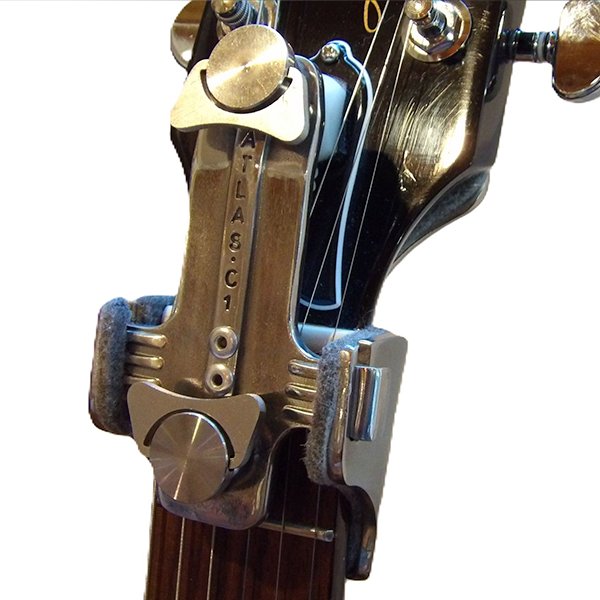
Repair work on a broken headstock is a serious job. If you are not experienced with luthier work, a professional repair is often the safer choice. The jig can help a skilled tech, and it can also help a careful owner avoid misalignment when the damage is minor.
Pros and Cons: Atlas C1 Versus Padding and Other Support Methods
Padding is a common method guitar owners use. It cushions the headstock against bumps.
Here is a quick comparison:
| Method | Main Benefit | Main Drawback | Best For |
|---|---|---|---|
| Atlas C1 | Supports the joint directly | Requires fitting each time | Travel, storage, repair |
| Padding or wrapping | Cheap and easy to add | Does not reduce joint stress | Short trips, light handling |
| Hard case alone | Protects against outside impact | Does not support the headstock | Everyday carrying |
Common Mistakes When Using an Angled Headstock Protector
A common mistake is fitting the support in the wrong spot. Check that it lines up with the junction before you tighten or secure anything.
Another mistake is forgetting to recheck after movement. Vibration and handling can shift the tool, so inspect it before each trip or storage session.
People also skip the headstock check. A support placed over an existing crack can hide the problem until it gets worse. Look at the headstock first, every time.
Start Protecting Your Guitar's Headstock Today with the Atlas C1
A cracked headstock is expensive and stressful to fix, and most of that damage is preventable. The Atlas C1 gives you direct support at the joint, along with a repair jig for when a break has already happened.
Buy the Atlas C1 directly from the product page to start protecting your guitar. Free shipping and a 10% product discount are available.
The Atlas C1 comes with an unlimited transferable lifetime warranty, so one tool can protect your guitars for years.
The Atlas C1 is one tool for the joint that matters most. See guidance on supporting angled headstocks to compare it with other approaches.
The Science of Harmony through innovation and design Long Live the Six String™
Frequently Asked Questions
Can the Atlas C1 be used with different guitar headstock angles?
The Atlas C1 is designed to support the vulnerable neck-to-headstock junction of angled headstocks, the design most often found on Gibson-style guitars. Straight-headstock guitars such as many Fender models have a different tension profile, so check how the tool sits against your instrument before relying on it. Before buying, confirm the tuning machine layout and headstock shape of your guitar, and check the product page at Atlas C1 for current compatibility details and pricing, which depend on quantity, dates and delivery.
Can the Atlas C1 support a guitar with a broken headstock?
The Atlas C1 also works as a pre-aligned repair jig for previously broken headstocks awaiting professional repair. It holds the headstock in position while you prepare the break, but it does not replace a qualified luthier for structural repair. If the break is recent or the wood is cracked beyond the joint, stop and have a professional assess the instrument first.
How can I protect an angled headstock during transport?
Fit the support before the guitar leaves its stand or case, and make sure it is seated firmly against the headstock and neck before any movement. Pair it with a hard case that has adequate interior padding. Check the fit before every trip, especially after the guitar has been handled or restrung.
Can a headstock protector be used for acoustic guitars and basses?
Headstock support is most relevant to guitars with angled headstocks under string tension, and the Atlas C1 is designed with that application in mind. Acoustic guitars and basses vary widely in headstock shape and tuning machine layout, so confirm compatibility with the specific instrument before use. Mention the brand, model and headstock design when you contact Atlas C1 for a current quote.