
Table of Contents
- Why Guitar Travel Protection Matters
- Hard-Shell Cases vs. Padded Gig Bags: What You Actually Need
- The Best Way to Ship Guitars Safely
- Guitar Headstock Protection Devices and Repair Solutions
- Touring Musician Gear: Essential Protection Tools
- Lightweight Cases and Travel Guitars for Maximum Portability
- DIY Modifications and Storage Solutions for Home Protection
- Insurance and Liability Considerations for Valuable Instruments
- Frequently Asked Questions
Last Updated: September 28, 2026
Why Guitar Travel Protection Matters
The vulnerable headstock-neck junction of a guitar can snap under pressure during transit, turning a beloved instrument into an expensive repair project. When musicians travel with guitars, they face real risks: turbulence shifts luggage in overhead bins, baggage handlers drop cases, and the constant pressure from string tension weakens the neck over time. A single headstock break can be an expensive repair, and some damage is irreversible.
This guide covers the full spectrum of guitar travel protection strategies, from hard cases and padded gig bags to specialized headstock support systems. Whether you're a touring professional or a collector protecting a vintage instrument at home, the right protection gear makes the difference between arriving safely and arriving broken.
Hard-Shell Cases vs. Padded Gig Bags: What You Actually Need
The choice between hard-shell cases and padded gig bags depends entirely on how you travel and what you're protecting. Hard-shell cases offer superior crush resistance and impact protection, making them the standard for air travel and professional touring. Padded gig bags prioritize portability and convenience, trading some protection for the ability to fit in overhead compartments and sling over your shoulder.
Hard-Shell Case Protection and Durability
A hard-shell case provides superior impact resistance through a rigid exterior shell that absorbs shock from drops, stacks, and compression during baggage handling.
The trade-off is weight and bulk. Hard-shell cases are heavier and take up more space in vehicles and hotel rooms. For gigging musicians who move between venues multiple times per week, the portability disadvantage becomes real.
Gig Bag Portability and Shock Absorption
Padded gig bags sacrifice crush resistance for portability and convenience, offering adequate protection when carried as a hand item rather than checked luggage.
Gig bags work best as carry-on items. Checking a gig bag as luggage significantly increases risk from rough handling and temperature extremes.
Gig bags fit overhead compartments and take minimal space in vans or hotel rooms, making them practical for frequent local gigging without long-distance air travel.
The Best Way to Ship Guitars Safely
Shipping guitars requires proper method selection, packaging, and carrier choice. Understanding the trade-offs between carry-on, checked baggage, and commercial shipping is essential for protection.
Carry-On vs. Checked Baggage: A Decision Framework
Carrying your guitar as a carry-on item is the safest option when flying domestically, as you maintain physical control and avoid baggage handling. Most airlines allow one guitar as a carry-on item, though policies vary by carrier.
A padded gig bag or hard-shell case fitting standard overhead bins keeps your guitar safe. TSA allows guitars through security without case removal, though expect time for inspection.
When to choose carry-on:
- Domestic flights under 6 hours
- Instruments valued over $2,000
- Guitars with irreplaceable sentimental value
- Tours with multiple flights per week (cumulative damage risk from checked baggage handling)
- When you have physical space in the overhead bin
Checked baggage introduces significant risk from rough handling, stacking, and temperature/humidity extremes that can cause finish checking or wood movement.
When checked baggage becomes necessary:
- International flights where carry-on restrictions are stricter
- Multiple instruments requiring separate cases
- When overhead bin space is unavailable
- Tours longer than 2 weeks where checked baggage logistics are already established
If you must check a guitar, use an ATA-rated hard-shell case with reinforced corners and heavy-duty latches.
TSA and ATA Compliance Standards Explained
These two standards address different concerns and are often confused.
TSA approval focuses on security screening convenience, not protection. A TSA-approved lock allows agents to open your case without breaking it, this does not indicate protection capability.
ATA ratings indicate a case meets airline industry durability standards through third-party testing for crush resistance, drop impact, latch durability, and environmental stress. ATA certification is a genuine durability marker. If checking a guitar, an ATA-rated case is the minimum acceptable protection level.
For international flights or extended tours, ATA-rated protection is critical, as baggage may transfer between multiple airlines with varying handling standards.
Commercial Shipping Methods: When to Ship Instead of Fly
For valuable instruments or relocations, commercial shipping offers an alternative to carrying guitars on planes. Specialty instrument shipping services use padded hard cases and insured transport designed for guitars, with full insurance coverage and professional packing, though delivery takes 5-10 business days.
Standard carrier options: UPS Ground and FedEx Ground offer economical rates for short distances with declared value insurance. USPS Priority Mail Express is fastest (1-2 days) but limited to cases under 70 pounds.
Use commercial shipping for high-value instruments, relocations, or when you don't need the guitar within 5 days. Avoid it for time-sensitive needs, irreplaceable instruments, or daily-use touring.
Packing Protocol for Any Shipping Method
Proper internal packing prevents vibration and impact damage. Inside the case: loosen strings to 50% tension (reduces headstock stress by ~65 pounds), wrap headstock and neck with soft cloth or bubble wrap, place foam blocks under the neck, fill empty space with soft materials, and add a humidity packet. Outside the case: use a hard-shell case for checked or shipped guitars, apply fragile stickers, use double-box method for commercial shipping with 3 inches of packing material on all sides.
This protocol applies whether you're checking a guitar on a flight, shipping cross-country, or storing an instrument for extended periods.
Guitar Headstock Protection Devices and Repair Solutions
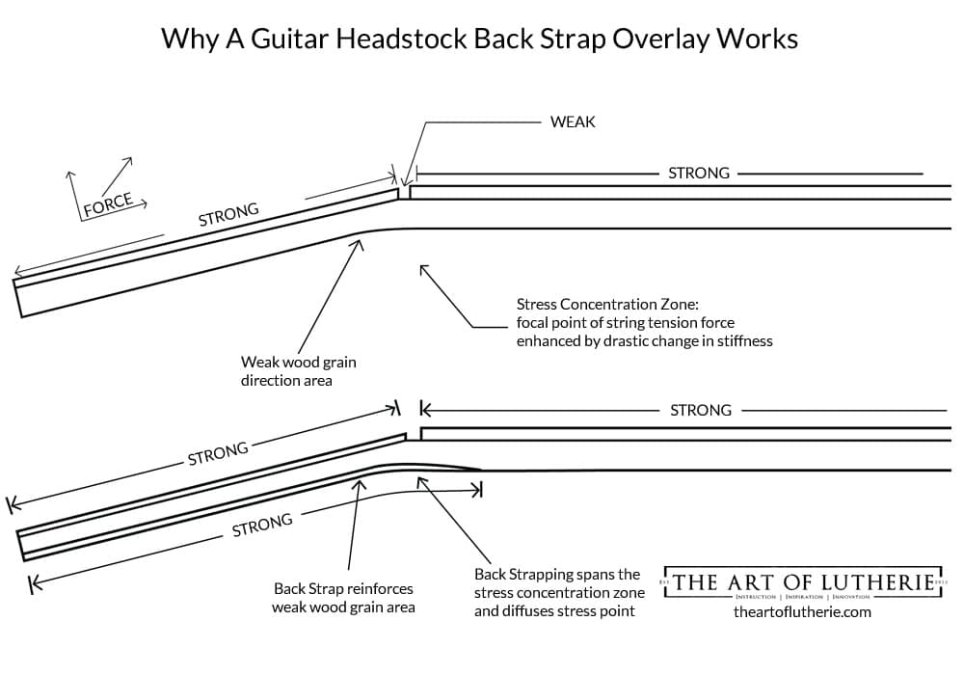
The headstock-neck junction is the weakest point on most guitars, experiencing roughly 130 pounds of downward force from string tension. During travel, vibration and impact can crack this junction, especially on angled headstocks like Gibson-style instruments.
How Headstock Support Systems Work
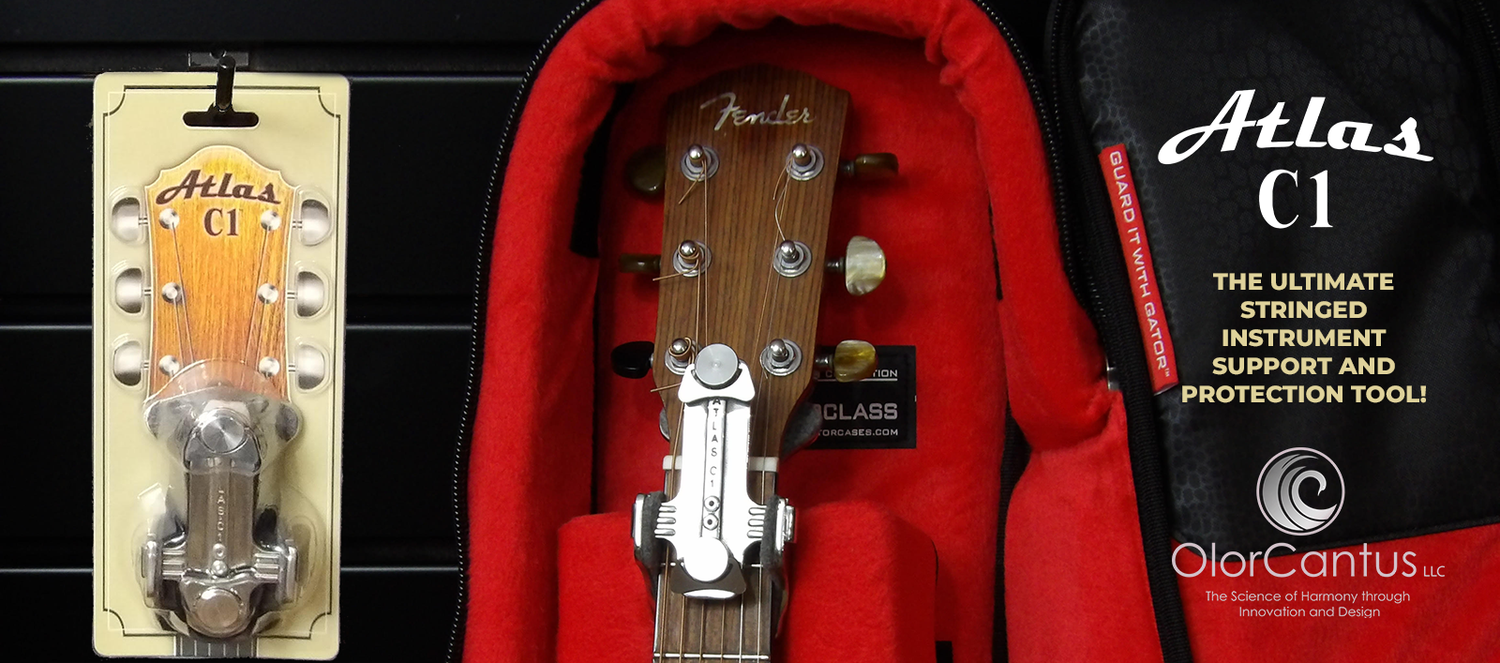
A headstock support device prevents the neck from bending backward under string pressure by distributing force across a wider area. The Atlas C1 is a precision-engineered headstock protection tool with universal design that fits many stringed instruments. It cradles the headstock and neck junction, counteracting the 130+ pounds of string pressure tension, and doubles as a pre-aligned repair jig. This targeted approach prevents damage more effectively than generic padding.
Multi-Function Repair Jigs vs. Passive Protection
Passive protection (cases, gig bags, and padding) prevents damage during travel but doesn't help if a break occurs. A repair jig becomes essential if you need to fix a headstock break without paying a luthier hundreds of dollars.
A multi-function repair jig like the Atlas C1 serves dual purposes: it protects your instrument during transport and provides the alignment tools needed for headstock repairs. If a break does happen, the jig holds the pieces in proper alignment while adhesive cures.
For professional musicians and collectors, this dual functionality justifies the investment. You get travel protection for the life of the instrument plus the ability to address repairs quickly.
Touring Musician Gear: Essential Protection Tools
Professional touring musicians need a comprehensive protection strategy that addresses multiple risks: impact during transport, humidity changes in different climates, and the wear-and-tear of constant movement.

A complete touring setup typically includes a hard-shell case for checked luggage, a padded gig bag for carry-on flights, and specialized headstock protection for overnight storage in hotel rooms. The Atlas C1 fits into this ecosystem as the dedicated headstock protection solution, preventing the most common damage pattern that touring musicians encounter.
Humidity control becomes critical during extended tours. Guitars are sensitive to moisture changes, and rapid swings between dry tour buses and humid hotel rooms can cause finish cracking and wood warping. Hard-shell cases with sealed interiors help stabilize humidity, while padded gig bags offer less protection against moisture changes.
Touring musicians should also consider insurance for valuable instruments. Professional liability coverage protects against loss or damage during transit, though it typically requires proof that you used appropriate protection gear. Using cases and support devices that meet industry standards strengthens insurance claims if damage occurs.
Lightweight Cases and Travel Guitars for Maximum Portability
When portability is your primary concern, lightweight cases and travel-specific guitars reduce the burden of constant movement without sacrificing playability, though tone and durability trade-offs are real and worth understanding before investing.
The Portability vs. Tone Trade-Off
Travel guitars achieve their compact size and light weight through design compromises that affect acoustic tone, structural durability, and long-term playability. Understanding these trade-offs helps you choose a travel instrument that matches your actual needs rather than buying based on convenience alone.
Full-size guitars (40-41 inches for acoustics, 25.5 inches scale for electrics) produce optimal tone because body size and scale length determine resonance characteristics and string vibration patterns. A standard dreadnought acoustic guitar's large body volume and 25.4-inch scale create the tonal characteristics musicians expect.
Travel guitars (typically 36-38 inches for acoustics, 24-24.75 inches scale for electrics) sacrifice body volume and scale length to reduce weight and size. This directly affects:
- Acoustic projection: Smaller bodies produce less volume and reduced bass response. A travel acoustic plays quietly compared to a standard dreadnought, making it less suitable for performance venues or recording.
- String tension: Shorter scale lengths require lighter gauge strings to maintain playability, which changes tone character and reduces sustain.
- Structural stress: Smaller bodies experience proportionally higher stress from string tension, making headstock breaks more likely on some designs.
- Resale value: Travel guitars typically retain 40-60% of purchase price, while quality full-size guitars retain 60-75%.
Folding and Compact Acoustic Designs
Voyage Air VAOM-04C features a patented folding hinge system that allows a full-sized acoustic guitar to fold at the neck joint, reducing packed length from 40 inches to approximately 26 inches. The solid spruce top maintains acoustic tone better than most travel designs because the body dimensions remain full-size, only the neck folds. The custom-fitted heavy-duty travel backpack provides adequate protection for carry-on travel. At roughly 4 pounds, the entire package fits in standard airline overhead compartments.
Tone characteristic: The full-size body produces near-standard acoustic volume and bass response. The folding mechanism adds complexity that some players report affects sustain slightly, though the difference is subtle compared to other travel designs.
Durability concern: The folding hinge is a potential failure point. Repeated folding and unfolding can loosen the joint over years of use, though Voyage Air's warranty covers hinge repairs.
Best for: Touring acoustic players who need full-size tone but require compact transport.
Martin Backpacker takes a minimalist approach with a unique body shape smaller than a standard ukulele but with a full 24.75-inch scale. The solid spruce top and mahogany back produce authentic acoustic guitar tone despite the compact body. The design is fixed (no folding), making it more durable than hinged alternatives.
Tone characteristic: The small body produces noticeably less volume than a standard acoustic, approximately 40% of a dreadnought's projection. The tone is bright and punchy rather than warm and resonant. This works well for fingerstyle playing but less well for strumming in group settings.
Durability: The fixed design is simpler and more robust than folding mechanisms. The smaller body experiences less string tension stress, reducing headstock break risk.
Best for: Solo fingerstyle players and singer-songwriters who prioritize portability over volume.
Taylor Baby Taylor (BT1) takes the middle ground with a 3/4-scale dreadnought body. It's not as compact as travel-specific designs, but it's significantly lighter (approximately 3 pounds) and smaller than a full-size guitar while maintaining excellent playability. The durable gig bag is included, and the high resale value makes it a practical investment if you decide to upgrade later.
Tone characteristic: The 3/4 scale produces fuller tone than smaller travel designs while remaining noticeably brighter than a full-size dreadnought. The smaller body limits bass response but maintains adequate volume for intimate venues and recording.
Durability: The 3/4 scale reduces string tension proportionally, lowering headstock break risk. Taylor's construction quality is excellent, and repairs are straightforward due to the standard design.
Best for: Traveling musicians who need a balance between portability and tone quality. The included gig bag and high resale value make this a low-risk investment for testing whether travel guitar format works for your playing style.
Headless Electric Designs
Donner HUSH-I Travel Guitar features a headless design and built-in preamp, eliminating the vulnerable headstock entirely and removing one major damage risk. The detachable frame allows the body to fold for packing, and the built-in speaker enables silent practice in hotel rooms without external amplification.
Tone characteristic: The headless design and solid-body electric construction produce bright, punchy tone with minimal sustain compared to full-size electrics. The built-in preamp colors the tone slightly, adding compression that some players find undesirable for clean tones.
Durability advantage: The headless design eliminates headstock breaks entirely. The detachable frame is a potential failure point, but the simple design is easy to repair.
Best for: Electric players who prioritize silent practice and damage prevention over tone quality.
Steinberger Spirit GT-Pro offers a headless design with full-scale playability and professional-grade construction. The patented R-Trem locking tremolo system maintains stable tuning despite travel stress and temperature changes. The compact ergonomic body fits comfortably in overhead bins. The deluxe gig bag is included, though you'll need double-ball end strings.
Tone characteristic: The headless design and active electronics produce modern, bright tone with excellent sustain for a compact instrument. The locking tremolo enables dive-bomb effects and maintains tuning stability through aggressive playing.
Durability: The locking tuning system and headless design are extremely durable. The main failure point is the tremolo mechanism, which is complex and requires professional service if damaged.
Best for: Professional touring electric players who need a backup instrument that matches their main guitar's playability and tuning stability.
Choosing Between Travel Guitar and Full-Size Protection
Before investing in a travel guitar, consider whether a lightweight case for your full-size instrument might serve your needs better.
Choose a travel guitar if:
- You fly more than 6 times per year
- You play solo fingerstyle or intimate venues (not loud bands)
- You're willing to accept tone compromises for portability
- You want to reduce overall tour luggage weight
- You're building a backup instrument collection
Choose a lightweight case for your full-size guitar if:
- You play fewer than 6 flights per year
- You perform in venues that require full acoustic volume
- Tone quality is non-negotiable
- You already own a guitar you love
- You want to minimize equipment investment
A quality lightweight gig bag combined with your existing full-size guitar often provides better value than a travel guitar purchase, especially if you don't fly frequently enough to justify the tone compromise.
DIY Modifications and Storage Solutions for Home Protection
Not every guitarist travels frequently, but all guitarists should protect their instruments during home storage and display. DIY modifications to existing cases and storage solutions can significantly improve protection without major expense.
Headstock support can be added to existing cases using simple materials. A rolled towel or foam wedge positioned under the headstock prevents the neck from bending backward under string tension during storage. This passive support costs nothing and requires only a few seconds to set up.
For guitars stored upright on stands, adding a neck rest prevents the headstock from bearing the full weight of the instrument. A simple foam block or padded clamp around the neck distributes pressure and reduces stress on the headstock-neck junction.
Temperature and humidity control in storage areas is often overlooked but critical. Guitars stored in attics or basements experience extreme swings that damage wood and finishes. A climate-controlled closet or interior room with stable temperature maintains instrument health far better than uncontrolled spaces.
For collectors with high-value vintage instruments, dedicated storage cases with sealed interiors and humidity control systems represent a worthwhile investment. These specialized cases maintain stable conditions that prevent wood movement and finish checking.
The Atlas C1 provides an alternative approach: rather than modifying storage setups, the device cradles the headstock and neck junction, providing targeted support that prevents stress-related damage during long-term storage. This approach is particularly valuable for Gibson-style guitars with angled headstocks, which experience more stress at the neck junction than straight-headstock designs.
Insurance and Liability Considerations for Valuable Instruments
Insurance becomes increasingly important as instrument value increases. A vintage 1959 Les Paul or a high-end custom acoustic guitar represents a significant financial asset that deserves protection beyond physical cases.
Professional musicians typically carry instrument insurance as part of their business liability coverage. This insurance covers loss or damage during transit, but it usually requires proof that you used appropriate protection measures. Using ATA-rated cases, TSA-approved locks, and specialized headstock protection devices demonstrates that you took reasonable precautions, strengthening insurance claims if damage occurs.
For touring musicians, liability coverage should specify coverage for instruments in transit, in storage, and during performance. Some policies exclude damage that occurs due to "inadequate protection," making your choice of protection gear directly relevant to claim approval.
Collectors and casual players should review homeowners or renters insurance policies to confirm that instruments are covered for their full replacement value. Many standard policies cap coverage at a percentage of home value, leaving valuable guitars under-insured. Adding a rider for musical instruments ensures full coverage.
Documentation strengthens insurance claims. Photographs of instruments, serial numbers, and proof of value (receipts, appraisals, or professional valuations) should be maintained separately from the instruments themselves. If damage occurs, detailed documentation accelerates claim processing.
For instruments with historical significance or irreplaceable value, insurance may not adequately compensate for loss. In these cases, physical protection using the best available gear becomes the primary defense against damage.
Protecting your guitar during travel and storage requires a combination of appropriate cases, specialized headstock support, and thoughtful packing methods. Hard-shell cases provide maximum protection for checked luggage, while padded gig bags offer the portability needed for frequent movement between venues.
Frequently Asked Questions
What is the best way to protect a guitar while traveling by air?
Use a TSA-approved hard-shell case with ATA-rated construction for checked baggage, or carry your guitar on board in a compact gig bag if space allows. Inside the case, add internal padding and secure the headstock with a dedicated guitar headstock protection device to prevent the most common damage point. Ensure latches are locked and remove any loose strings or accessories that could shift during transit.
How does the Atlas C1 compare to wrapping my guitar in extra padding?
The Atlas C1 provides targeted structural support to the headstock-neck junction, counteracting 130+ pounds of string pressure tension and preventing the lateral stress that causes breaks during impact. Extra padding alone absorbs shock but doesn't prevent the neck from bending at its weakest point. The device also functions as a pre-aligned repair jig if damage occurs. It's a lifetime investment that addresses the root cause of headstock damage rather than just cushioning.
Can the Atlas C1 work with straight-headstock guitars like Fenders and Telecasters?
Yes. While the Atlas C1 was engineered with angled Gibson-style headstocks in mind, its universal multi-function design adapts to various headstock angles and neck profiles. Straight headstocks still require support at the neck junction during transport and storage. Verify compatibility with your specific guitar model, where you can find detailed specifications and usage guidance for different instrument types.
Should I check my guitar as luggage or carry it on the plane?
Carry-on is safer if your instrument fits within airline overhead bin dimensions. Checked baggage exposes your guitar to baggage handlers, extreme pressure changes, and temperature fluctuations. If you must check it, use a hard case with TSA-approved locks and internal protection like a headstock protection device. Always confirm your airline's specific guitar policy before booking, as rules vary by carrier.