
Table of Contents
- What Is Atlas Guitar Headstock Protection?
- Why Headstock Damage Matters to Guitarists
- Atlas C1 Key Features and Design
- Preventing Guitar Headstock Damage During Travel
- Using Atlas C1 as a Guitar Headstock Repair Jig
- Shipping Acoustic Guitars Safely with Atlas C1
- Universal Compatibility Across Headstock Styles
- Real-World Performance and Testimonials
- Is Atlas C1 Right for Your Playing Style?
- Frequently Asked Questions
Last Updated: September 29, 2026
What Is Atlas Guitar Headstock Protection?
The term "atlas guitar" refers to multiple distinct entities in the guitar world, creating significant confusion for musicians and collectors searching for information, from vintage instruments to the modern atlas guitar headstock protection tool. Understanding what you're actually looking for requires clarity on the different manufacturers, products, and contexts that share this name.
The Name Overlap Problem
Searches for "atlas guitar" return results spanning:
- Atlas headstock protection tools, precision-engineered devices designed to stabilize the headstock-neck junction during transport and repair
- Atlas brand acoustic and electric guitars, instruments manufactured by different companies at different periods, primarily in the mid-20th century
- Atlas guitar stands and accessories, equipment manufacturers producing cases, stands, and hardware
- Atlas as a model designation, specific guitar models from established manufacturers that used "Atlas" as a product name
This fragmentation means users searching for "atlas guitar" may be looking for a vintage instrument, a modern protection tool, a stand, or historical information about a specific manufacturer, and current search results mix all of these together without clear distinction.
Why This Matters
Collectors hunting for a vintage Atlas acoustic guitar from the 1950s will find results about modern headstock protectors. Musicians researching headstock damage prevention encounter forum threads about defunct manufacturers. The lack of clear categorization wastes time and creates frustration.
This guide addresses that confusion by establishing clear categories and providing depth on each. Whether you're researching the history of Atlas-branded instruments, evaluating headstock protection solutions, or trying to identify a guitar you own, understanding which "atlas guitar" you're actually researching is the essential first step.
The Atlas C1 Headstock Protection Tool
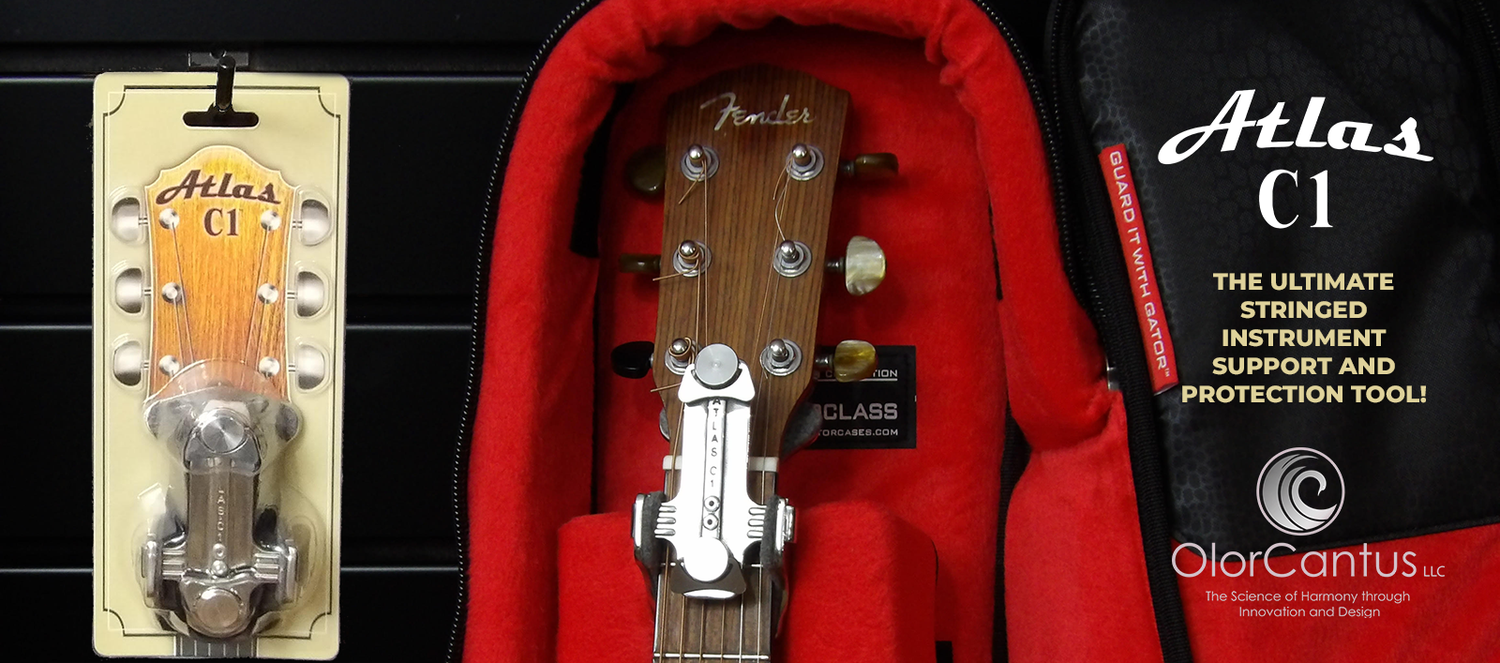
One prominent modern product using this name is the Atlas C1, a precision-engineered tool designed to stabilize the headstock-neck junction during travel, shipping, storage, and repair work. Unlike generic padding or soft cases, the Atlas C1 functions as a targeted support system that cradles the headstock-neck junction with structural reinforcement, counteracting the downward pull of string tension that causes breaks during transport or accidents. The tool also serves as a pre-aligned repair jig, allowing musicians and luthiers to realign broken headstocks without requiring specialized shop equipment.
For touring musicians, collectors protecting vintage instruments, and professional technicians, this dual-purpose approach eliminates the need for multiple solutions. A single lifetime investment handles protection, transport, and repair scenarios.
Why Headstock Damage Matters to Guitarists
Headstock breaks represent one of the costliest repairs a guitarist can face. A broken headstock doesn't just affect playability, it compromises the instrument's structural integrity, resale value, and long-term viability. The damage often requires professional luthier work.
The vulnerability exists because headstocks cantilever away from the body. When a guitar is laid on its side or dropped, gravity and string tension work together to snap the headstock at its weakest point: the neck junction. This is especially true for angled headstocks common on Gibson-style instruments, where the angle creates mechanical disadvantage.
For collectors, a headstock break can reduce an instrument's value by 30-50 percent, even after professional repair. Vintage guitars and handcrafted instruments suffer even steeper depreciation. A 1959 Les Paul with a repaired headstock loses far more value than the repair cost alone.
Professional touring musicians face a different pressure: downtime. A broken headstock during a tour means renting a replacement instrument, canceling shows, or playing an unfamiliar guitar. The financial and creative costs extend far beyond the repair bill.
Atlas C1 Key Features and Design
The Atlas C1 combines precision engineering with practical functionality. Its design targets the headstock-neck junction specifically, providing structural support where it matters most.
The device works with multiple headstock styles, including angled Gibson-style designs and straight Fender-style headstocks. This universal compatibility means a single tool serves an entire collection, regardless of brand or model.
Key design elements include:
- U.S. patent-protected engineering that cannot be replicated by generic competitors
- Pre-aligned geometry that ensures correct headstock-neck angle during repair work
- Lifetime construction designed for hundreds of uses without degradation
- Compact form factor that fits inside standard guitar cases for travel protection
The Atlas C1 doubles as a repair jig by eliminating the guesswork in headstock alignment. When a break occurs, the tool's geometry ensures the headstock realigns to its original angle, a critical factor in successful repair outcomes. This pre-alignment capability reduces repair time and improves structural integrity compared to freehand repair methods.
Preventing Guitar Headstock Damage During Travel
Travel represents the highest-risk scenario for headstock damage. Whether flying with a guitar, transporting by bus, or moving instruments between venues, the headstock experiences repeated micro-stresses and sudden impacts that accumulate into failure.
The Atlas C1 addresses this by providing external structural support. During transport, the tool stabilizes the headstock-neck junction, preventing the rocking motion that occurs inside a standard case. This is especially critical for air travel, where cabin pressure changes, temperature fluctuations, and baggage handling create multiple stress vectors.
Setup takes minutes: position the Atlas C1 around the headstock-neck junction, secure it according to the tool's design, and place the entire assembly into the guitar case. The compact form factor means it adds minimal bulk while providing maximum protection. When ordering, take advantage of free shipping to have your protection tool delivered directly to your door.
For musicians traveling 100+ days per year, the protection compounds. Each flight, each venue change, each equipment move represents potential risk. The Atlas C1 reduces that cumulative risk to near-zero, which explains why professional touring musicians have adopted it as standard equipment.
The tool's design also works during storage. Guitars stored vertically or horizontally experience different stress patterns. The Atlas C1 stabilizes the headstock regardless of storage orientation, making it valuable even for instruments that rarely leave home.
Using Atlas C1 as a Guitar Headstock Repair Jig

When a headstock break occurs, most musicians face a choice: pay a luthier or attempt DIY repair with uncertain results. The Atlas C1 shifts that equation by providing professional-grade alignment without requiring specialized knowledge.
The tool's pre-aligned geometry ensures the headstock realigns to its original angle. This matters because even slight misalignment, a degree or two off, creates playability problems and structural weakness. Traditional clamps and makeshift jigs rely on visual estimation, which introduces error.
Setup as a repair jig works like this: position the broken headstock inside the Atlas C1's clamping geometry, apply clamping pressure according to the tool's design, and allow epoxy to cure. The tool holds alignment throughout the cure cycle, ensuring the headstock sets in correct position.
The repair process involves allowing epoxy to cure, with the Atlas C1 providing consistent pressure throughout. Once cured, the headstock-neck junction often becomes as strong as the original joint.
For luthiers and repair technicians, this capability eliminates the need for custom jigs. The Atlas C1's pre-aligned design handles the most common headstock break scenarios, reducing repair time and improving outcomes.
Shipping Acoustic Guitars Safely with Atlas C1
Acoustic guitars present unique shipping challenges. Their larger bodies and thinner wood make them more vulnerable to pressure changes and vibration. The headstock-neck junction becomes even more critical during shipping because the guitar cannot be played or adjusted during transit.
The Atlas C1 provides external stabilization that survives the entire shipping process. Unlike padding or foam, which compress over time, the tool maintains consistent support from pickup to delivery. This is especially valuable for vintage or handcrafted acoustic instruments, where the original tonewood and craftsmanship justify premium protection.
Setup for shipping involves positioning the Atlas C1 around the headstock-neck junction, securing it, and then placing the entire assembly in a hard case with additional padding. The tool's compact form factor means it doesn't require oversized packaging, which reduces shipping costs compared to larger protection systems.
For musicians shipping instruments internationally or across the country, this approach provides confidence that the headstock will arrive intact. The tool's design addresses the specific stresses created by transportation: vibration, pressure changes, and impact forces.
Universal Compatibility Across Headstock Styles
One of the Atlas C1's core advantages is its ability to work with nearly any headstock design. This universal compatibility eliminates the need for multiple tools or custom solutions.
Compatibility includes:
- Gibson-style angled headstocks on Les Pauls, SGs, and similar instruments where the angle creates mechanical stress
- Fender-style straight headstocks on Stratocasters, Telecasters, and similar designs with different stress patterns
- Specialty designs including multiscale instruments, 12-string guitars, and bass guitars with non-standard headstock geometry
- Vintage instruments with original wood and finishes that require non-invasive support
The universal design means a touring musician with a mixed collection, perhaps a Gibson, a Fender, and an acoustic, uses the same tool for all three. This simplifies travel packing, reduces equipment weight, and ensures consistent protection across the entire collection.
For collectors, universal compatibility addresses a common pain point: protecting instruments without investing in multiple specialized tools. A single Atlas C1 protects the entire collection, whether instruments share headstock geometry or not.
Real-World Performance and Testimonials
Modern Atlas C1 Recognition
The Atlas C1 headstock protection tool has earned recognition from professional musicians and industry publications. Featured in Premier Guitar Magazine, the tool has been adopted by touring musicians in demanding environments where instrument protection directly impacts performance reliability. Customer reviews consistently highlight the tool's effectiveness during travel and its dual functionality as a repair jig. Professional luthiers and guitar technicians have integrated the Atlas C1 into their repair workflows, citing the pre-aligned geometry as a significant improvement over traditional clamping methods. The U.S. patent protection awarded in 2019 reflects the tool's innovative design and engineering precision.
Historical Atlas Guitar Manufacturers and Models
Understanding the broader "atlas guitar" landscape requires acknowledging the different manufacturers that have used this name:
Mid-Century Atlas Instruments (1950s-1970s)
Several manufacturers produced guitars under the Atlas brand during the post-war era. These instruments were typically entry-level to mid-range acoustics and electrics, competing in a crowded market alongside Harmony, Kay, and Silvertone models. Atlas guitars from this period are now sought by vintage collectors, though they remain relatively uncommon in the used market compared to major brands. Original Atlas instruments from the 1950s-1960s typically feature:
- Laminated spruce or plywood bodies (common for budget instruments of the era)
- Simple hardware and electronics
- Headstock designs that varied by manufacturer
- Serial numbers that help identify production year and origin
These vintage instruments rarely command high prices in today's market, but they hold value for collectors interested in budget-brand history and mid-century manufacturing techniques.
Identifying Vintage Atlas Guitars
Confusion arises because multiple manufacturers used the Atlas name without clear coordination. A visual identification approach helps distinguish between them:
- Headstock shape and logo placement, Different manufacturers positioned the Atlas logo differently; some used script lettering, others block letters
- Serial number format, Production year and manufacturer origin can often be determined from serial number patterns, though documentation is sparse
- Body construction, Laminated versus solid wood, binding style, and finish type vary by manufacturer and era
- Hardware configuration, Bridge design, tuning machine style, and pickup configuration (on electrics) reflect different manufacturers' sourcing practices
Without clear documentation from original manufacturers, identifying the exact maker of a vintage Atlas guitar often requires consulting vintage guitar databases, forums, or experienced luthiers familiar with mid-century production.
Why Atlas Instruments Remain Obscure
Unlike Gibson, Fender, or Martin guitars, Atlas instruments were never produced by a single dominant manufacturer with consistent quality control or brand identity. This fragmentation means:
- Limited documentation exists about original manufacturers
- Repair parts are difficult to source
- Resale value remains low compared to recognized vintage brands
- Collector interest is niche rather than mainstream
For musicians who own a vintage Atlas guitar, the instrument's value lies primarily in playability and historical interest rather than investment potential. Maintenance and repair typically require generalist luthier skills rather than brand-specific expertise.
The Modern Product Landscape
Today, "atlas guitar" searches also return results for Atlas-branded stands, cases, and accessories from various manufacturers. These products occupy the budget-to-mid-range segment and compete with more established brands like Hercules and K&M. The Atlas C1 headstock protection tool represents a more specialized modern product, distinct from these generic accessories and addressing a specific engineering problem that generic solutions don't fully solve.
Understanding which Atlas product or manufacturer you're researching, vintage instruments, modern protection tools, or accessories, is essential for finding relevant information and making informed purchasing or collecting decisions.
Is Atlas C1 Right for Your Playing Style?
The Atlas C1 delivers maximum value for specific use cases, though it serves musicians across different playing styles and usage patterns.
The tool is essential for:
- Touring musicians who fly or travel extensively with instruments. The protection justifies itself after a single prevented headstock break.
- Collectors protecting high-value instruments. Vintage guitars, handcrafted instruments, and rare models justify the investment through preserved resale value and structural integrity.
- Professional luthiers and repair technicians who work with headstock repairs regularly. The pre-aligned jig capability reduces repair time and improves outcomes.
- Gibson-style guitar owners with angled headstocks experiencing mechanical stress from string tension.
The tool is less critical for:
- Casual players who keep instruments at home and rarely travel. For stationary use, standard case protection typically suffices.
- Musicians flying only a few times annually. The protection value accumulates with frequency; occasional flyers may find standard padding adequate.
- Budget-conscious beginners evaluating initial instrument purchases. The tool represents a secondary investment best made after establishing a collection worth protecting.
| Use Case | Best Fit | Alternative Approach |
|---|---|---|
| Touring 100+ days/year | Essential | Expensive repairs + downtime |
| Protecting $5K+ instruments | Essential | Risk depreciation from breaks |
| Professional repair work | Essential | Slower repairs, alignment guesswork |
| Occasional air travel | Recommended | Standard case padding |
| Home storage only | Optional | Standard case protection |
| Casual beginner player | Not yet | Invest after building collection |
The decision ultimately depends on how much your instruments are worth, both financially and creatively, and how much risk you're willing to accept during transport and storage.
Protecting your guitar's headstock from damage requires more than hope and padding. The Atlas C1 combines precision engineering with practical functionality, addressing the specific vulnerability where headstocks fail most often. Whether you're a touring musician managing multiple instruments, a collector protecting high-value gear, or a technician who repairs headstocks regularly, the tool's dual functionality, travel protection and repair jig, delivers lasting value. With U.S. patent protection, endorsements from professional musicians, and recognition in Premier Guitar Magazine, the Atlas C1 represents the most reliable solution for safeguarding your instruments. Get started with the Atlas C1 today and receive a 10% product discount on your order, plus free shipping to protect your guitars for a lifetime of playing.
Frequently Asked Questions
How does the Atlas C1 protect a guitar headstock during travel?
The Atlas C1 provides structural support to the vulnerable headstock-neck junction by counteracting over 130 pounds of string pressure tension. When properly installed, it distributes the weight of the strings and the headstock evenly, preventing the sharp angles and sudden movements that cause breaks during flight, shipping, or transport. The tool's precision engineering ensures consistent support whether your guitar is in a case or traveling in cargo.
Can the Atlas C1 be used as a repair jig for headstock breaks?
Yes. The Atlas C1 doubles as a pre-aligned repair jig, meaning it's engineered to hold a broken headstock in the exact position needed for proper gluing and alignment. This eliminates guesswork during repairs and simplifies the process for both professional luthiers and musicians attempting their own fixes. The jig design ensures your repair will restore proper intonation and playability.
Is the Atlas C1 compatible with all guitar headstock types?
The Atlas C1 is designed as a universal tool that accommodates various headstock shapes, including Gibson-style angled headstocks and Fender-style straight headstocks. Its adjustable design means whether you own a Les Paul, Telecaster, or acoustic dreadnought, the tool provides the same level of protection and support.
What makes the Atlas C1 better than simply wrapping my guitar in extra padding?
Extra padding absorbs impact but doesn't address the root cause of headstock damage: string tension pulling on the neck junction during movement. The Atlas C1 actively counteracts this tension by providing targeted structural support. Additionally, the tool serves a second purpose as a repair jig, making it a lifetime investment that saves money on professional repairs if damage does occur. Padding alone cannot prevent damage caused by the guitar's own string pressure.
How long does it take to set up the Atlas C1 as a repair jig?
Setup time is minimal because the tool comes pre-aligned for repair work. Unlike improvised solutions, you don't need luthier experience to position a broken headstock correctly. Simply place the broken pieces in the jig, align them visually, and apply glue. The pre-engineered design handles the technical alignment for you, making professional-quality repairs accessible to musicians without formal repair training.