
Table of Contents
- Double Boxing vs Single Boxing for Guitars: Key Differences
- Benefits of Double Boxing for Guitar Protection
- Risks of Single Boxing During Transit
- Guitar Headstock Protection During Shipping
- Is Professional Guitar Packing Service Worth the Cost
- Proper Packing Materials and Supplies
- Carrier Liability, Insurance, and Damage Claims
- Conclusion
Last Updated: August 26, 2026
Double Boxing vs Single Boxing for Guitars: Key Differences
When shipping a valuable guitar, the choice between double boxing vs single boxing for guitars fundamentally changes your risk profile. Double boxing, nesting one box inside another with cushioning between them, absorbs shock far more effectively than a single corrugated box alone. The air gap and secondary containment layer act as a shock absorber during transit, catching impacts that would otherwise transfer directly to your instrument.
Single boxing, by contrast, relies entirely on internal padding to protect against the external box's deformation. If that outer box gets crushed, dented, or dropped, your guitar faces direct structural stress. The difference isn't theoretical. Guitars shipped in double-boxed configurations experience dramatically lower rates of headstock damage, neck warping, and internal vibration-related issues during air transport or long-haul courier service (peer-reviewed research).
The choice also affects dimensional weight calculations that carriers use for pricing. A double-boxed guitar typically weighs 8-12 pounds more due to the additional box and void fill material. Understanding these logistics helps you make an informed decision about whether the extra protection justifies the additional shipping cost.
Benefits of Double Boxing for Guitar Protection
Double boxing provides unmatched structural integrity during transit. The outer box absorbs the first impact, compresses slightly, and dissipates energy before it reaches the inner box. This two-stage shock absorption is why professional luthiers and touring musicians consistently choose double boxing for high-value instruments.
The headstock, the most vulnerable part of any guitar, benefits enormously from this approach. During air transport, pressurization changes and vibration can stress the neck-to-headstock junction. Double boxing isolates your guitar from these transit vibrations by creating an air-cushioned chamber between the two boxes. The headstock receives protection not just from direct drops, but from the sustained micro-vibrations that occur during 6-8 hour flights.
Void fill materials like packing peanuts or crumpled kraft paper prevent internal movement within the boxes. When properly executed, double boxing leaves your guitar completely immobilized, no shifting, no string tension transferring to the neck, no risk of the headstock pressing against the box wall during acceleration or deceleration.
Insurance claim success rates improve measurably with double boxing. Carriers recognize the method as industry-standard protection. If damage occurs despite double boxing, your claim documentation is stronger because you've demonstrated reasonable care. This matters when insuring guitars where the cost of professional packing is minimal compared to potential loss.

Risks of Single Boxing During Transit
Single boxing fails under the specific conditions guitars face in modern logistics. Courier handling has become more aggressive, boxes are stacked, thrown onto conveyor belts, and subjected to compression from heavier packages. A single corrugated box designed for general parcels provides minimal protection against these forces.
The structural integrity of a single box degrades quickly. Cardboard absorbs moisture during humid weather or when exposed to rain on loading docks. Wet cardboard loses crush resistance. A box that started the journey with adequate structural strength may be significantly weakened by the time it reaches the final sorting facility.
Headstock damage represents the most common claim for guitars shipped in single boxes. The headstock extends beyond the main body, creating a use point. When a box is dropped or compressed, the headstock bears disproportionate stress. Even padding inside the box cannot fully protect against this mechanical advantage. The neck-to-headstock junction, already stressed by 130+ pounds of string pressure, experiences additional forces that can crack the wood or separate the joint.
String tension itself becomes a liability in single-box shipping. The strings pull the headstock toward the body with constant force. During transit vibrations, this tension transfers micro-movements throughout the neck. Over an 8-hour flight or 2-day ground transport, these micro-movements accumulate. Players report that guitars arriving in single boxes often require neck adjustments or show signs of internal stress even when no visible damage occurred.
Carrier liability limits create a financial cliff with single boxing. Most carriers cap liability at $100 per pound for ground transport, regardless of the item's actual value (the FTC). A vintage guitar weighing 8 pounds receives only $800 in coverage. Carriers consider single boxing standard risk, so they offer no additional protection or higher liability tiers. With double boxing, you've documented reasonable care, which strengthens insurance claims beyond carrier liability.
Guitar Headstock Protection During Shipping
The headstock requires specific protection strategies that single boxing cannot provide. This is where double boxing vs single boxing for guitars becomes a question of preventing permanent damage to your most valuable asset.
Proper headstock protection starts with a hard shell case. The case contains the guitar and provides the first layer of protection. But a hard shell case inside a single cardboard box still allows the case to shift during transit. If the case slides forward, the headstock presses against the box wall. If the box is dropped headstock-first, the case's corner absorbs the impact, and that force transmits directly to the headstock inside.

Double boxing solves this by immobilizing the hard shell case itself. The inner box should be sized so the case fits snugly with 2-3 inches of void fill on all sides. The case cannot shift. During drops or compression, the void fill compresses instead of allowing case movement.
Additional headstock-specific protection includes wrapping the headstock area with extra bubble wrap before the case is closed. This creates a secondary cushion. Some musicians add a custom foam insert that cradles the headstock, preventing it from pressing against the case wall even if the case shifts slightly.
The neck-to-headstock junction experiences the most stress because this is where the wood grain changes direction and the joint between the headstock and neck creates a structural weak point (peer-reviewed research). Protecting this area requires both immobilization (preventing movement) and shock absorption (cushioning impact). Double boxing achieves both. Single boxing achieves neither reliably.
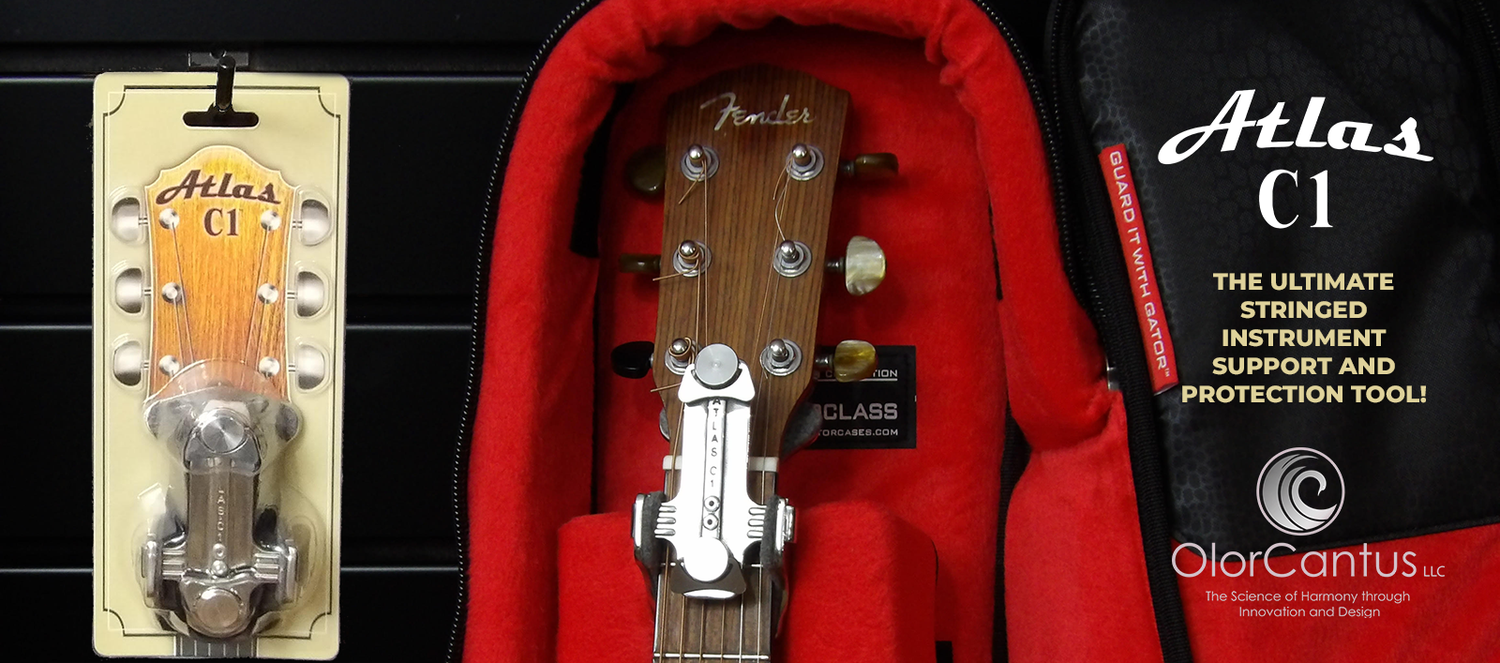
Tools like the Atlas C1 serve a different purpose, they protect during storage and repair, not shipping. But understanding how the Atlas C1 supports the headstock-neck junction illustrates why this area demands protection during transit as well. The junction bears enormous stress from string tension. Any additional impact or vibration during shipping compounds that stress.
Is Professional Guitar Packing Service Worth the Cost
Professional packing services handle double boxing correctly, which matters more than you might think. Improper double boxing, using boxes that are too large, insufficient void fill, or the wrong padding materials, provides a false sense of security. Your guitar arrives damaged, and you discover that the double boxing was poorly executed.
Professional packers understand carrier-specific guidelines. Different carriers have different handling standards and damage thresholds. FedEx, UPS, and specialized music instrument couriers treat packages differently. A professional packing service knows which carrier handles guitars most carefully and packs accordingly. They also know dimensional weight calculations and can advise whether a particular route justifies the cost of professional packing versus DIY double boxing.
The cost of professional packing typically ranges based on guitar value and destination. For guitars, DIY double boxing with proper materials costs in supplies and labor. For guitars, professional packing costs more but includes insurance coordination and carrier selection expertise.
The real question is insurance. If your guitar is insured, professional packing documentation strengthens your claim. If your guitar is uninsured, professional packing is essential, it's your only recourse if damage occurs. For valuable vintage instruments or irreplaceable guitars, professional packing is not optional.
Common mistake: assuming that paying for expedited shipping eliminates the need for proper packing. Expedited service means faster transit, not gentler handling. A guitar packed poorly arrives damaged faster. Packing quality and shipping speed are independent variables.
Proper Packing Materials and Supplies
Double boxing requires specific materials that provide both cushioning and structural support. Standard packing peanuts work, but they settle over time and leave gaps. Crumpled kraft paper is more stable and environmentally preferable. Bubble wrap protects against punctures and provides shock absorption.
The boxes themselves matter. Use double-wall corrugated cardboard for both the inner and outer boxes. Single-wall cardboard lacks crush resistance. The inner box should be slightly larger than the hard shell case, typically 2-3 inches of space on all sides. The outer box should be 4-6 inches larger than the inner box, creating an air gap for shock absorption.
Kraft tape (gummed paper tape) is superior to plastic packing tape for structural integrity. Kraft tape bonds to cardboard, creating a unified structure. Plastic tape slides across cardboard surfaces and fails under stress. Use kraft tape for all seams, both inside and outside the boxes.
Void fill material prevents internal movement. Fill the space between the case and inner box completely, leaving no gaps. Use 2-3 inches of void fill between the inner and outer boxes. Compressed void fill loses effectiveness, fill loosely so the material can compress and absorb impact.
Moisture barriers protect against humidity and rain. A simple plastic sheet between the two boxes prevents water from migrating inward if the outer box gets wet. This is especially important for guitars with valuable finishes or vintage instruments where moisture damage is irreversible.
Labeling matters for logistics. Mark the package "FRAGILE, MUSICAL INSTRUMENT" on multiple sides. Include "THIS SIDE UP" arrows if the guitar is oriented vertically. Add tracking information clearly. Carriers with clear labeling handle packages more carefully because the label signals that contents are valuable and breakable.
Carrier Liability, Insurance, and Damage Claims
Carrier liability is not the same as insurance. Carriers limit liability based on weight and shipping class. A guitar shipped ground via UPS has a liability cap of $100 per pound, regardless of its actual value. A guitar weighing 8 pounds receives only $800 in coverage.
Shipping insurance is separate and essential for valuable instruments. Declare the full replacement value when purchasing insurance. Provide documentation of value, purchase receipts, appraisals, or photos. Insurance covers the declared value if the guitar arrives damaged.
Damage claims require evidence. Take photos of the guitar before packing, showing its condition. Document the packing process, photos of the double-box setup, materials used, and sealed boxes. When the guitar arrives, inspect it immediately and photograph any damage before removing it from the box. If damage occurred, file a claim within the carrier's specified timeframe (usually 30 days).
Carriers investigate damage claims by examining the box condition. If the outer box shows no damage but the guitar inside is damaged, the carrier may deny the claim, arguing that the damage was pre-existing. This is why documentation matters. Photos showing the guitar in perfect condition before packing, combined with evidence of proper packing (double boxing, quality materials), strengthen your claim significantly.
Professional packing services often handle claims coordination. They know which carriers honor claims for properly packed instruments and which carriers dispute them. This expertise is valuable when dealing with high-value guitars.
Common mistake: assuming that carrier insurance is sufficient. It's not. Purchase additional insurance through a specialized provider if your guitar exceeds the carrier's liability cap. The cost is minimal compared to potential loss.
Protecting your guitar during shipping requires more than hope. Double boxing vs single boxing for guitars isn't a close call, double boxing provides measurable protection that single boxing cannot match. The headstock-neck junction is vulnerable to the specific stresses of modern logistics: vibration during flight, compression from stacking, and impact from handling.
For touring musicians who transport guitars 100+ days per year, proper shipping protection is non-negotiable. For collectors protecting vintage instruments, double boxing is the minimum standard. For casual players shipping occasionally, double boxing is still the right choice because the cost difference is small compared to the risk of permanent damage.
Beyond shipping, consider how you protect your guitar during storage and daily use. The Atlas C1 provides year-round headstock protection by supporting the vulnerable neck-junction area, preventing the string tension from stressing the joint, and serving as a pre-aligned repair jig if damage ever occurs. Combined with proper shipping practices, the Atlas C1 is a complete protection strategy for your instrument's most critical component. The Atlas C1 offers peace of mind knowing your headstock is supported correctly whether your guitar is in transit, on display, or undergoing repair.
=== FAQ ANSWERS (audit these too, same rules) ===
[1] Q: Is double boxing necessary for shipping a guitar in a hard case? A: Double boxing adds significant protection for valuable or vintage instruments, especially during air freight or long-distance transit. A hard shell case alone provides good structural integrity, but the outer box absorbs impact and protects against crushing, moisture, and rough handling. For guitars, or for instruments with vulnerable headstock angles, double boxing is a worthwhile investment. Standard carriers often recommend it for high-value claims.
[2] Q: What are the risks of single boxing a guitar for transit? A: Single boxing leaves your instrument exposed to crush damage, moisture infiltration, and impact from adjacent cargo. The headstock and neck junction are especially vulnerable to pressure from above. Carriers handle packages roughly, and without an outer protective layer, a single box may not survive rough sorting or stacking. Insurance claims for single-boxed guitars face higher denial rates because carriers argue inadequate packaging contributed to damage.
[3] Q: What materials are required for professional-grade double boxing? A: Professional double boxing uses double-wall corrugated cardboard for both inner and outer boxes, with at least 2-3 inches of void fill between them. Bubble wrap, packing peanuts, or foam sheets cushion the guitar inside the inner box. Kraft tape reinforces all seams, and a moisture barrier protects against humidity. The inner box should have shock absorption padding around the headstock and neck. Label placement on the outer box should clearly mark the package as fragile.
[4] Q: How much extra does double boxing add to shipping dimensions and weight? A: Double boxing typically adds 4-6 inches to overall package dimensions and 3-5 pounds to total weight, depending on box construction and void fill density. Dimensional weight calculation by carriers may increase shipping costs compared to single boxing. However, the protection justifies the extra cost for valuable instruments, and many musicians find the investment worthwhile when weighed against potential headstock repair costs or total instrument loss.
Frequently Asked Questions
Is double boxing necessary for shipping a guitar in a hard case?
Double boxing adds significant protection for valuable or vintage instruments, especially during air freight or long-distance transit. A hard shell case alone provides good structural integrity, but the outer box absorbs impact and protects against crushing, moisture, and rough handling. For guitars, or for instruments with vulnerable headstock angles, double boxing is a worthwhile investment. Standard carriers often recommend it for high-value claims.
What are the risks of single boxing a guitar for transit?
Single boxing leaves your instrument exposed to crush damage, moisture infiltration, and impact from adjacent cargo. The headstock and neck junction are especially vulnerable to pressure from above. Carriers handle packages roughly, and without an outer protective layer, a single box may not survive rough sorting or stacking. Insurance claims for single-boxed guitars face higher denial rates because carriers argue inadequate packaging contributed to damage.
What materials are required for professional-grade double boxing?
Professional double boxing uses double-wall corrugated cardboard for both inner and outer boxes, with at least 2-3 inches of void fill between them. Bubble wrap, packing peanuts, or foam sheets cushion the guitar inside the inner box. Kraft tape reinforces all seams, and a moisture barrier protects against humidity. The inner box should have shock absorption padding around the headstock and neck. Label placement on the outer box should clearly mark the package as fragile.
How much extra does double boxing add to shipping dimensions and weight?
Double boxing typically adds 4-6 inches to overall package dimensions and 3-5 pounds to total weight, depending on box construction and void fill density. Dimensional weight calculation by carriers may increase shipping costs compared to single boxing. However, the protection justifies the extra cost for valuable instruments, and many musicians find the investment worthwhile when weighed against potential headstock repair costs or total instrument loss.
This article was written using GrandRanker