
Table of Contents
- Why Shipping Guitars Safely Demands More Than a Good Case
- How to Prevent Headstock Damage During Shipping
- Step-by-Step: How to Pack a Guitar for Shipping
- Best Shipping Carriers for Musical Instruments
- Guitar Shipping Insurance Cost and Coverage Options
- The Best Way to Ship Guitars Safely: Common Mistakes to Avoid
- Conclusion
Last Updated: August 23, 2026
Shipping a guitar without proper preparation reliably results in cracked headstocks, broken neck joints, or instruments worth half their original value. Safe guitar shipping requires precision at every stage: the right case, packing method, carrier, and protection at vulnerable points. This guide from Atlas C1 breaks down exactly what that looks like, from the most common failure point to insurance decisions that protect your investment.
Most guides focus on the outer box. That's the wrong place to start.
The real danger in shipping a guitar isn't rough handling on a conveyor belt. It's the physics happening inside the case before the box even gets loaded onto a truck.
Why Shipping Guitars Safely Demands More Than a Good Case
A hardshell case is necessary, but it's not sufficient. The case protects against outside impact but doesn't address what happens to the instrument inside when that impact occurs.
Guitars are under constant tension. The strings pull against the bridge and tuning machines, concentrating forces at the headstock-neck junction. During shipping, when a package is dropped or jolted, that tension transfers directly through the neck to the most structurally vulnerable point on the instrument. A good case keeps the body from rattling but does almost nothing to prevent the headstock from snapping forward under shock loading.
Professional touring musicians and collectors treat the case as the first layer of protection, not the only layer. The case goes inside a well-padded outer box, and before any of that, the headstock-neck junction gets addressed directly.
How to Prevent Headstock Damage During Shipping
Preventing headstock damage starts with understanding why it happens. The headstock is the most frequently broken part of any guitar during transit due to structural vulnerability, not accident.
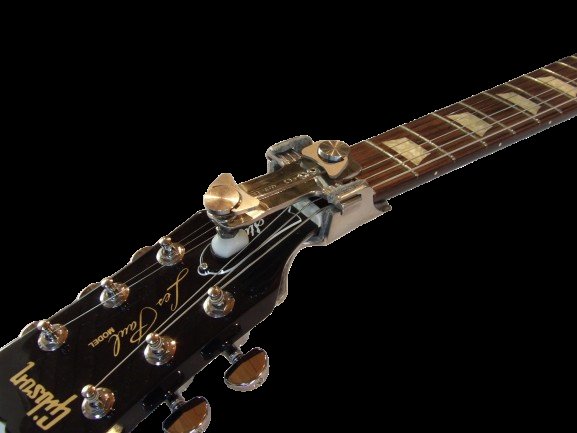
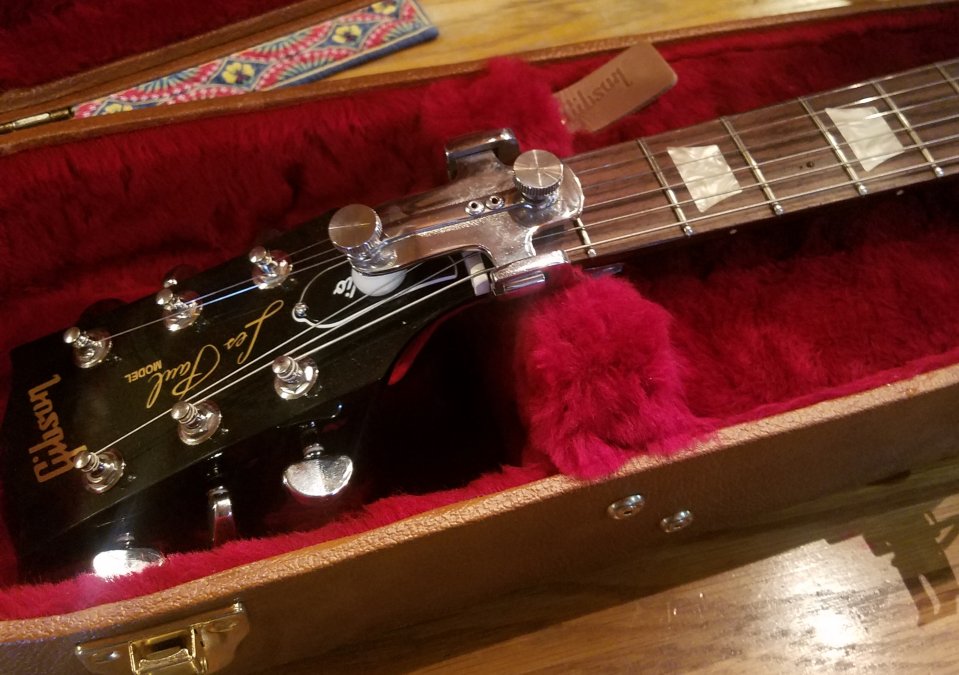
Close-up of a guitar headstock secured inside an open hardshell case, with the Atlas C1 device attached at the neck-headstock junction, surrounded by dense foam padding on a wooden workshop table under warm overhead lighting
The Headstock-Neck Junction: The Most Vulnerable Point
The headstock-neck junction is where the neck transitions to the headstock, typically at an angle on Gibson-style instruments and shallower on Fender designs. On angled headstocks, this junction experiences the most mechanical stress because string tension pulls in two directions simultaneously: down toward the body and back toward the tuning machines.
When a guitar case receives sharp impact, the headstock swings forward. The case interior provides no meaningful resistance to that rotational force. The wood at the junction, already under tension, cracks or breaks cleanly through. Repairs are always expensive and always avoidable.
The fix isn't more bubble wrap. Bubble wrap compresses under load and provides no structural support. What's needed is a device that supports the junction itself, countering the forces that cause the break.
How the Atlas C1 Addresses the Problem
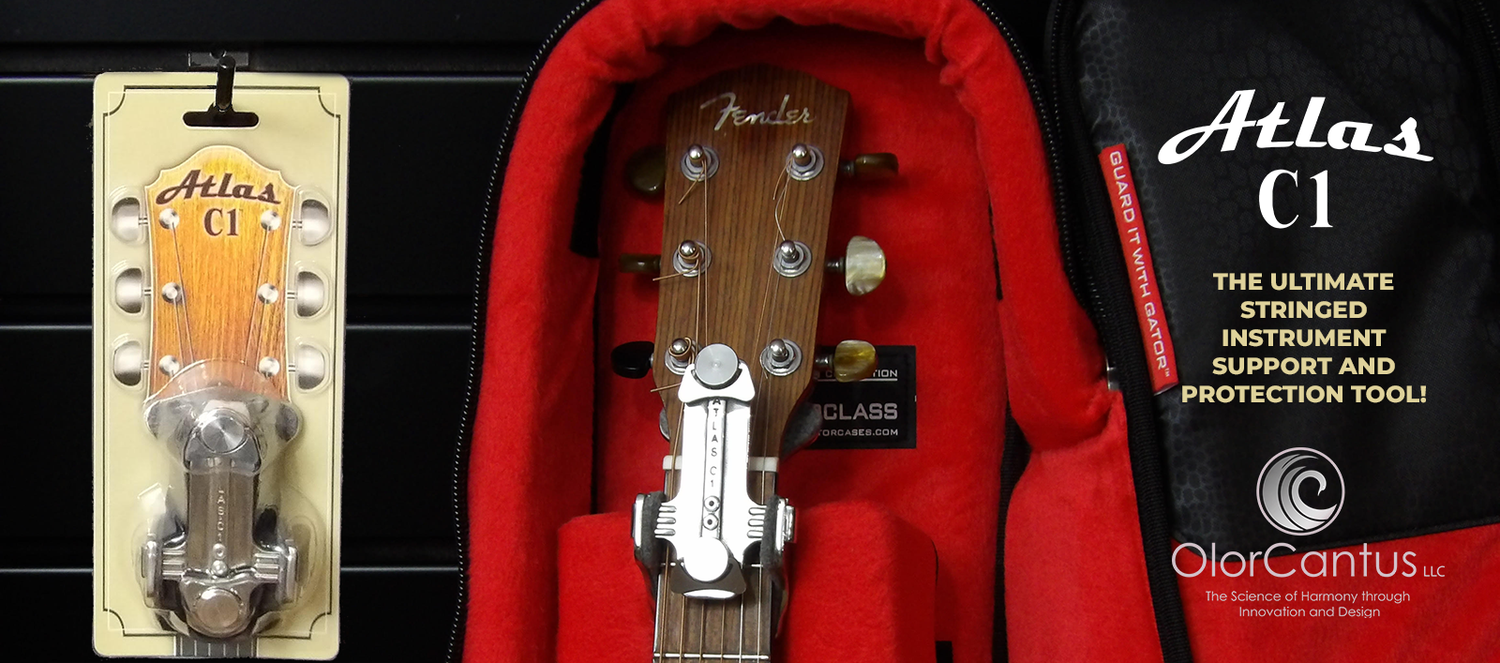
The Atlas C1 is a precision-engineered headstock support tool designed specifically for this failure point. It attaches at the headstock-neck junction and provides direct mechanical support, counteracting more than 130 pounds of string pressure tension that concentrate at that location during shipping stress (peer-reviewed research).
The design uses a 7mm thick cowhide leather fret pad mounted on an anti-compression spring steel base, with folding butterfly torque screws that secure it firmly without damaging the instrument's finish. The low-profile construction fits inside standard hardshell cases without modification. It's a U.S. patent-protected design received in 2019 and has been used by professional touring musicians. It's available at Guitar Center for players who want to evaluate it in person.
The Atlas C1 doubles as a pre-aligned repair jig for headstock breaks, meaning the same tool meant to prevent damage can assist in repair if a break occurs.
Step-by-Step: How to Pack a Guitar for Shipping
Packing a guitar for shipping correctly takes 20-30 minutes done properly. Rushing this process is the most common mistake.
Inside the Case
Start by loosening the strings two to three half-steps. This reduces tension at the headstock-neck junction without letting the neck shift completely slack. Install the Atlas C1 at the headstock-neck junction before closing the case.
Fill any void space inside the case with soft packing material. The guitar should not move when the case is closed and shaken gently. Pay particular attention to the headstock area, body cavity, and neck pocket to ensure proper support.
If shipping to a different climate, include a humidity control packet inside the case. Boveda's 2-way humidity control packets maintain relative humidity between 40% and 60% and help prevent cracking or warping caused by climate changes during transit.
Close and latch the case. Test it by picking it up, turning it sideways, and shaking it. Nothing should move.
The Outer Box
The case goes into a corrugated cardboard shipping box with a minimum 275 lb. test strength. Purpose-built guitar shipping boxes from Uline are sized for specific guitar types: electric, acoustic, and bass models each have appropriate dimensions.
Line the bottom of the outer box with at least 3 inches of packing material before placing the case inside. Surround all four sides with equal depth of packing material. Add at least 3 inches on top before closing.
A musician in a well-lit home studio carefully lowering a guitar in a hardshell case into a large corrugated cardboard shipping box on a wooden table, with rolls of bubble wrap, packing tape, and foam padding arranged nearby
Packing Stage |
Action |
Key Requirement |
|---|---|---|
String tension |
Loosen 2-3 half-steps |
Reduces junction stress |
Headstock support |
Install Atlas C1 |
Mechanical support at junction |
Case interior |
Fill all void space |
No movement when shaken |
Humidity |
Add control packet |
40-60% RH maintained |
Outer box |
275 lb. test minimum |
Purpose-built dimensions |
Buffer layer |
3 inches on all sides |
Even distribution around case |
Seal the outer box with reinforced packing tape along all seams and edges. Label the package clearly with "Fragile - Musical Instrument" on at least two sides.
Best Shipping Carriers for Musical Instruments
The best shipping carriers for musical instruments are those that offer declared value coverage, trackable service, and consistent handling protocols. No carrier guarantees damage-free delivery, which is why packing correctly matters more than carrier selection alone.
FedEx and UPS are the most commonly used carriers for instrument shipping. Both offer ground and air services, trackable delivery, and declared value coverage up to specified limits. FedEx has historically been preferred among professional musicians and dealers for domestic shipping due to its handling reputation and claims process. UPS offers comparable service and is often competitive on pricing.
USPS Priority Mail is a lower-cost option for lighter instruments, but declared value coverage is limited and the claims process is slower. For high-value instruments, most professionals avoid USPS.
Ground vs. Air: Which Is Safer for a Guitar?
Ground shipping is generally safer for guitars than air freight. Air cargo holds experience significant pressure changes and temperature swings, and airport loading tends to be faster and less careful than ground sorting facilities. Ground shipping also allows more predictable transit times, reducing handling events.
Air shipping is appropriate when time is critical, such as getting an instrument to a tour date. In those cases, packing protocol becomes even more important, and insurance coverage should be confirmed before shipping.
As documented in UPS's guidelines for shipping musical instruments, carriers have specific packaging requirements that must be met for damage claims to be honored. Failing to pack to carrier standards can void your ability to collect on a claim.
Guitar Shipping Insurance Cost and Coverage Options
Guitar shipping insurance cost and coverage options vary depending on declared instrument value, the carrier, and whether you use a third-party insurer.
Every major carrier offers declared value coverage, but this is not insurance. Declared value coverage is a liability cap, not a replacement guarantee. For instruments worth more than a few hundred dollars, third-party instrument insurance is worth evaluating. Policies through specialty music instrument insurers cover transit damage, theft, and accidental damage in ways that carrier liability programs do not.
Key factors that affect guitar shipping insurance cost:
- Declared instrument value: Higher-value instruments cost more to insure
- Coverage type: Transit-only coverage costs less than all-risk policies
- Deductible: Higher deductibles reduce premiums
- Documentation: Appraisals, receipts, and photographs are required for claims on high-value instruments
For vintage or high-value guitars, the National Association of Music Merchants' guidance on instrument valuation and insurance recommends maintaining current appraisals and photographing instruments in detail before shipping. This documentation is what makes or breaks a claim.
Homeowner's or renter's insurance typically has low sublimits for musical instruments and excludes transit damage entirely. Verify your coverage before shipping anything irreplaceable.
The Best Way to Ship Guitars Safely: Common Mistakes to Avoid
The best way to ship guitars safely is undermined most often not by bad luck but by specific, repeatable mistakes.
Skipping the headstock support. This is the single most consequential omission. The physics don't change; the probability just catches up eventually.
Using the wrong outer box. A guitar case inside a box that's too large will shift during transit. A box that's too small will transfer impact directly to the case.
Insufficient void fill. Three inches of packing material on all sides is the minimum, not the target.
Not loosening the strings. Full string tension at the headstock-neck junction during impact is a reliable way to cause a break. Two to three half-steps takes 30 seconds and meaningfully reduces force at the vulnerable point.
Relying on carrier liability instead of real insurance. Carrier declared value programs are designed to limit payout. For any instrument worth more than a few hundred dollars, third-party coverage is appropriate.
Shipping in a gig bag. Gig bags compress under load and offer no protection against stacking weight or sharp impacts. A hardshell case is the baseline requirement.
Not photographing the instrument before shipping. Without pre-shipment documentation, a damage claim is nearly impossible to substantiate. Photograph the guitar from multiple angles before sealing the outer box.
The pattern behind these mistakes is the same: players treat shipping as a logistics problem when it's actually an engineering problem. Addressing stress systematically, from the headstock junction outward, is what separates a guitar that arrives intact from one that needs a luthier.
Shipping a valuable guitar without proper preparation is a risk that compounds with every transit event. The Atlas C1 addresses the most critical failure point directly: the headstock-neck junction, where string tension and shipping shock combine to cause the majority of instrument damage. With a U.S. patent-protected design that counteracts more than 130 pounds of string pressure tension, doubles as a pre-aligned repair jig, and fits inside standard hardshell cases, it's the one piece of preparation that most packing guides overlook entirely. Visit Atlas C1 to get started and protect your instrument before the next shipment.
Frequently Asked Questions
How do you pack a guitar for shipping without a hard case?
Without a hard case, your guitar is at serious risk. At minimum, loosen the strings slightly, wrap the headstock and body in at least two layers of bubble wrap, and stuff the interior of a sturdy gig bag with foam or crumpled packing paper to prevent movement. Place that inside a purpose-built guitar shipping box with at least 2 inches of foam or packing peanuts on all sides. This approach reduces risk but does not eliminate it — a hard case inside a double-box remains the safest method to ship guitars safely.
Should I loosen the strings before shipping a guitar?
Yes, loosen the strings by roughly two to three half-steps before shipping. This reduces neck tension without fully detuning, which can cause the neck to shift. On guitars with angled headstocks — such as Gibson-style instruments — the headstock-neck junction is already under stress from string tension. Reducing that load before transit lowers the chance of a break if the case takes an impact. Adding a headstock support tool like the Atlas C1 addresses the remaining structural vulnerability that string loosening alone cannot fix.
What is the safest carrier for shipping musical instruments?
No single carrier guarantees damage-free delivery, but among the major options, FedEx and UPS are widely preferred by musicians and guitar dealers for domestic ground shipping because they offer declared value coverage and have established handling protocols. USPS Priority Mail can work for lighter instruments but offers less robust coverage for high-value items. For vintage or high-value guitars, specialized instrument shipping services or freight brokers with instrument experience are worth the added cost. Always confirm declared value limits before booking.
How much does guitar shipping insurance cost?
Guitar shipping insurance cost varies based on the instrument's declared value, the carrier, and whether you use a third-party insurer. Carrier-declared value add-ons typically charge around $1 per $100 of coverage, though limits and claim processes differ by company. Third-party insurers such as those specializing in musical instruments often provide broader coverage, including for transit and storage. For vintage or high-value instruments, a standalone instrument insurance policy may offer better protection than per-shipment carrier coverage.
Do I need to insure my guitar when shipping?
For any guitar worth more than a few hundred dollars, insurance is strongly recommended. Standard carrier liability covers only a fraction of most instruments' actual value, and claims are frequently denied if packaging is deemed inadequate. Declaring full value and purchasing additional coverage — or using a dedicated instrument insurer — protects your investment. Keep receipts, appraisals, and photos of the guitar and packaging before you ship. These documents are essential if you need to file a claim.
How do I prevent headstock damage during transit?
Headstock breaks are the most common shipping injury for guitars, particularly on instruments with angled headstock designs. The neck-headstock junction concentrates impact force, and even a padded case may not absorb a sharp drop. To prevent damage: loosen strings before shipping, add a dedicated headstock support tool like the Atlas C1 to brace the junction, pack the case interior so the guitar cannot shift, and double-box with at least 2 inches of foam between the case and the outer box. Proper bracing at the headstock is the single most impactful step.
This article was written using GrandRanker