
Table of Contents
- The Real Cost of a Headstock Break
- Why Guitar Headstock Support Is Necessary for Angled Necks
- What Actually Happens Inside Your Guitar Case
- Preventing Guitar Neck Damage During Travel and Storage
- Beyond Protection: Using a Guitar Headstock Repair Jig
- How to Choose the Right Support System
- Conclusion
- Frequently Asked Questions
Last Updated: September 9, 2026
Every guitarist has seen the photo: a beloved Les Paul or SG lying on a workbench with a clean break where the headstock meets the neck. The question of whether guitar headstock support is really necessary usually comes up after that photo is taken, not before. The short answer is yes: if you own a guitar with an angled headstock, dedicated support is not an accessory, it is the difference between a lifetime instrument and a costly repair. Below, we'll break down the physics of why headstocks break, what happens inside your case during travel, and how to choose the right protection system.
The Real Cost of a Headstock Break
A headstock fracture is one of the most common and most expensive repairs in the guitar world. When a Gibson-style guitar falls over or takes an impact in transit, the headstock can snap cleanly at the neck joint, a repair that many luthiers describe as routine but never cheap. The labor alone involves careful gluing, clamping, and often refinishing, and the structural integrity of the instrument is never quite the same afterward.
Beyond the repair bill, consider the intangibles. A vintage instrument with a repaired headstock loses significant collector value, and even a well-executed repair changes the instrument's resonance and sustain. For working musicians, a broken headstock means missed gigs and studio time while the guitar sits in the shop.
Preventative maintenance is always cheaper than repair. A quality support system costs a fraction of what a single headstock repair runs, and it protects the instrument every single day, not just when you remember to be careful.

Why Guitar Headstock Support Is Necessary for Angled Necks
Guitar headstock support is necessary because of basic geometry. On guitars with angled headstocks, the headstock tilts back from the neck at roughly 14 to 17 degrees, which creates a natural weak point at the junction. This design gives the strings proper downward pressure across the nut, but it also means the headstock acts as a lever, concentrating any impact force directly onto the neck joint.
The string tension itself is a constant factor. A set of strings exerts over 130 pounds of pull on the headstock, and when the guitar is hanging or resting with the headstock unsupported, that tension works against the joint rather than with it. Proper support counteracts this pressure by cradling the neck and headstock in a neutral position.
Gibson-Style vs. Fender-Style Headstocks
Not every guitar faces the same risk. Fender-style headstocks are cut from a single piece of maple with a straight grain line, making them far more resistant to impact damage. Gibson-style headstocks, by contrast, are typically glued onto the neck at an angle, creating a joint that is inherently more vulnerable to fractures.
This distinction matters for your support strategy. If you own a Stratocaster or Telecaster, the risk profile is lower, and basic padding in a case may be sufficient. If you own a Les Paul, SG, or any guitar with an angled, glued headstock, dedicated support should be non-negotiable, especially during transport.
What Actually Happens Inside Your Guitar Case
Most guitarists assume that a hard case provides complete protection. The reality is more complicated. Inside a standard case, the guitar rests on its back with the neck supported at the heel and the headstock often left hanging in open space. During transit, the guitar shifts, and the headstock can impact the case interior with surprising force.
The physics are unforgiving. A sudden stop in a car or a rough baggage handler can generate forces several times the weight of the guitar, and that energy has nowhere to go except through the neck joint. Case manufacturers add padding, but the headstock area is frequently under-supported, leaving the most vulnerable part of the instrument exposed.
Transportation risks are highest for touring musicians who fly or travel by bus regularly. A guitar that survives fifty flights can break on the fifty-first, and the damage is almost always at the headstock. Support systems that fill the void around the headstock and distribute pressure evenly are the only reliable defense against this kind of impact damage.
Preventing Guitar Neck Damage During Travel and Storage
Preventing guitar neck damage during travel starts with understanding the two main threats: impact and sustained pressure. Impact damage comes from drops, bumps, and rough handling. Sustained pressure comes from improper storage, like leaning a guitar against a wall where it can slowly shift, or leaving it in a case where the neck is bent or the headstock is bearing weight.
Safe storage practices are straightforward. Always store guitars in a case or on a proper wall hanger that supports the neck, never leaning against furniture where they can fall. Control humidity in the storage area, since wood that dries out becomes more brittle and more prone to cracking. And for long-term storage, loosen the strings slightly to reduce tension on the neck joint.
For travel, the rules are similar but stricter. Use a hard case rated for airline travel. Pack the case tightly so the guitar cannot shift inside. And consider adding headstock support that cradles the neck and prevents movement, especially for angled-headstock guitars. The guitar case support you choose should be made of non-reactive materials that will not damage nitrocellulose finishes, which are common on vintage and higher-end instruments.
Beyond Protection: Using a Guitar Headstock Repair Jig
If the damage is already done, a guitar headstock repair jig becomes essential. Professional headstock repairs require precise alignment of the broken pieces before clamping, and getting that alignment wrong can leave the guitar with a permanent neck angle issue or poor tuning stability.
A quality repair jig holds the headstock and neck in the correct alignment while the glue cures, eliminating the guesswork that plagues DIY repairs. The best designs are pre-aligned, meaning the jig itself establishes the proper geometry without requiring the user to measure and adjust. This makes the difference between a repair that holds for decades and one that fails under string tension.
For the hobbyist, a repair jig opens the door to fixing minor cracks before they become major breaks. For the professional luthier, it speeds up bench work and improves consistency across repairs. The same tool that protects your guitar during travel can also serve as your repair setup when accidents happen.

How to Choose the Right Support System
Choosing the right support system comes down to three factors: the type of guitar you own, how you transport it, and whether you need repair capability. A casual player who keeps a guitar at home may only need basic case padding. A touring musician with a vintage Les Paul needs a system that provides genuine structural support during every flight and bus ride.
Material science matters more than most guides acknowledge. The support surface should be cork or a similar soft, non-reactive material that will not interact with nitrocellulose finishes. Many guitar finishes are sensitive to certain plastics and foams, which can cause clouding or discoloration over time. A support system that damages your finish while protecting your headstock is a poor trade.
Consider the support geometry as well. The best systems cradle both the neck and the headstock, distributing pressure across a wide area rather than concentrating it at a single point. This prevents the gravity-based stress that builds up when a guitar rests unsupported for long periods.
| Support Type | Best For | Key Consideration |
|---|---|---|
| Case padding only | Casual players, home storage | Limited protection during impact |
| Wall hanger | Home display, easy access | Must support neck, not just headstock |
| Dedicated headstock support | Touring musicians, angled-headstock guitars | Counteracts string tension, prevents movement |
| Multi-function support tool | Professionals, vintage owners | Doubles as repair jig for headstock fractures |
Conclusion
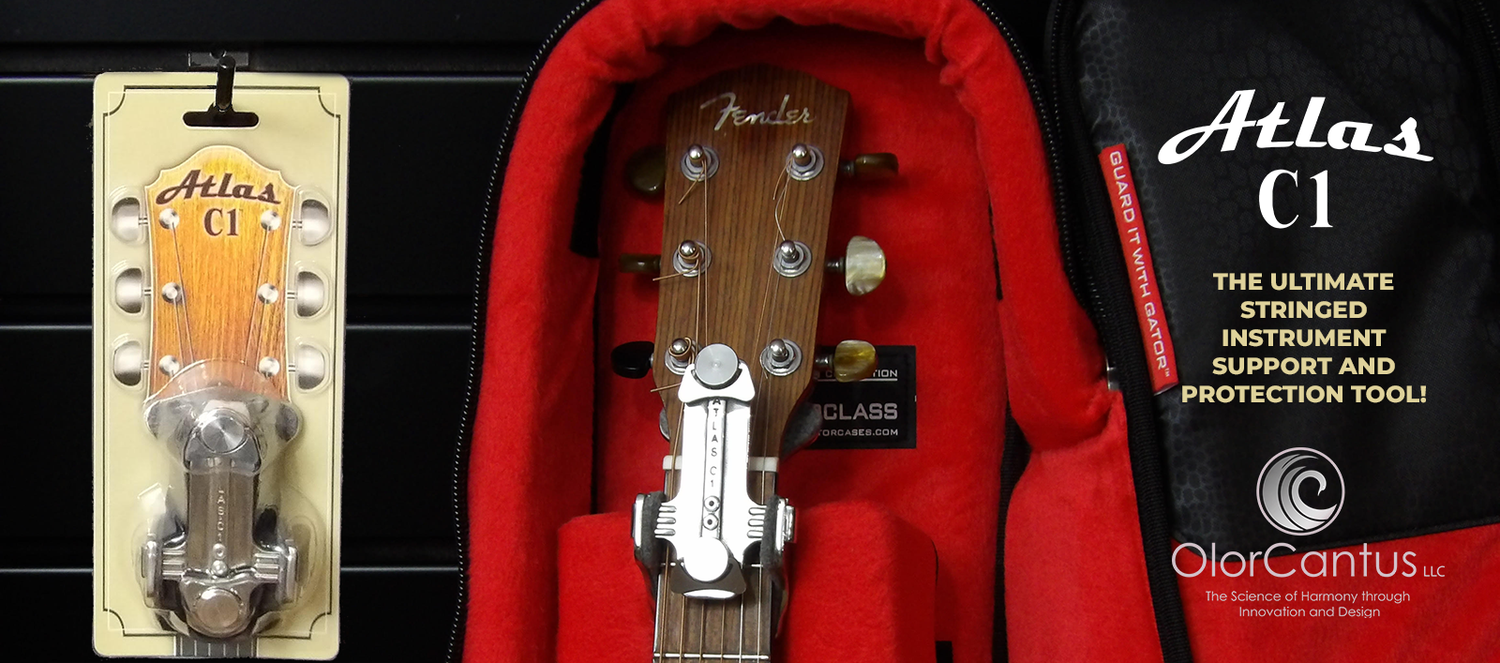
The question of whether guitar headstock support is really necessary has a clear answer: for anyone with an angled-headstock guitar, it is essential. The cost of prevention is minimal compared to the expense of a headstock repair, the loss of collector value on vintage instruments, and the downtime when your main guitar is in the shop. The Atlas C1 is a precision-engineered, universal multi-function tool that targets and protects the vulnerable headstock-neck junction, counteracting over 130 pounds of string pressure tension during travel, shipping, or storage. It doubles as a pre-aligned repair jig, simplifying the process of fixing common headstock breaks, making it a lifetime-use investment for any guitarist. Get started with Atlas C1 and protect your instrument before the break happens, not after.
Frequently Asked Questions
Is it bad to hang a guitar by its headstock?
For guitars with angled headstocks, like many Gibson models, hanging by the headstock can be risky. The constant leverage from the guitar's body weight applies sustained pressure to the neck joint, which can lead to warping or a headstock fracture over time. While a well-made wall hanger distributes the load, the safest approach for these instruments is to store them in a case with proper neck support. Straight headstock designs, like those on most Fenders, handle hanging better, but no guitar benefits from unnecessary stress.
Can a guitar headstock repair jig be used by someone without luthier experience?
Yes, a pre-aligned guitar headstock repair jig is designed to simplify the repair process by holding the broken pieces in perfect alignment while the glue sets. This removes the guesswork of manual clamping, which is the hardest part for a novice. The Atlas C1, for example, acts as both a protective tool and a repair jig. You still need to apply glue correctly and follow the instructions, but the jig handles the critical alignment, making a successful repair far more achievable for a first-timer.
Do Fender-style guitars with straight headstocks need the same level of support?
Straight headstocks are less prone to the classic snap that affects angled designs, but they are not immune to damage. Impact damage from a fall or a hard knock against a case interior is still a primary cause of neck fractures on all guitar types. While the continuous string tension is less likely to cause a break on a straight headstock, protecting the instrument from impact during travel is still critical. A universal support system offers valuable protection for both angled and straight headstock designs.