
Table of Contents
- The Hard Truth: Why Guitars Break at the Neck
- Is Guitar Neck Protection Necessary for Your Situation?
- How to Protect Angled Guitar Headstocks
- Preventing Guitar Neck Damage During Shipping
- The Guitar Headstock Repair Jig Answer: When Damage Happens
- Common Myths About Neck Protection
- Conclusion: Protect Your Instrument
- Frequently Asked Questions
Last Updated: September 7, 2026
The Hard Truth: Why Guitars Break at the Neck
A guitar's most vulnerable point is the headstock-neck junction, where angled grain direction and high string tension create a structural weak point. When a guitar falls, the headstock absorbs the impact with nowhere to transfer the energy, which is why most catastrophic guitar damage happens there.
This guide from Atlas C1 explains whether guitar neck protection is necessary, who needs it most, and how to safeguard your instrument before an accident happens.
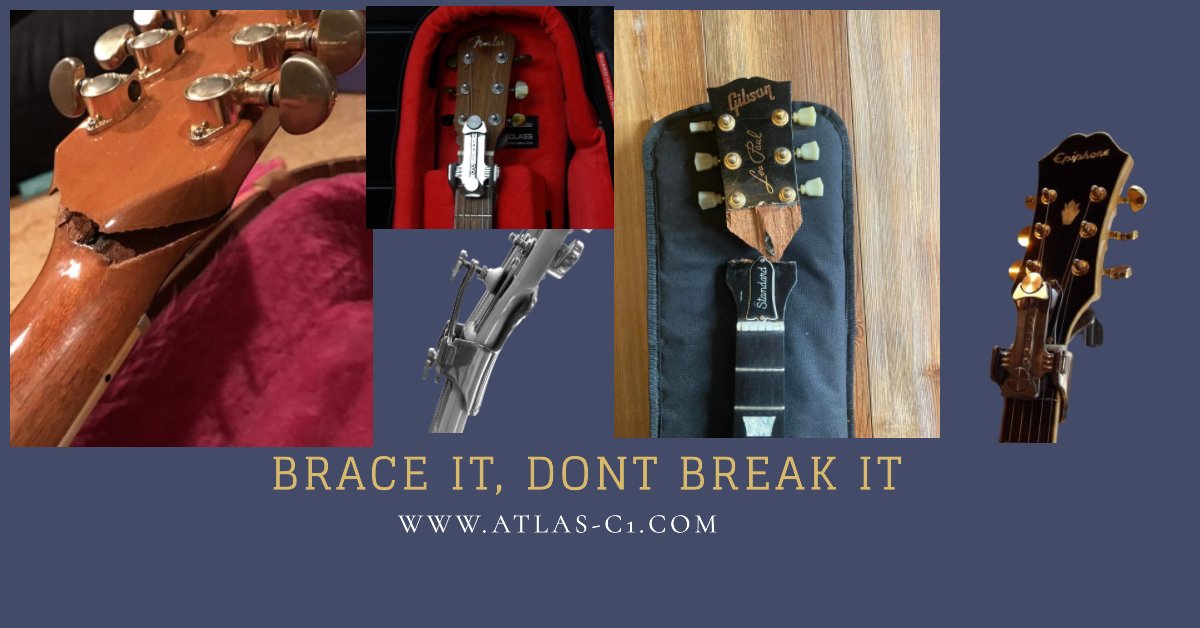
Guitar neck protection is a practical response to a known failure point affecting virtually every stringed instrument. A dropped guitar can release enough kinetic energy to snap a headstock clean off, and even careful players eventually bump a case into a doorframe or knock an instrument off a stand.

Is Guitar Neck Protection Necessary for Your Situation?
Guitar neck protection is necessary whenever your instrument leaves a controlled environment. The question isn't whether breaks happen, but whether you're prepared for the consequences when they do.
Who Needs It Most
Touring musicians who travel 200-plus days a year face the highest risk, with instruments enduring constant loading, temperature shifts, and baggage handling. Collectors with vintage instruments carry an even heavier burden: a single break can reduce a guitar's value by thousands of dollars, regardless of repair quality.
Players with angled headstocks should pay special attention. The angle creates a natural stress point where the headstock meets the neck, and the tension from the strings pulls against that joint constantly. Over time, even minor impacts can compromise the structural integrity of the junction.
When Basic Cases Are Not Enough
A quality hard case protects against bumps and scratches but doesn't address the internal forces that cause headstock breaks. When a cased guitar is dropped, the headstock still snaps from inertia and kinetic energy; the case absorbs external impact but does nothing to support the neck inside.
Case fitment matters too. Many guitars shift slightly inside their cases during transit, and that movement can put pressure on the headstock. A support tool that holds the neck firmly in place eliminates this movement entirely.
How to Protect Angled Guitar Headstocks
Angled headstocks, common on Gibson-style guitars, require a different protection strategy than the straight designs on Fender-style instruments. The break typically occurs where the headstock angles back from the neck, a location experiencing both impact forces and constant string tension.
Bolt-On vs. Set-Neck: Different Weak Points
Understanding the difference between bolt-on and set-neck construction is critical for targeted protection.
- Set-Neck (Gibson-style): The neck is glued into a pocket in the body. The headstock angle is carved into a single piece of wood (or a separate scarf joint). The grain direction changes at the angle, creating a natural stress riser. A drop or hard knock here often results in a clean break right at the angle.
- Bolt-On (Fender-style): The neck is attached to the body with screws and a metal neck plate. While the headstock is less angled, the vulnerability shifts to the neck pocket and the heel. A severe impact can crack the neck pocket or, in extreme cases, snap the neck at the heel. The headstock itself is less prone to the classic 'Gibson break,' but the neck joint is still a critical failure point.
Protection Strategies for Each Design
For angled headstocks, the priority is supporting the headstock itself to prevent it from snapping backward. A support tool placed under the headstock, not just under the neck, is essential. This distributes the force of an impact across the entire neck, rather than concentrating it at the angle.
For bolt-on necks, the focus shifts to immobilizing the neck heel and body joint. A support that cradles the neck at the body joint prevents the leverage that can crack the pocket. While a headstock support is still helpful for tuning stability, the primary structural concern is the heel.
The Hidden Danger of String Tension
String changing presents a hidden danger for both designs. Removing all six strings releases normal tension, stressing the glued joint on a set-neck or allowing the neck to move in the pocket on a bolt-on.
Change strings one at a time when possible. This maintains constant tension on the neck and prevents the wood from 'relaxing' and then suddenly being re-stressed. Always support the headstock during the process, especially for angled designs.
Finish-Safe Material Selection
Material safety is a critical, often-overlooked aspect of neck protection. DIY solutions like yoga blocks or rolled towels can damage your guitar's finish. Nitrocellulose lacquer, common on vintage and higher-end instruments, is particularly sensitive; plasticizers in synthetic rubber or certain foams can cause it to soften, cloud, or melt.
When choosing any padding or support that will contact the neck or headstock, look for materials that are inert and non-reactive. Open-cell foam, felt, or cork are generally safe. Avoid PVC, silicone, and rubber-based products unless they are specifically marketed as 'finish-safe' for nitrocellulose. A simple test: place the material against the finish in an inconspicuous spot for 24 hours and check for any reaction.
Luthier-Recommended Checks
Luthiers recommend checking the truss rod and neck angle regularly, especially before long trips. A neck that's already under stress from improper adjustment is more susceptible to damage. For set-neck guitars, inspect the heel joint for any hairline cracks. For bolt-on necks, ensure the neck plate screws are snug but not over-torqued. Regular setup and maintenance catch these issues before they become catastrophic failures.
Preventing Guitar Neck Damage During Shipping
Shipping a guitar adds risks beyond personal transport. Package handlers aren't careful, and the box will be dropped, stacked, and compressed. Guitar neck damage during shipping is one of the most common claims filed by musicians and dealers, but the environmental journey can be just as damaging as physical impact.
The Climate Factor: Humidity and Wood Movement
Wood is hygroscopic, absorbing and releasing moisture from the air. When a guitar ships from a humid region to a dry one, the wood undergoes significant dimensional changes, a neck perfectly straight in Nashville can develop a back-bow or twist after a week in a dry Arizona warehouse.
The critical issue is the speed of change. A guitar suddenly subjected to a 30% relative humidity swing in a cargo hold experiences rapid moisture loss from the end grain, causing uneven contraction that stresses the neck joint and fretboard glue joint.
Guidance from the Guitar Foundation of America on instrument care emphasizes that sudden humidity changes stress the neck and headstock joint. This is why the 'acclimation period' is not just a nicety, it's a structural necessity.
The 40-50% Relative Humidity Rule
A stable environment between 40% and 50% relative humidity is generally considered the safe zone for guitars. When shipping, you can't control the entire journey, but you can control the immediate environment.
- Use a humidistat: Place a small, calibrated hygrometer inside the case to monitor conditions.
- Case humidifiers: For dry destinations, use a case humidifier that releases moisture gradually. For humid destinations, use desiccant packs to absorb excess moisture.
- Sealed bags: For long-term storage or shipping, some luthiers recommend placing the guitar in a sealed plastic bag with a controlled humidity pack (like a Boveda pack designed for instruments) before putting it in the case. This creates a microclimate that buffers against external swings.
Physical Immobilization: The Non-Negotiable
Beyond climate, the key to safe shipping is immobilization. A guitar that can shift inside its case during transit is at risk. Support the headstock so it cannot move, and ensure the case fits snugly inside the shipping box with adequate cushioning on all sides.
The case should not be the outer shipping container. A hard case inside a cardboard box with at least two inches of foam or bubble wrap on all sides is the minimum standard. The case protects against impact; the box protects the case and provides a buffer.
Post-Shipping Protocol
When the guitar arrives, do not open the case immediately if the climate differs significantly. Allow the sealed case to acclimate for 12-24 hours, then let the guitar sit in the open case for a few more hours before playing. Allow several days before making truss rod adjustments, the neck needs time to stabilize.
For high-value instruments, consider shipping insurance covering transit damage. Most carriers offer declared value coverage, but filing a claim is far more painful than preventing damage. Document the instrument's condition with photos before shipping and keep all packaging materials until the claim window passes.
The Guitar Headstock Repair Jig Answer: When Damage Happens
Despite best efforts, headstock breaks happen, and repair quality determines whether the guitar survives. Proper repair requires precise alignment of the broken pieces, which is where a repair jig becomes essential.
A guitar headstock repair jig holds broken pieces in perfect alignment while glue cures. Without one, even an experienced luthier struggles to maintain correct angle and position during drying. Misalignment creates tuning stability issues that persist long after the glue sets.
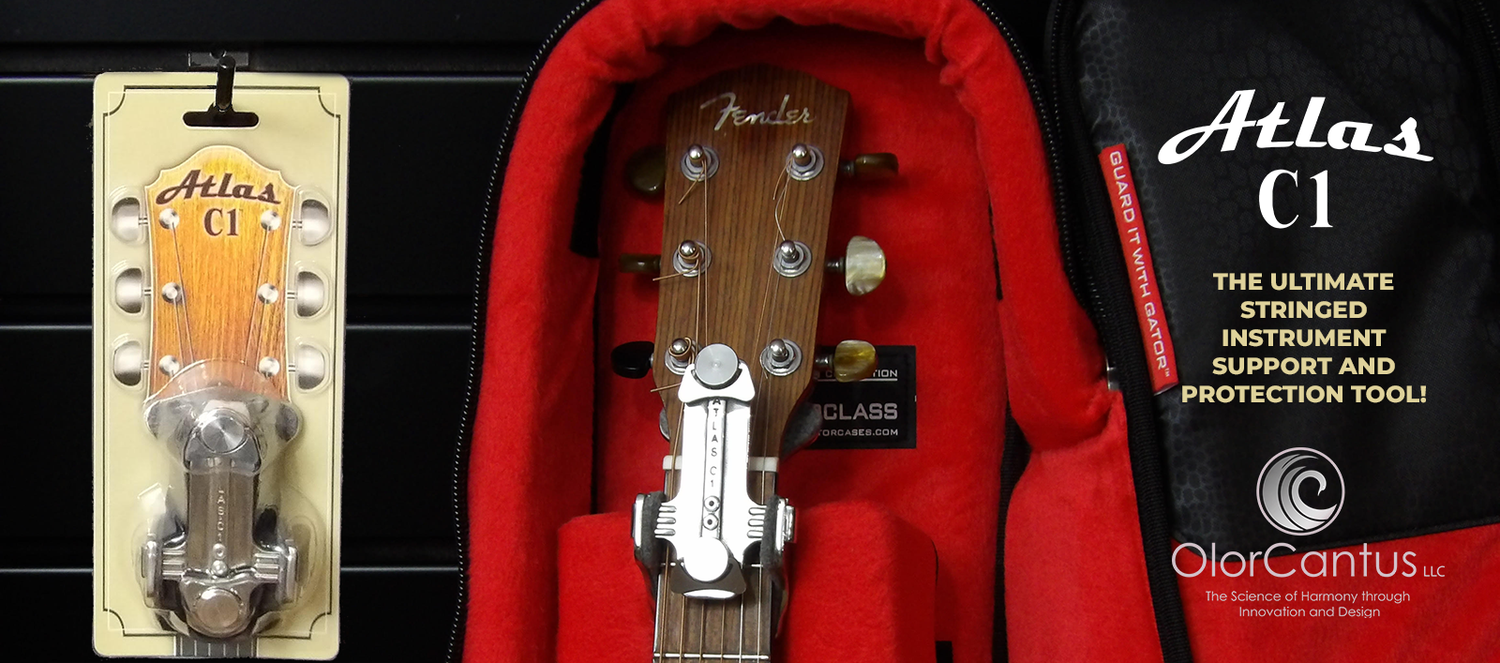
The Atlas-C1 addresses both sides of this problem. As a protection tool, it supports the headstock during travel and storage. When damage does occur, the same device converts into a pre-aligned repair jig that simplifies the process of fixing common headstock breaks. This dual function makes it an essential, lifetime-use investment.
The repair process itself follows a straightforward sequence:
- Clean the break surfaces and remove any debris
- Apply wood glue to both sides of the fracture
- Position the pieces using the repair jig for alignment
- Clamp and allow 24 hours for the glue to fully cure
- Remove the jig and check for any gaps or misalignment
Common Myths About Neck Protection
Several misconceptions keep guitarists from taking reasonable precautions. The first is that a hard case is sufficient protection, cases handle external impacts but leave the neck unsupported internally.
Another myth holds that neck protection tools are only for Gibson-style guitars with angled headstocks. While angled designs face higher risk, straight headstocks benefit too, Fenders and Teles can still suffer headstock damage from drops, and tuning stability improves when the neck is held firmly in place.
Some players believe that padding the case is just as effective as a dedicated support tool. Research on instrument storage and structural integrity from the American Federation of Musicians suggests that proper support matters more than cushioning volume. Loose padding can shift during transit, leaving the headstock unprotected exactly when it needs support.
A more dangerous myth is that a repaired headstock is as strong as the original. A well-executed repair restores playability, but the break site remains a potential weak point. Prevention is always preferable.
Conclusion: Protect Your Instrument
The evidence is clear: guitar neck protection is necessary for anyone who values their instrument. Whether you're a touring professional, a collector with vintage pieces, or a weekend player wanting to avoid expensive repairs, supporting the headstock-neck junction should be part of your standard instrument care routine.
Premier Guitar Magazine's coverage of headstock protection tools has featured the Atlas-C1 precisely because it solves a problem every guitarist faces. The tool counteracts the 130-plus pounds of string pressure tension that constantly stress the neck joint, and its U.S. patent-protected design works universally across guitar types.
The Atlas-C1 is a precision-engineered, universal multi-function tool that protects stringed instruments from headstock damage during travel, shipping, or storage. It doubles as a pre-aligned repair jig for fixing common headstock breaks, making it an essential, lifetime-use investment for any guitarist looking to safeguard their valuable gear.
Get started with the Atlas-C1 and protect your instrument before an accident happens. Take advantage of a 10% product discount and free shipping to secure your guitar's safety today.
Frequently Asked Questions
Is guitar neck protection necessary for casual players?
If you only play at home and your guitar stays in a stable environment, the risk is lower. However, guitar neck protection becomes necessary the moment you move the instrument, whether to a gig, a friend's house, or a studio session. Even a simple trip to the car introduces risk. A hard case offers basic protection, but it does not counteract the internal forces that cause headstock breaks during sudden impacts. For casual players, a simple support tool used during transport is a low-cost insurance policy.
How do you prevent guitar headstock breaks during travel?
Preventing guitar neck damage during shipping and travel starts with a properly fitted hard case. The guitar should not shift inside. For angled headstocks, which are more vulnerable, you need dedicated support at the neck joint to absorb shock. Cushioning the case with soft materials is not enough, as it does not address the inertia forces at play. A tool like the Atlas-C1 that supports the headstock junction and counteracts string tension provides a more reliable layer of protection.
Does a guitar neck rest prevent warping?
A neck rest primarily prevents impact damage, not warping. Warping is usually caused by changes in humidity and temperature, which affect the wood's moisture content. While proper support can help maintain a neutral position, it cannot stop the wood from reacting to its environment. To prevent warping, focus on storing the guitar in a case with humidity control, keeping it in a room with a stable climate, and ensuring the truss rod is adjusted correctly.