
Table of Contents
- Elixir Optiweb: Coated Strings That Fight Oxidation
- Thomastik-Infeld Power-Brights: Harmonic Clarity That Lasts
- Rotosound Roto Yellows: Vintage Warmth on a Budget
- Martin Authentic Acoustic: Resonance for Acoustic Players
- GHS Boomers: Punchy Tone for Rock and Metal
- Stringjoy Signatures: Custom Gauges for Unique Tunings
- Curt Mangan Pure Nickel: Hand-Wound Warmth
-
How to Prevent Guitar Headstock Damage During Travel and Storage
- Table of Contents
- Comparison Table: At a Glance
- Elixir Optiweb: Coated Strings That Fight Oxidation
- Thomastik-Infeld Power-Brights: Harmonic Clarity That Lasts
- Rotosound Roto Yellows: Vintage Warmth on a Budget
- Martin Authentic Acoustic: Resonance for Acoustic Players
- GHS Boomers: Punchy Tone for Rock and Metal
- Stringjoy Signatures: Custom Gauges for Unique Tunings
- Curt Mangan Pure Nickel: Hand-Wound Warmth
- How to Prevent Guitar Headstock Damage During Travel and Storage
- The Best Guitar Maintenance Kit for String and Fretboard Care
- Professional Guitar Repair Tools for Headstock Breaks and Setup
- Conclusion
- Frequently Asked Questions
- The Best Guitar Maintenance Kit for String and Fretboard Care
- Professional Guitar Repair Tools for Headstock Breaks and Setup
- Conclusion
- Frequently Asked Questions
Last Updated: September 18, 2026 Alternative for Guitar Care
Players rarely switch string brands for fun. They switch because a set that felt right in the store goes dead two weeks later, or because the same gauge that worked on a studio guitar feels stiff on a touring instrument. research usually starts with one of three complaints: strings tarnish too fast, tone fades before the next gig, or the setup never quite settles.
At Atlas C1, we hear these complaints constantly from touring musicians and collectors who transport guitars by air and bus. String choice is only part of the picture. The headstock-neck junction takes the real beating in transit, and that is where most damage originates.
The eight alternatives below cover coated, pure nickel, hand-wound, and custom-gauge options. Each one solves a different problem, so the right pick depends on your playing style, climate, and how often your guitar leaves the house.
Comparison Table: At a Glance
Brand |
Starting Price |
Material |
Best For |
|---|---|---|---|
Elixir Optiweb |
$15.99/set |
Coated nickel-plated steel |
Longevity and corrosion resistance |
Thomastik-Infeld Power-Brights |
$18.50/set |
High-output alloy |
Harmonic clarity for pros |
Rotosound Roto Yellows |
$7.99/set |
Pure nickel wrap |
Vintage warmth on a budget |
Martin Authentic Acoustic |
$8.99/set |
Tin-plated steel |
Acoustic resonance |
GHS Boomers |
$6.50/set |
Nickel-plated steel |
Rock and metal punch |
Stringjoy Signatures |
$11.90/set |
Pure nickel or nickel-wound |
Custom gauges, unique tunings |
Curt Mangan Pure Nickel |
$9.50/set |
Pure nickel, hex core |
Hand-wound warmth |
Elixir Optiweb: Coated Strings That Fight Oxidation
Oxidation is the quiet killer of string life. Sweat, humidity, and airborne contaminants react with the metal wrap, and the winding process leaves tiny gaps where corrosion takes hold first. Elixir's Optiweb coating addresses this directly by sealing the wrap wire while keeping a feel close to uncoated strings.
The coating matters most for players in humid climates or anyone who sweats heavily during shows. A common mistake is judging coated strings by their first hour of play. They need a break-in period before the coating settles and the tone opens up.
Where Optiweb falls short is cost. At $15.99 per set, it is roughly double the price of a standard uncoated pack. The trade-off only makes sense if you are replacing strings monthly or more often.
Thomastik-Infeld Power-Brights: Harmonic Clarity That Lasts
Precision winding separates Thomastik-Infeld from mass-market competitors. The Austrian-made Power-Brights use a high-output alloy that pushes more signal through your pickups, and the harmonic range stays intact far longer than typical nickel-wound sets.
For players chasing sustain and tonal complexity, this is the closest thing to a studio-grade string at a retail price. The $18.50 starting cost is steep, but the lifespan justifies it if you play professionally.
The catch: these strings reward a light touch. Players who dig in hard with a heavy pick may find the brightness overwhelming on the bridge pickup.
Rotosound Roto Yellows: Vintage Warmth on a Budget
Roto Yellows deliver a classic British tone at $7.99 per set, which makes them the value pick in this lineup. The pure nickel wrap produces warmth rather than the scooped brightness of nickel-plated steel, and the balanced tension across the set keeps bends predictable.
What most guides miss is that pure nickel strings age differently. They lose brightness gradually rather than falling off a cliff, so the tonal decay feels natural instead of abrupt.
Players who need maximum output for high-gain rigs should look elsewhere. Roto Yellows favor clean tones and classic rock, not modern metal.
Martin Authentic Acoustic: Resonance for Acoustic Players
Acoustic guitars demand a different string philosophy. Martin's Authentic Acoustic sets use a high-tensile core wire and tin-plated steel wrap, which resists corrosion while preserving the resonance that makes an acoustic sing.
The consistent winding tension is the real engineering story here. Uneven tension across strings throws off intonation, especially on guitars with a fixed bridge. Martin controls that variable tightly.
One honest limitation: these are not designed for electric guitar output. If you split time between acoustic and electric, keep separate sets rather than compromising.
GHS Boomers: Punchy Tone for Rock and Metal
GHS has been making Boomers in the U.S. for decades, and the formula has not changed much because it works. The nickel-plated steel wrap and roundwound construction produce an aggressive, bright attack that cuts through a loud mix.
At $6.50 per set, they are the cheapest option here without feeling cheap. String-to-string balance stays consistent, which matters when you are chugging on the low strings and soloing up top.
The stiffness is the trade-off. Players coming from coated or pure nickel sets often need a week to adjust their bending technique.
Stringjoy Signatures: Custom Gauges for Unique Tunings
Standard gauge sets assume standard tuning. Stringjoy built its business on the players who don't fit that assumption. You can order custom gauge combinations for drop tunings, seven and eight-string instruments, or hybrid sets that balance tension across radically different pitches.
The higher core-to-wrap ratio improves tuning stability, and the hand-wound quality control catches defects that automated lines miss. At $11.90 per set, the price sits mid-pack.
The direct-to-consumer model is the one drawback. You will not find these on a local store wall, so plan ahead before a tour.
Curt Mangan Pure Nickel: Hand-Wound Warmth
Small-batch manufacturing shows in the tone. Curt Mangan winds pure nickel wrap over a hex core, which produces a warm frequency response that sits well in a mix without fighting other instruments.
The hex core adds stability that round cores lack, so tuning holds better under aggressive playing. At $9.50 per set, it undercuts most boutique competitors.
Availability is the weak point. Fewer retail stores stock Curt Mangan, so most players order direct.
How to Prevent Guitar Headstock Damage During Travel and Storage
String selection protects tone, but it does nothing for the structural weak point on most guitars. The headstock-neck junction absorbs every bump in a case, every overhead bin shove, and every temperature swing in a cargo hold. Angled headstocks, common on Gibson-style instruments, concentrate stress at that joint. That is why a string-care routine that ignores transport and storage is only solving half the problem.

Atlas-C1 Flash sale
Why the junction fails
The headstock is a lever. String tension pulls the headstock forward, and the neck resists. On an angled design, that force concentrates at a short grain run near the nut, which is the weakest point on the instrument. A drop that would barely scuff the body can snap the headstock clean off because the energy has nowhere to go but through that joint. The same physics applies in storage: a guitar that shifts inside a loose case can strike the lining hard enough to crack the joint without any visible external damage.
A practical routine for protecting that junction
- Loosen string tension slightly before long trips to reduce load on the neck
- Use a support tool that cradles the headstock-neck junction inside the case
- Avoid soft gig bags for air travel; hard cases absorb impact far better
- Keep the guitar away from car trunks and unheated storage in winter
- Check the case fit; a loose guitar slides and strikes the case walls
- Let a cold guitar reach room temperature before opening the case, so condensation does not form on the metal
Climate and storage conditions that accelerate string and joint damage
Most string-care guides ignore climate entirely, but humidity and sweat chemistry change how fast a set dies and how much stress the neck carries.
- High humidity (coastal summers, unventilated rooms): Sweat stays on the wrap wire longer, and airborne moisture accelerates oxidation on nickel-plated and plain steel strings. Coated sets earn their price here. Store with a silica packet in the case and wipe strings after every session.
- Low humidity (heated homes, winter air): The fretboard shrinks, fret ends protrude, and the neck can shift relief. Pure nickel and hex-core sets tend to hold tuning more predictably through these swings. A case humidifier in the 45-55% relative humidity range is the common target.
- Acidic sweat: Players with more acidic perspiration see strings turn black within days regardless of brand. The fix is mechanical, not chemical, wipe after every session, and rotate sets more often. Coated strings are the only real defense.
- Temperature swings in transit: Metal contracts and expands faster than wood. A guitar that goes from a cold cargo hold to a warm stage can arrive with tuning a full step off and a neck that needs an hour to settle. Let it acclimate in the case before tuning.
Storage habits that extend string life
- Keep the guitar in its case when not in use. Dust and airborne contaminants settle on the wrap wire and accelerate oxidation.
- Avoid leaning the guitar against a wall or amp where the headstock bears weight.
- If you store long-term, detune slightly and support the neck junction.
- Rotate between two guitars if you play daily. Each set gets a rest day, and both last longer.
The Best Guitar Maintenance Kit for String and Fretboard Care
Most string-care guides hand you a shopping list. That is the easy part. The harder question is what each item actually does to the metal, and which household substitutes work without damaging the wrap wire. This section covers both, because the gap between a $60 branded kit and a $15 assembled one is mostly packaging.
What each tool actually does to the string
- Microfiber cloth (strings): Wipes away sweat residue and skin oils before they bind with the wrap wire. Use a separate cloth for the body finish so you are not dragging metal dust across the clear coat.
- Fingerboard conditioner: Rosewood and ebony lose moisture as humidity drops, and a shrinking board pulls away from the fret ends. Conditioning every second or third string change keeps the board stable. Lemon oil is the traditional choice; a light mineral oil works for most boards. Avoid anything with silicone.
- Nut and saddle lubricant: Friction at the nut is the single biggest cause of tuning slip after a bend. A graphite pencil rubbed into each nut slot is the classic household fix and costs nothing. Dedicated nut sauces last longer but do the same job.
- String winder and cutter: Pure speed. A winder cuts change time roughly in half, and a proper cutter prevents the kinked ends that snap at the tuning post.
- Feeler gauges and hex keys: For checking neck relief and adjusting the truss rod. A typical electric setup calls for relief in the range of a few thousandths of an inch at the eighth fret, measured with the string fretted at the first and last fret. Gauges let you confirm rather than guess.
- Headstock support tool: Protects the neck junction during transport and doubles as a repair aid.
Household-safe alternatives that actually work
Not every branded product has a cheaper equivalent, but several do:
- Isopropyl alcohol (70% or higher): Safe on unfinished maple boards and on strings for a deep clean. Do not use it on finished or oiled boards, and do not soak the strings, a wipe is enough.
- White vinegar: Cuts light oxidation on plain steel strings. Wipe, then dry immediately. Leaving vinegar on the wrap wire accelerates the corrosion you were trying to remove.
- Graphite from a pencil: The best free nut lubricant. Rub the pencil tip into each slot until you see a gray film.
- A clean, dry toothbrush: The best tool for clearing lint and skin debris out of the gap between the string and the fretboard, where corrosion often starts.
What to avoid
- WD-40 on strings or the board. It leaves a residue that traps grit and deadens tone.
- Silicone-based polishes near the fretboard. Silicone migrates and makes future refinishing or repair work difficult.
- Soaking strings in any liquid. The wrap wire holds moisture against the core, which is the exact condition that produces the black residue players blame on the brand.
A realistic budget
A functional kit assembled from household items plus a winder, cutter, and one bottle of board conditioner typically lands well under the cost of a single professional setup. The branded kits are convenient, not necessary. Buy the tools that save time and the consumables that protect the wood, and skip the rest.
What most players overlook is the fretboard. A dry fingerboard changes playability and can lead to fret sprout as the wood shrinks. Conditioning every second or third string change keeps it stable.
Professional Guitar Repair Tools for Headstock Breaks and Setup
Headstock breaks are the most common serious repair on angled-neck guitars, and the cost of a luthier fix often exceeds the price of a new instrument for mid-range models. That reality pushes many players toward doing the repair themselves, which is where alignment becomes the hard part.
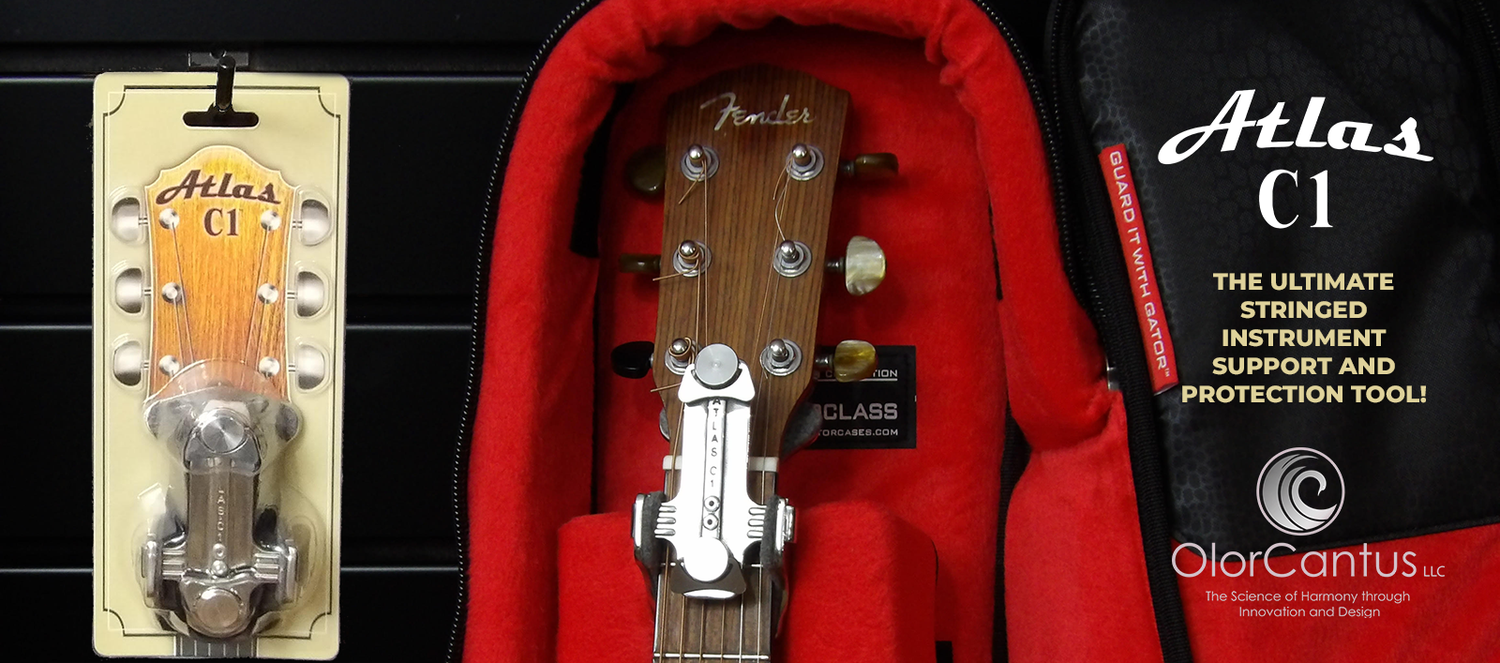
A pre-aligned repair jig changes that equation. The Atlas C1 is a universal multi-function tool that cradles the headstock-neck junction during both transport and repair. Its U.S. patent-protected design counteracts more than 130 pounds of string pressure tension, and it doubles as a jig that holds a broken headstock in correct alignment while glue cures.
For players without luthier experience, that pre-alignment removes the most error-prone step. The tool has been featured in Premier Guitar Magazine and is used by touring professionals including Pete Townshend, Greg Martin, and Vic Johnson.
Conclusion
String choice solves tone problems. It does not solve structural ones, and the headstock-neck junction remains the most vulnerable point on any guitar that travels. Players who tour, ship instruments, or store vintage pieces need protection that addresses that junction directly.
The Atlas C1 was built for exactly that job. It is a universal, U.S. patent-protected tool that supports the headstock-neck junction during travel and storage, counteracts over 130 pounds of string tension, and doubles as a pre-aligned repair jig when a break does happen. It is a lifetime-use investment rather than a consumable, and it is available through Guitar Center. If you are stocking up on strings and care supplies at the same time, keep an eye out for a 10% product discount and free shipping.
Get started with Atlas C1 and give your instrument the structural protection that string upgrades alone cannot provide.
Frequently Asked Questions
What is the best guitar maintenance kits available?
A solid kit includes a cleaning cloth, fretboard conditioner, string lubricant, and a headstock support tool. Look for kits that use gentle, non-abrasive cleaners and include a conditioner safe for rosewood or ebony. Pair your kit with a reliable headstock protection device for travel. Many players find that assembling individual components gives better value and lets you tailor the kit to your guitar's specific needs.
How do I choose the right fretboard conditioner for my instrument?
Match the conditioner to your fretboard wood. Rosewood and ebony benefit from oil-based conditioners that replenish natural oils without leaving residue. Maple boards usually have a finish and need only a damp cloth, not oil. Apply a small amount, let it sit for a minute, then wipe off the excess. Avoid products with silicone or petroleum distillates, which can build up over time. If you are unsure, test on a small area first. A quality conditioner extends fretboard life and keeps the wood from drying out.
Can I use household items for guitar cleaning, or should I use specialized products?
Household items like distilled water and a microfiber cloth are fine for light dusting. For deeper cleaning, specialized products are safer because they are formulated to be pH-neutral and safe for finishes. Vinegar or alcohol can damage nitrocellulose lacquer and some poly finishes. Dish soap leaves residue that attracts dust. A dedicated guitar cleaner costs little and prevents costly finish repairs. For the fretboard, use a proper conditioner rather than olive or lemon oil, which can go rancid or contain additives.
What are the best tools for preventing headstock damage during maintenance?
A headstock support tool that cradles the neck junction is the most direct protection. The Atlas C1 is a universal multi-function tool that supports the vulnerable headstock-neck joint and doubles as a pre-aligned repair jig. It counteracts over 130 pounds of string tension, reducing the risk of breaks during string changes, travel, or storage. For general maintenance, a neck rest and a properly fitted case also help. Avoid leaning the guitar on its headstock or applying uneven pressure when restringing.
Are there professional-grade alternatives to standard guitar polish?
Yes. Many luthiers prefer a two-step approach: a gentle cleaner followed by a non-silicone polish. Brands like Music Nomad and Dunlop offer professional-grade formulas. For glossy finishes, a swirl-remover polish can eliminate fine scratches. For satin finishes, avoid abrasive polishes. Always use a clean microfiber cloth and work in small sections. If your guitar has a vintage finish, test any product on a hidden area first. Professional-grade products often cost more but last longer and reduce the risk of finish damage.