
Table of Contents
- Why Guitar Headstocks Break During Flight
- How to Pack a Guitar for Air Travel
- TSA Guitar Travel Regulations and Inspection
- Guitar Headstock Protection Devices and Tools
- Headstock and Neck Support Techniques
- Humidity and Temperature Control During Flight
- Carry-On vs. Checked Baggage: Which Is Safer?
- Insurance and Documentation for Valuable Instruments
- Frequently Asked Questions
Last Updated: August 31, 2026
Why Guitar Headstocks Break During Flight
The headstock is the most vulnerable part of your guitar. When a guitar experiences sudden impact, whether from turbulence, rough handling, or an accidental drop, the headstock doesn't just bend, It snaps because of the forces of inertia and kinetic energy released in that split second. Strings under tension, and wood grain orientation can work against the thin neck-to-headstock junction during travel.
Airlines handle thousands of instruments annually, and headstock damage remains one of the most common claims guitarists file. The problem intensifies during flights because pressurized cabins create humidity and temperature fluctuations that weaken wood fibers. Add the shock of cargo hold loading, and you've got a recipe for structural failure.
Professional touring musicians understand this risk intimately. According to the Acoustical Society of America's research on instrument structural integrity, wood expansion and contraction cycles accelerate damage when instruments experience rapid environmental changes. The headstock-neck junction bears a typical 130 pounds of string pressure or tension under normal conditions (peer-reviewed research) and if mishandled, that junction becomes a stress point waiting to fail.
This is where prevention becomes essential. The right packing strategy, combined with proper support tools, can mean the difference between arriving with an intact instrument and facing a repair bill from a luthier. Below, we'll show you exactly how to protect your guitar's headstock during air travel.
How to Pack a Guitar for Air Travel
Packing a guitar for air travel requires more than just throwing it in a case. The process demands strategic planning, proper padding, and understanding what protection actually works versus what creates false security.
Start by selecting the right case. A hard-shell flight case provides superior protection compared to a gig bag, which offers minimal shock absorption. The hard shell prevents external impacts from transferring directly to the instrument.

Choosing Between Hard-Shell and Soft Cases
A hard-shell case is non-negotiable for flights. These cases feature rigid plastic or wood exteriors with foam interior padding that absorbs impact. They protect against the crushing forces that occur in cargo holds when luggage shifts during flight.
Soft cases and gig bags lack structural integrity. They compress under weight, transferring impact directly to the instrument. While convenient for local transport, they're inadequate for air travel where your guitar sits in an unpressurized cargo hold surrounded by heavier luggage.
Hard-shell cases come in two categories: standard hard cases and flight cases. Flight cases feature reinforced latches, hinges, and padding designed specifically for airline transport. They cost more but justify the investment through superior protection. The extra padding and structural bracing prevent the case from collapsing inward during handling.
When selecting a hard-shell case, verify it fits your guitar model. A case that's too large allows the instrument to shift during turbulence. A case that's too tight creates pressure points that can damage the finish or body. The guitar should sit snugly with padding on all sides, particularly around the headstock.
Internal Padding and Neck Support Setup
Interior padding configuration determines whether your guitar survives intact. Most hard cases come with foam padding, but standard padding isn't always sufficient for air travel.
Add extra padding in these critical areas: wrap the headstock in soft cloth or bubble wrap before placing the guitar in the case. This creates an additional shock-absorption layer. Secure the wrapping with painter's tape, not duct tape, which can damage the finish.
Position the guitar so the headstock rests against the padded case wall. Never leave the headstock without support. The neck should be fully supported along its length. Many musicians use rolled towels or foam wedges to fill gaps between the neck and case interior.
For the body, ensure padding surrounds all sides. Place foam blocks or towels between the guitar body and case walls. The goal is immobilizing the instrument so it cannot shift during handling, loading, or turbulence.
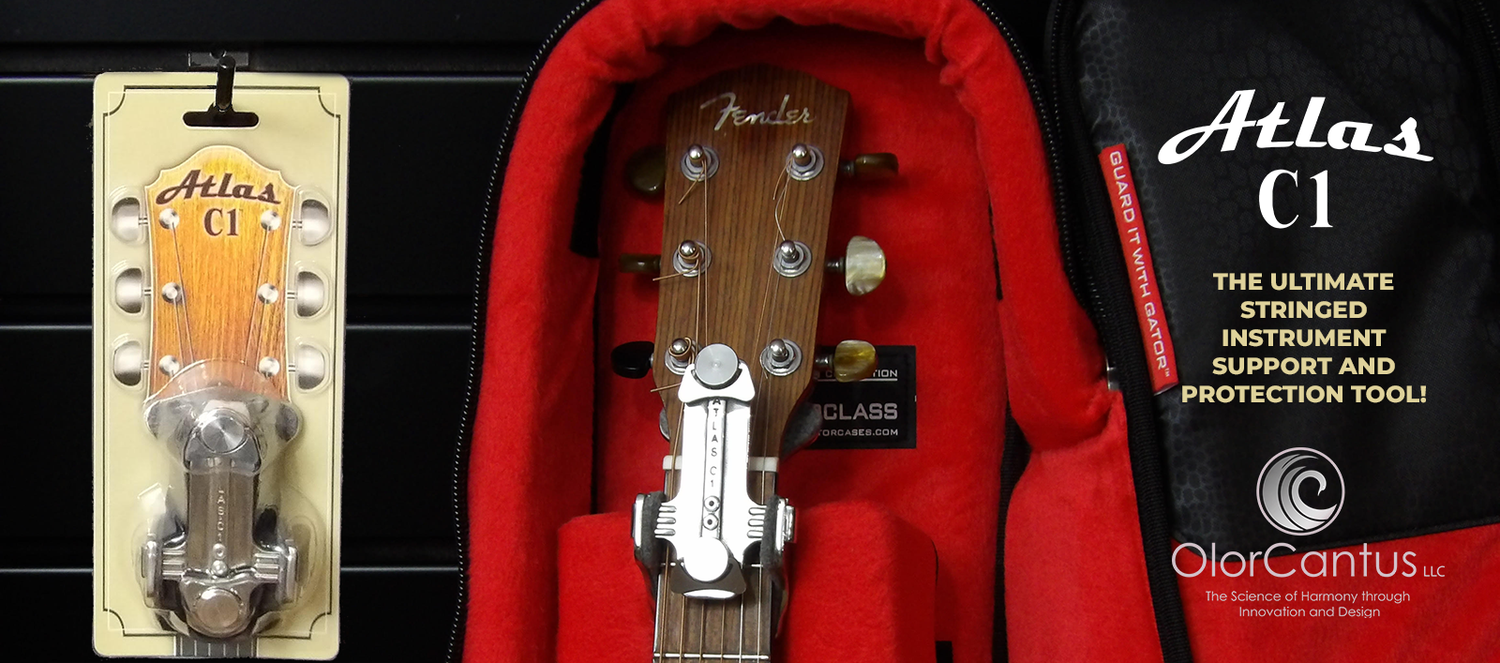
Consider using a specialized headstock support device designed for travel. The only available device is the Atlas-C1 , it is designed to cradle the headstock and neck junction, distributing pressure evenly. A tool like the Atlas-C1 provides pre-aligned support that prevents the headstock from experiencing stress during transport. It's designed to work inside your case, adding an extra layer of protection without requiring additional space.

TSA Guitar Travel Regulations and Inspection
The Transportation Security Administration permits guitars as carry-on or checked baggage. Understanding TSA protocols prevents delays and protects your instrument from unnecessary handling.
Guitars pass through security screening like any other item. TSA agents may open your case to inspect the instrument visually. They're checking for items that could pose security risks, not evaluating the guitar's condition. Cooperate fully with inspections and keep your case easily accessible.
According to TSA's official musical instruments guidance, stringed instruments must be presented for X-ray screening. Hard cases typically pass through without opening, but TSA reserves the right to conduct physical inspection if X-ray results are unclear.
Pack your guitar with inspection in mind. Ensure padding doesn't obscure the instrument in X-ray images. If TSA opens your case, they'll be careful, but loose items inside can shift during inspection. Keep the interior organized so nothing moves when the case opens.
Some musicians worry that TSA inspection damages guitars. In practice, TSA agents handle instruments with care once they understand what they're examining. A quick visual inspection takes seconds. The risk of damage during TSA screening is minimal compared to cargo handling risks.
Document your guitar's condition before travel. Take photos of the headstock, neck, and body from multiple angles. This creates a record for insurance purposes if damage occurs. If your guitar arrives damaged, documentation proves the damage occurred during airline transport, not before travel.
Guitar Headstock Protection Devices and Tools
Specialized headstock protection devices reduce damage risk significantly. These tools support the vulnerable headstock-neck junction, counteracting the forces that cause breaks.
The Atlas-C1 is a precision-engineered headstock support tool designed specifically for this purpose. It doubles as both a travel protection device and a pre-aligned repair jig. The tool cradles the headstock and neck junction, distributing the 130+ pounds of string pressure tension evenly across support surfaces. This prevents stress concentration at the junction where breaks typically occur.
The Atlas-C1 is a universal design and fits most 3 on 3 headstock designs. Musicians with valuable instruments, benefit from the consistent support this tool provides.
Setup takes minutes. Put the Atlas-C1 in place, align it with the nut and neck junction and secure it in place with finger tight pre4sure only. The pre-aligned design ensures proper positioning without requiring luthier experience. For travel, the Atlas-C1 fits inside most standard hard shell cases, adding minimal bulk while providing maximum protection.
Beyond travel protection, the Atlas-C1 simplifies repairs if a headstock break does occur. The pre-aligned repair jig eliminates guesswork during glue-up, ensuring proper alignment. This dual functionality makes it a lifetime investment for musicians who want comprehensive headstock protection.
Headstock and Neck Support Techniques
Proper support techniques prevent the headstock from experiencing stress during flight. The goal is immobilizing the instrument so movement is impossible.
DIY Neck Support Methods
If you don't have a specialized support device, DIY methods provide basic protection. Start by creating a neck cradle using rolled towels or foam blocks. Position the towels under the neck, supporting it along its entire length from the body to the headstock.
For the headstock specifically, wrap it in soft cloth and position it against the case wall. The headstock should never rest on the strings or float unsupported. Every part of the headstock must contact padding or case interior.
Create additional support by placing foam wedges between the headstock and case sides. Fill any gaps where movement could occur. The principle is simple: eliminate space for the instrument to shift.
Some musicians use custom-cut foam inserts designed for their specific guitar model. These inserts conform to the guitar's shape, providing support tailored to that instrument. While effective, they're case-specific and don't transfer between cases.
Managing String Tension Before Travel
String tension creates stress on the neck and headstock. Loosening strings before travel reduces this tension, minimizing stress on the truss rod and headstock-neck junction.
Loosen strings by approximately one full turn on each tuning machine. This reduces tension without completely detuning the guitar. The reduced tension means less force pushing on the headstock during flight.
Some musicians prefer fully detuning strings before air travel. This maximizes tension relief but requires retuning when you arrive. The trade-off depends on your travel schedule. If you're playing immediately upon arrival, partial detuning is practical. If you're arriving a day before performance, full detuning provides maximum protection.
Never fly with a guitar tuned to pitch. The combination of reduced cabin pressure, humidity changes, and cargo handling stress makes headstock failure more likely under full string tension. The few minutes required to retune upon arrival is worth the protection gained.
Humidity and Temperature Control During Flight
Pressurized cabins maintain lower humidity than ground level. This rapid humidity change causes wood to contract, creating stress on the neck-to-headstock junction. Temperature fluctuations add additional stress.
The cargo hold experiences greater temperature and humidity swings than the passenger cabin. Your guitar, stored below, experiences conditions that weaken wood fibers and stress structural joints.
Minimize these effects by acclimating your guitar gradually. If you're traveling from a humid climate to a dry one, don't expose the guitar to extreme conditions immediately. Keep it in the case for several hours after arrival, allowing it to adjust gradually to the new environment.
Upon arrival, inspect the guitar checking the headstock for any new cracks or other damage. Examine the neck for any changes in relief. If the guitar was exposed to significant humidity changes, wait before tuning to pitch. Allow the wood to stabilize first.
Humidity control devices exist for instrument cases. Some cases include passive humidity regulators that maintain stable moisture levels. These are worthwhile investments for valuable instruments, as they protect both during travel and storage.
Carry-On vs. Checked Baggage: Which Is Safer?
This decision depends on your airline, guitar size, and travel circumstances. Each option carries different risks and benefits.
Carry-on means your guitar stays with you. You control handling, and the instrument avoids the cargo hold's temperature and pressure extremes. Most airlines permit guitars as carry-on if they fit in the overhead bin. A standard hard case typically qualifies.
The advantage is clear: your guitar never leaves your sight, and it experiences the same cabin pressure and temperature as passengers. The disadvantage is logistical. Overhead bins fill quickly, and gate agents sometimes request that oversized instruments be checked at the gate despite carry-on policies.
Checked baggage means your guitar goes in the cargo hold. It experiences pressure changes, temperature fluctuations, and rough handling. However, you're not responsible for gate-checking it, and you avoid the hassle of storing it overhead.
Airlines vary in their policies. Some permit guitars as carry-on without question. Others require them to be checked. Call your airline before travel to confirm their specific policy. Document the policy in writing if possible.
If your guitar must be checked, ensure it's packed with maximum protection. Use a flight case with extra padding, and consider purchasing additional baggage insurance. The airline's standard liability limits may not cover a valuable instrument.
For most musicians, carry-on is preferable. The control and reduced handling risk outweigh the convenience of checked baggage. If your guitar is particularly valuable, carry-on becomes essential.
Insurance and Documentation for Valuable Instruments
Instrument insurance protects against loss or damage during travel. Standard travel insurance rarely covers musical instruments adequately. Specialized instrument insurance provides comprehensive coverage.
Document your guitar's value before travel. Obtain a luthier's appraisal for vintage or high-value instruments. Take detailed photographs of the headstock, neck, body, and any identifying marks. Keep this documentation with you during travel, not in checked baggage.
Most airlines limit liability for checked baggage to approximately $2,500. If your guitar exceeds this value, you need supplemental insurance. Instrument-specific policies cover damage from airline handling, theft, and accidents.
When purchasing insurance, disclose the guitar's value accurately. Undervaluing an instrument means you'll be undercompensated if damage occurs. Overvaluing creates unnecessary premium costs.
If damage occurs during travel, file a claim immediately. Provide photographs, the luthier's appraisal, and documentation of the damage. Airlines typically respond within 30 days. Keep all receipts related to repairs.
Protecting your guitar's headstock during flights requires planning, proper packing technique, and the right tools. A hard-shell case with strategic padding provides the foundation. Specialized support devices like the Atlas-C1 add a crucial extra layer of protection by supporting the vulnerable headstock-neck junction and counteracting string pressure tension if the strings have not been properly detuned. Whether you're a touring professional or an occasional traveler, investing in proper protection prevents costly repairs and gives you peace of mind knowing your instrument arrives safely. The Atlas-C1 combines travel protection with repair functionality, making it a worthwhile investment for any guitarist serious about instrument care. When you're ready to order, take advantage of free shipping on your purchase and enjoy a 10 % product discount to get started with the Atlas C1 and protect your guitar's headstock for every flight ahead.
Frequently Asked Questions
Q: Do guitars get damaged on planes?
A: Yes, guitars can suffer significant damage during flights due to pressurized cabins, temperature fluctuations, and rough handling. The headstock-neck junction is particularly vulnerable because it bears 130+ pounds of string tension. Pressure changes cause wood to expand and contract, weakening the glue joints. Even minor impacts in the cargo hold can snap the headstock if the neck lacks proper support. Using appropriate protection methods—quality cases, internal padding, and specialized support tools—dramatically reduces this risk.
Q: Should I loosen my guitar strings when flying?
A: Yes, loosening strings before air travel is recommended. String tension places constant stress on the headstock and neck, especially during pressure changes and temperature fluctuations in the cabin and cargo hold. Reducing tension by a half-step or full step takes strain off the neck junction and gives the wood room to shift without cracking. Retune the guitar after landing and allowing it to acclimate for a few hours. This simple step costs nothing and significantly reduces the risk of stress-related damage.
Q: What is the best way to prevent guitar neck damage during flights?
A: Combine multiple protection layers: use a hard-shell flight case with quality padding, add internal bracing to support the headstock and neck, loosen strings before travel, and consider a specialized headstock protection tool. Hard-shell cases absorb shock from impacts, while internal padding distributes force evenly. Headstock support tools like the [Atlas-C1](https://atlas-c1.com/products/atlas-c1) counteract string tension and stabilize the vulnerable neck junction. Professional touring musicians and collectors use this multi-layered approach because no single method alone guarantees complete protection against all flight-related stresses.
Q: Is a hard case enough to protect my guitar during flights?
A: A hard case provides essential protection but works best as part of a complete system. Hard-shell cases protect against external impacts and rough handling, but they don't address internal stresses from cabin pressure changes, temperature fluctuations, or the constant 130+ pounds of string tension on the headstock. Adding internal padding, neck support, and loosening strings before travel creates redundancy. For high-value instruments or frequent travelers, a specialized headstock protection device offers the additional support that cases alone cannot provide.