

Last Updated: November 6, 2026
Quick Summary
To store vintage guitars in dry climates safely, keep relative humidity between about 45% and 55% and temperature steady between roughly 65°F and 75°F. Use a calibrated digital hygrometer to monitor conditions, add humidification slowly, and keep the instrument in a hard case with a humidity pack or in a stable room away from vents.
- Keep relative humidity between about 45% and 55%, with stability mattering as much as the exact number.
- Place a digital hygrometer near the guitar, not touching it, and calibrate it before relying on it.
- Choose an interior room away from exterior walls, sunlight, heating vents, and air-conditioning outlets.
- Use a two-way humidity pack in a hard case for long-term storage, since it needs no power.
- Watch for sharp fret ends, sinking tops, and cracks, and raise humidity gradually if dehydration appears.
Table of Contents
- Why Dry Climates Put Vintage Guitars at Risk
- Ideal Humidity for Guitar Storage and Temperature Ranges
- Step 1: Choose a Stable Storage Location
- Step 2: Set Up Monitoring With a Calibrated Hygrometer
- Step 3: Add Humidification With a Guitar Case Humidifier or Room Unit
- Step 4: Protect the Headstock and Neck During Long-Term Storage
- How to Store a Guitar Long Term: Case, Stand, or Wall Hanger
- Recognizing Dehydration and Recovering a Dried-Out Vintage Guitar
- Storage Plan for Travel, Power Outages, and Extended Absences
- Set Up Your Dry-Climate Storage Routine Today
- Frequently Asked Questions
Dry air is one of the quietest threats to a vintage guitar. Wood shrinks, finishes check, and necks move in ways that can turn a playable instrument into a costly repair. If you live in a dry climate, or you keep your guitars through a long winter with the heat running, you need a plan for safely storing vintage guitars in dry climates. Owners often discover this kind of damage only after it has already happened. This guide walks you through the risks, the target conditions, and a step-by-step setup you can use at home.
Why Dry Climates Put Vintage Guitars at Risk
Wood is hygroscopic. It takes in moisture when the air is humid and gives it up when the air is dry. Vintage guitars are often built from woods that have been aging for decades, so they respond to these shifts in very real ways.
When humidity drops too far, the top and back can shrink and begin to crack. Glue joints can loosen. The neck can change its angle, which affects action and relief. Finishes on older instruments may check or craze, especially nitrocellulose lacquer.
Dry climates make the problem worse in three ways:
- Heating in winter pulls moisture out of indoor air quickly.
- Desert or high-altitude regions have low humidity year-round.
- Air conditioning strips moisture even in summer.
The headstock is especially vulnerable. Dehydrated wood at the headstock-neck junction is more likely to crack under string tension, which is why many owners treat headstock protection as part of the storage plan.
Ideal Humidity for Guitar Storage and Temperature Ranges
Most luthiers and instrument makers recommend keeping relative humidity (RH) between about 45% and 55%, with temperatures that stay steady and comfortable for people. Stability matters as much as the exact number. A guitar that swings between 30% and 60% RH every few days will suffer more than one held steady at 40%.
Here are practical targets to aim for:
- Relative humidity: 45% to 55%
- Temperature: roughly 65°F to 75°F (18°C to 24°C), avoiding rapid swings
- Daily change: small and gradual, not sudden spikes
These are general guidelines drawn from common luthier practice. Your specific instrument, its finish, and its age may call for a slightly different approach, so check with a qualified guitar technician if you own a rare or highly valuable piece.
Step 1: Choose a Stable Storage Location
Location decides how hard your humidity control has to work. Pick a room that stays consistent and avoids the spots that cause the most swings.
Look for these qualities:
- An interior room away from exterior walls
- No direct sunlight through windows
- Away from heating vents, radiators, and air-conditioning outlets
- Not in a garage, attic, or basement that gets extreme temperature changes
Think about where the guitar sits in the room too. A corner next to a floor register is a poor choice. A closet or a guitar stand in the middle of an interior room often gives the most stable conditions.
Step 2: Set Up Monitoring With a Calibrated Hygrometer
You cannot manage what you do not measure. A digital hygrometer that reads both temperature and humidity is the simplest tool for the job.
To set up monitoring:
- Buy a digital hygrometer with a stated accuracy of about ±2% RH or better.
- Place it near the guitar, at the same height, but not touching the instrument.
- Check the reading daily for the first two weeks to learn your room's normal pattern.
- Calibrate it using a salt test or a reference unit, following the manufacturer's directions.
Many owners set up a simple routine: check the reading each morning and log it if the guitar is especially valuable. Patterns show up quickly, and a log tells you whether your fixes are working.
Step 3: Add Humidification With a Guitar Case Humidifier or Room Unit
Once you know your baseline, add humidity where it is needed. The right choice depends on whether the guitar lives in its case or on display, how many instruments you own, and how much maintenance you want. A combination of a room unit to keep the space near target and a case humidifier to buffer the instrument itself is a common approach.
Here is how the main options compare by use case:
- Two-way humidity packs (in-case): These packs release or absorb moisture to hold the RH near a set target, typically in the 45% to 55% range. They suit a single guitar stored in a hard case, require replacement every few months depending on conditions, and need no power. They are the simplest option for long-term case storage and for travel. The trade-off is that they only condition the small volume inside the case, so they do not help a guitar left on a stand.
- Sponge or gel case humidifiers: These add moisture but do not absorb excess, so they can overshoot if the room is already humid. They are inexpensive and work well in consistently dry rooms when checked regularly. They require refilling every week or two and are less precise than two-way packs.
- Room humidifiers: These condition the entire space and suit owners with several instruments or those who keep guitars on stands or wall hangers. A unit with an automatic humidistat is easier to maintain than refilling a case unit daily. Room units need regular cleaning to avoid mineral dust and microbial growth, and they can struggle to keep up in very dry climates or large open rooms. They are the best fit for display setups.
- Whole-home humidification: If the entire house is dry, a furnace-mounted or whole-home system can stabilize the whole environment. This is a larger investment and is best planned with an HVAC professional, but it reduces the burden on room and case units.
Whichever you choose, avoid overshooting. Excess moisture can swell wood, loosen finishes, and cause problems of its own. Let the hygrometer guide you, and adjust slowly. A common pattern is to set the target, check the reading daily for the first week, then weekly once the system is stable.
Watch out: A room humidifier that runs continuously without a humidistat can push RH above 60%, which may cause swelling and finish clouding on vintage instruments. Always pair a room unit with a calibrated hygrometer and a set target.
Step 4: Protect the Headstock and Neck During Long-Term Storage
Storage is also about physical protection. Dry wood is brittle, so the headstock and neck need extra care during long periods away from play.
Consider these habits:
- Store the guitar with the neck supported, not hanging by the headstock.
- Loosen the strings slightly if your instrument will sit for months, keeping enough tension to hold the neck in place.
- Keep the guitar away from any location where it might be bumped or leaned against.
- Check the headstock and neck joint during regular inspections.
A cushioned case with a proper neck cradle is the simplest protection. The headstock should never bear the weight of the instrument.
How to Store a Guitar Long Term: Case, Stand, or Wall Hanger
Storing a guitar long term is a choice between three main methods. Each one suits different owners.
Hard case: This is the safest option for protection. A quality hard case shields the guitar from dust, bumps, and rapid air changes. Place a humidity pack inside, and you get the most controlled micro-environment. The downside is that you cannot see or easily reach the guitar.
Stand: A stand keeps the guitar visible and accessible. It works well in a stable room with humidity control. Exposure to air currents and light, though, can speed up drying and finish damage over time.
Wall hanger: A wall hanger saves space and keeps the instrument on display. Use only hangers designed for the weight and shape of your guitar, and be sure the mount is fixed into a stud. Wall-mounted guitars are more exposed to room air, so humidity control matters even more.
For long-term storage in a dry climate, a hard case with a humidity pack is a common recommendation. If you prefer to display your guitar, pair a stand or hanger with a room humidifier and regular hygrometer checks.
Recognizing Dehydration and Recovering a Dried-Out Vintage Guitar
Sometimes the damage is already present. Vintage instruments often show dehydration in a predictable sequence, and catching the early signs gives you the best chance of avoiding structural repair. Here is what to look for, in rough order of how often owners notice them:
- Sharp fret ends: As the fretboard shrinks, the metal frets stay the same length and begin to protrude past the edges. This is often the first visible sign and is easy to check by running a finger along the fretboard edge.
- Sinking or bellying top: The top may sink between the bridge and the soundhole or belly behind the bridge as the wood loses moisture and changes shape. A straightedge across the top can reveal a change from the instrument's normal arch.
- Fret buzz and action changes: As the neck moves, relief and action can change, causing buzz or notes that fret out. These changes are not always caused by dryness, but they are worth investigating when they appear alongside other signs.
- Cracks: Small cracks may appear along the top, back, or around the soundhole. Cracks that follow the grain are common in dry conditions; cracks across the grain are more serious.
- Lifting or loose binding: Binding can separate from the body as the wood shrinks at a different rate than the plastic or wood binding.
- Finish checking: Nitrocellulose lacquer on older instruments may check or craze as the wood beneath it moves. Checking is often cosmetic, but it signals that the instrument has experienced humidity swings.
If you find dehydration damage, do not try to force the wood back into shape. Gradual humidification is the correct first step. A practical recovery protocol looks like this:
- Stabilize the environment first. Move the guitar to a room you can control and bring the RH up slowly toward 45% over one to two weeks. Avoid sudden jumps.
- Use a case as a buffer. Place the guitar in its hard case with a two-way humidity pack set near 50% RH. The case slows changes and gives you a smaller volume to manage.
- Raise humidity in small steps. Increase the target by about 5% RH per week, monitoring the instrument for signs of swelling, finish clouding, or glue loosening. Stop if you see any of these.
- Monitor daily for the first two weeks. Keep a log of RH, temperature, and any changes in the instrument. Photograph cracks and fret ends so you can compare over time.
- Know when to stop adjusting. If a crack grows, a brace rattles, or the neck angle changes significantly, stop and consult a qualified guitar technician. Forcing humidity into already-damaged wood can make things worse.
Any crack, loose joint, or headstock break should be assessed by a qualified guitar technician before repair. A technician can tell you whether the damage is cosmetic or structural and whether the instrument is safe to play. Serious structural repairs belong in skilled hands.
Watch out: Rapid humidification, for example, moving a dried guitar straight into a 60% RH room, can cause the top to swell unevenly and may loosen glue joints. Slow and steady is safer for old wood.
The table below summarises the early signs of dehydration in order of how often owners notice them, along with what each one points to.
| Sign | What it shows | Next step |
|---|---|---|
| Sharp fret ends | Fretboard has shrunk while frets stay the same length | Check edges by running a finger along the fretboard |
| Sinking or bellying top | Wood has lost moisture and changed shape | Check with a straightedge against the normal arch |
| Fret buzz and action changes | Neck relief has moved | Investigate alongside other signs |
| Cracks | Wood has dried and shrunk | Cracks across the grain are more serious than those along it |
| Lifting or loose binding | Binding and body shrink at different rates | Note and monitor |
| Finish checking | Finish is moving with the wood beneath | Often cosmetic, but signals humidity swings |
Storage Plan for Travel, Power Outages, and Extended Absences
Your storage plan should cover the times when things change: trips, power loss, and long absences.
When traveling: Protect the guitar from humidity swings in transit. Keep it in its case with a humidity pack, and avoid leaving it in a hot car or an unheated cargo hold for long periods. If you fly often, check your guitar's condition after each trip.
During power outages: Heating and cooling stop, but the humidity in your home will still shift. A battery-powered hygrometer lets you keep watch. The case humidity pack continues to work without power, which is one reason it is a useful backup.
During extended absences: Set your room humidifier and monitor the reading remotely if possible. Some smart hygrometers send alerts to your phone. Ask a trusted friend to check the room if you are away for weeks.
Plan for the worst case before it happens. A simple checklist can help:
- Hygrometer in place and reading correctly
- Humidity pack or room unit set to the target RH
- Guitar in a hard case or supported stand
- Headstock and neck protected from bumps
- Backup plan for power loss or travel
Set Up Your Dry-Climate Storage Routine Today
Protecting a vintage guitar in a dry climate comes down to three habits: control the humidity, keep the temperature steady, and check the instrument regularly. Start with a reliable hygrometer, pick a stable room, and add humidification that you adjust slowly. Protect the headstock and neck, and plan ahead for travel and outages.
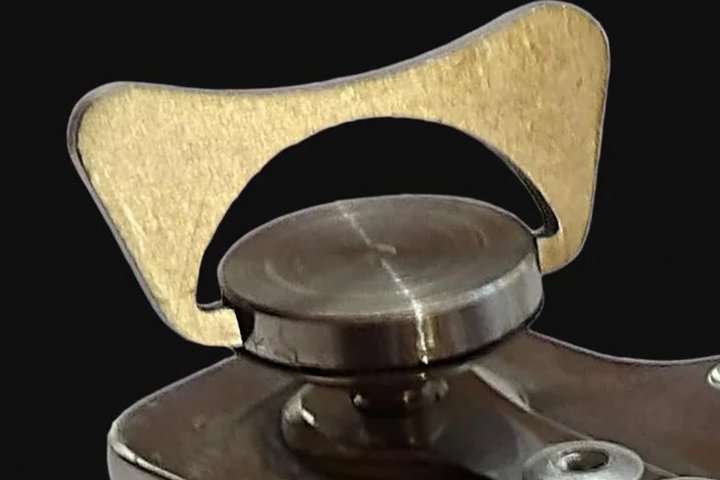
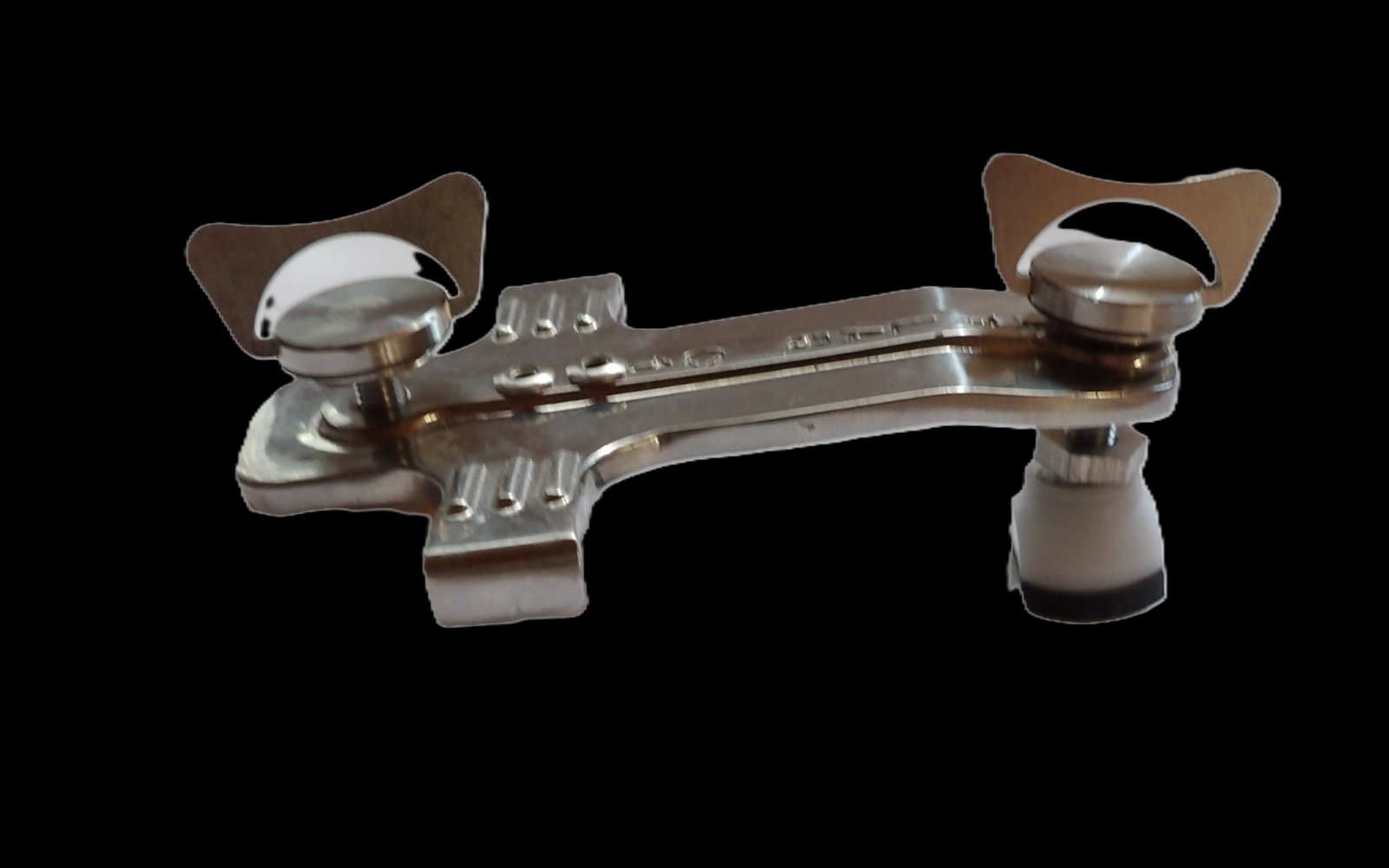
The Atlas-C1 is a universal multi-function tool designed to protect stringed instruments from headstock damage during travel, shipping, or storage. It also doubles as a pre-aligned repair jig and is a lifetime-use investment for owners who want extra peace of mind. Buy Now and take a proactive step toward protecting your instrument. Our customers can also take advantage of a 10 % product discount and free shipping.
The Science of Harmony through innovation and design
Long Live the Six String™
Frequently Asked Questions
What humidity level is safe for storing a vintage guitar?
Most guitar makers and technicians aim for a relative humidity between roughly 45 and 55 percent for stored instruments, with temperature kept at a comfortable room level. Vintage guitars are often more sensitive because their wood and finish have aged and dried over decades. Use a calibrated hygrometer to confirm the reading rather than relying on a room thermostat or a generic weather app, since sensor placement and calibration can shift results considerably.
Is it better to store a guitar upright or flat?
Most players store guitars upright on a stand or wall hanger so the neck and headstock are not under constant stress, and so the body is supported at its natural contour. Lying a guitar flat in its case can work for short periods but puts pressure on the top and the neck joint over time. Whichever position you choose, keep the instrument away from direct sunlight, heating vents, and air-conditioning outlets.
Should a vintage guitar be stored in its case?
A hard case gives the most consistent environment for a vintage guitar in a dry climate, because it slows humidity swings and blocks dust and accidental impacts. Pair the case with a two-way humidity control pack or a case humidifier, and check the reading regularly. For guitars you handle often, a wall hanger or stand may be more practical, but the instrument will be more exposed to changing room conditions.
How often should you check a guitar in long-term storage?
Check the hygrometer and the guitar at least once a week during the dry season, and inspect the neck, fretboard ends, and finish for early signs of drying or cracking. Increase the frequency after weather changes, power outages, or any move to a new room. Record readings in a simple log so you can spot trends before they become a repair issue.