
Table of Contents
- Why Guitar Flight Cases Matter for Air Travel
- Hard Cases vs. Soft Gig Bags: What Survives Baggage Handling
- Best Guitar Cases for Air Travel: Quick Comparison
- 1. Crossrock Poly Carbon: Mid-Range Protection for Classical Guitars
- 2. Gator Hard-Shell Cases: Military-Grade Durability for Road Warriors
- 3. G2X: Lightweight Flight Case for Frequent Travelers
- 4. Calton Cases: Premium Acoustic Guitar Protection
- Guitar Case Fit Guide: Matching Cases to Guitar Shapes
- How to Protect a Guitar When Flying: Pre-Flight Checklist
- How to Pack a Guitar for Shipping: Step-by-Step Process
- Frequently Asked Questions
Last Updated: October 5, 2026
Why Guitar Flight Cases Matter for Air Travel
Protecting your guitar during air travel isn't optional, it's essential. Airlines treat baggage roughly, and a headstock break can cost hundreds to repair. The right guitar flight case prevents damage that would otherwise be inevitable.
When you fly with a guitar, your instrument faces temperature swings, pressure changes, and baggage handlers who don't care that you're carrying a $3,000 Les Paul. A quality flight case absorbs impact, stabilizes the neck, and keeps humidity stable during the flight. Without it, you're gambling with your investment.
The difference between a soft gig bag and a hard flight case is dramatic. A gig bag offers basic protection for studio sessions and local gigs. A flight case is engineered for the abuse of commercial air travel. If you're flying more than twice a year with your guitar, a hard case isn't a luxury, it's the baseline.
At Atlas C1, we understand the stakes of instrument protection. Our approach to safeguarding guitars focuses on the most vulnerable point: the headstock-neck junction. This guide covers the best guitar flight cases available in 2026 and how to pack your instrument safely for air travel.
Hard Cases vs. Soft Gig Bags: What Survives Baggage Handling
A hard flight case and a soft gig bag serve different purposes, and the choice matters more than most players realize.
Hard cases use rigid shells, typically polycarbonate, ABS plastic, or molded plywood, that absorb direct impacts without transferring force to your guitar. The interior is lined with foam padding that cushions the instrument. Hard cases are heavier, bulkier, and more expensive. They're also the only option that reliably protects against baggage handling abuse.
Soft gig bags use padded nylon or canvas exteriors with foam or fleece interiors. They're lightweight and portable, making them ideal for walking into a rehearsal space or loading into a van. But soft cases compress under weight, and baggage handlers routinely stack luggage on top of them. A soft bag won't protect your headstock if a 50-pound suitcase lands on it.
The reality: soft gig bags work fine for car travel, studio sessions, and local performances. For air travel, they're inadequate. Baggage handlers don't know (and don't care) that your case contains a fragile instrument. They'll stack it, throw it, and compress it. A hard flight case is the only barrier between your guitar and that environment.
Airlines also have size restrictions for checked baggage. Most hard flight cases fit within standard dimensions, but verify your airline's policy before booking.
Best Guitar Cases for Air Travel: Quick Comparison
The cases reviewed below represent different price points, guitar types, and travel scenarios. Each is engineered for checked baggage, but they differ significantly in shell construction, interior support design, weight, and which guitar shapes they accommodate.
| Case | Best For | Shell Material | Interior Support | Weight | Guitar Fit | Latches & Locks |
|---|---|---|---|---|---|---|
| Crossrock Poly Carbon | Classical and flamenco guitars, budget-conscious players | Polycarbonate shell | Foam padding with neck cradle | Moderate (approx. 8-10 lbs) | Classical, nylon-string (flat-top) | Standard latches, TSA-ready lock compatible |
| Gator Hard-Shell | Professional touring musicians, frequent flyers, maximum durability | ABS plastic with reinforced ribs | Multi-layer foam, adjustable neck support | Heavy (approx. 12-15 lbs) | Acoustic dreadnought, auditorium, electric | Military-grade latches, TSA-ready locks included |
| G2X | Frequent travelers, session musicians, weight-conscious professionals | Lightweight polycarbonate composite | Contoured foam with neck support | 19.6 lbs | Electric, thin-body acoustic | Reinforced latches, TSA-ready lock compatible |
| Calton Cases | Collectors, high-value acoustic guitars, international travel | Molded plywood with fiberglass reinforcement | Custom-fitted interior (instrument-specific) | Varies by model (approx. 10-14 lbs) | Custom-fit to specific guitar model | Heavy-duty latches, premium locks |
How to Use This Comparison
The table above groups cases by construction approach and intended use. Here's how to read it:
Shell Material indicates the outer protection layer. Polycarbonate offers good impact resistance at moderate weight. ABS plastic is heavier but more durable for repeated impacts. Molded plywood (Calton) provides superior rigidity and custom fit but adds weight.
Interior Support describes how the case stabilizes your guitar. Foam padding with a neck cradle works for most players. Adjustable support (Gator) lets you customize fit for different guitar shapes. Custom-fitted interiors (Calton) eliminate all movement but require a case built for your specific model.
Weight matters if you fly frequently or check multiple bags. A 19.6-pound case (G2X) saves 5-8 pounds per flight compared to heavier alternatives. Over 50 flights per year, that's 250-400 pounds of luggage weight reduction.
Guitar Fit is critical. A case designed for dreadnought acoustics won't work well for electric guitars. Verify your guitar's body shape and width before purchasing. Calton's custom approach eliminates fit guesswork but requires ordering a case for your specific instrument.
Latches and Locks affect airport security and durability. TSA-ready locks allow security to inspect your case without breaking the lock. Military-grade latches (Gator) withstand repeated baggage handling. Standard latches work fine for occasional travelers but may fail after 50+ flights.
The sections below detail each case's construction, protection mechanisms, and best-use scenarios.
1. Crossrock Poly Carbon: Mid-Range Protection for Classical Guitars
The Crossrock Poly Carbon is a solid mid-range flight case designed specifically for classical and flamenco guitars. It uses a polycarbonate shell with interior foam padding that supports the neck and body securely.
This case strikes a balance between cost and protection. The rigid shell handles baggage handling well, and the interior padding is sufficient for most flight conditions. Classical guitars fit snugly inside, which reduces movement during turbulence and rough handling.
The Crossrock Poly Carbon works well if you own a classical guitar and fly occasionally. It's not the lightest option, but it's durable and reliable. The polycarbonate shell resists impact better than soft cases, and the latches lock securely for checked baggage.
One limitation: the interior is designed for classical guitars specifically. If you own an acoustic dreadnought or electric guitar, you'll need a different case. The fit is tight, which is good for protection but limits versatility.
For classical guitarists who fly a few times per year and want solid protection without premium pricing, this case delivers. It's the type of guitar flight case that protects your investment without requiring a second mortgage.
2. Gator Hard-Shell Cases: Military-Grade Durability for Road Warriors
Gator hard-shell cases are built for touring musicians who fly constantly and demand maximum durability. These cases use military-grade construction with reinforced latches and locking mechanisms.
The shell is thick and rigid, designed to survive stacking, impacts, and rough handling. Gator cases are heavier than some alternatives, but that weight comes from reinforced construction. If you're a professional touring musician flying 100+ days per year, this is the case that won't fail you.
The interior padding on Gator cases is substantial. Neck support is excellent, and the case design minimizes movement during flight. These cases also come with TSA-ready locks, which means security can open and inspect them without breaking the locks.
The tradeoff is weight and cost. Gator cases are among the heaviest options available, and they're priced accordingly. If you're a casual player who flies once a year, you're overspending. But if you're a professional who depends on your guitar for income, the durability justifies the investment.
Gator cases are the guitar flight cases that professional touring musicians choose. They're built to outlast the career of most players.
3. G2X: Lightweight Flight Case for Frequent Travelers
The G2X is engineered specifically for musicians who travel constantly and need to minimize weight without sacrificing protection.
This case weighs 19.6 pounds, making it the lightest hard flight case in its class. The design incorporates research and development from earlier protective case models, resulting in a shell that's both rigid and lightweight. For a musician checking baggage on multiple flights per week, the weight savings add up.
The G2X is flight-ready, meaning it meets airline specifications for checked baggage dimensions and construction. The interior padding supports the neck and body securely, and the latches are reinforced for baggage handling.
The lightweight design is the G2X's primary advantage. If you're a touring musician who flies frequently and wants to minimize luggage weight, this case is worth investigating. The tradeoff is that lighter materials may not absorb impacts quite as effectively as heavier cases, but the design is still strong.
For frequent travelers, the G2X represents a practical balance between protection and portability. It's the guitar flight case that professional session musicians and touring players choose when weight matters.
4. Calton Cases: Premium Acoustic Guitar Protection
Calton cases represent the premium tier of guitar flight cases. These cases are custom-fitted to specific guitar models and built with superior craftsmanship.
Calton cases are designed for musicians who own valuable acoustic guitars and prioritize protection above all else. The interior is custom-molded to fit your specific guitar, which means zero movement during flight. The construction is meticulous, and the materials are top-tier.
These cases are expensive and heavy, but they offer the highest level of protection available. If you own a vintage acoustic guitar worth $5,000 or more, a Calton case makes sense. The custom fit eliminates the risk of your guitar shifting during turbulence or rough baggage handling.
Calton cases are also ideal for musicians traveling internationally with valuable instruments. The superior construction and custom fit provide peace of mind that justifies the premium price.
For collectors and professional musicians with high-value acoustic guitars, Calton cases are the standard. They're the guitar flight cases that protect irreplaceable instruments.
Guitar Case Fit Guide: Matching Cases to Guitar Shapes
Not all guitar cases fit all guitars. Acoustic, electric, classical, and archtop guitars have different body shapes, and a case designed for one won't work well for another.
Dreadnought and Auditorium Acoustic Guitars
Dreadnought and auditorium acoustic guitars have large, flat-bottomed bodies. Cases designed for these shapes have wide, shallow interiors that accommodate the body without excess space.
When choosing a case for a dreadnought or auditorium guitar, verify that the interior width matches your guitar's body width. A case that's too narrow will bind the sides, and a case that's too wide allows the guitar to shift during flight.
Most hard flight cases are designed for either dreadnought or auditorium shapes. Crossrock and Gator both offer cases in these dimensions. Measure your guitar's body width and compare it to the case interior dimensions before purchasing.
Electric and Solid-Body Guitars
Electric guitars and solid-body acoustics have narrower, thinner bodies than dreadnoughts. Cases designed for electric guitars have tighter interiors that match these proportions.
The G2X and many Gator cases offer electric-guitar dimensions. The interior padding is contoured to support the thinner body shape, and the neck support is positioned for the angle of electric guitar headstocks.
If you own a Fender Stratocaster, Telecaster, or Gibson solid-body, verify that the case is designed for electric guitars. An acoustic case will have too much interior space, allowing your guitar to shift during flight.
Classical and Arched-Top Guitars
Classical guitars have nylon strings, wider bodies, and flat tops. Archtop guitars (like Gibson L-9 models) have curved, carved tops that require specialized interior support.
Crossrock Poly Carbon cases are specifically designed for classical guitars. The interior padding accommodates the wider body and flat top without excess space. For archtop guitars, Calton cases offer custom-fitted interiors that support the curved top securely.
If you own a classical or archtop guitar, don't assume a standard acoustic case will work. These guitar shapes require specialized cases. Verify that the case interior matches your guitar's dimensions and body shape before flying.
How to Protect a Guitar When Flying: Pre-Flight Checklist
Flying with a guitar requires preparation. The checklist below covers the essential steps to protect your instrument before you board the plane.

Carry-On vs. Checked Baggage: Current Airline Rules
Most airlines allow guitars as carry-on baggage if the case fits within their carry-on dimensions. Typical carry-on limits are 22 inches × 14 inches × 9 inches. Many hard flight cases exceed these dimensions, which means your guitar must be checked.
Check your airline's policy before booking. Some airlines allow guitars as carry-on regardless of size, while others strictly enforce dimensional limits. Call the airline directly, don't rely on their website, which is often outdated.
Checked baggage is the safer option for hard flight cases. Your guitar will be loaded into the cargo hold with other luggage, but the hard case protects it from impacts and pressure changes. Carry-on allows you to keep your guitar with you, but it must fit the airline's size restrictions.
Current airline rules (as of 2026) generally treat guitars as standard baggage, not as delicate instruments. This means your case will be stacked, compressed, and handled roughly. A hard flight case is your only protection against this treatment.
Interior Padding and Neck Support Setup
Before you pack your guitar, verify that the case's interior padding is intact and positioned correctly. The neck support should cradle the headstock and neck without crushing them.
Place your guitar in the case and check that it doesn't move when you gently shake the case. If the guitar shifts, add padding or adjust the existing padding. Movement during flight causes damage.
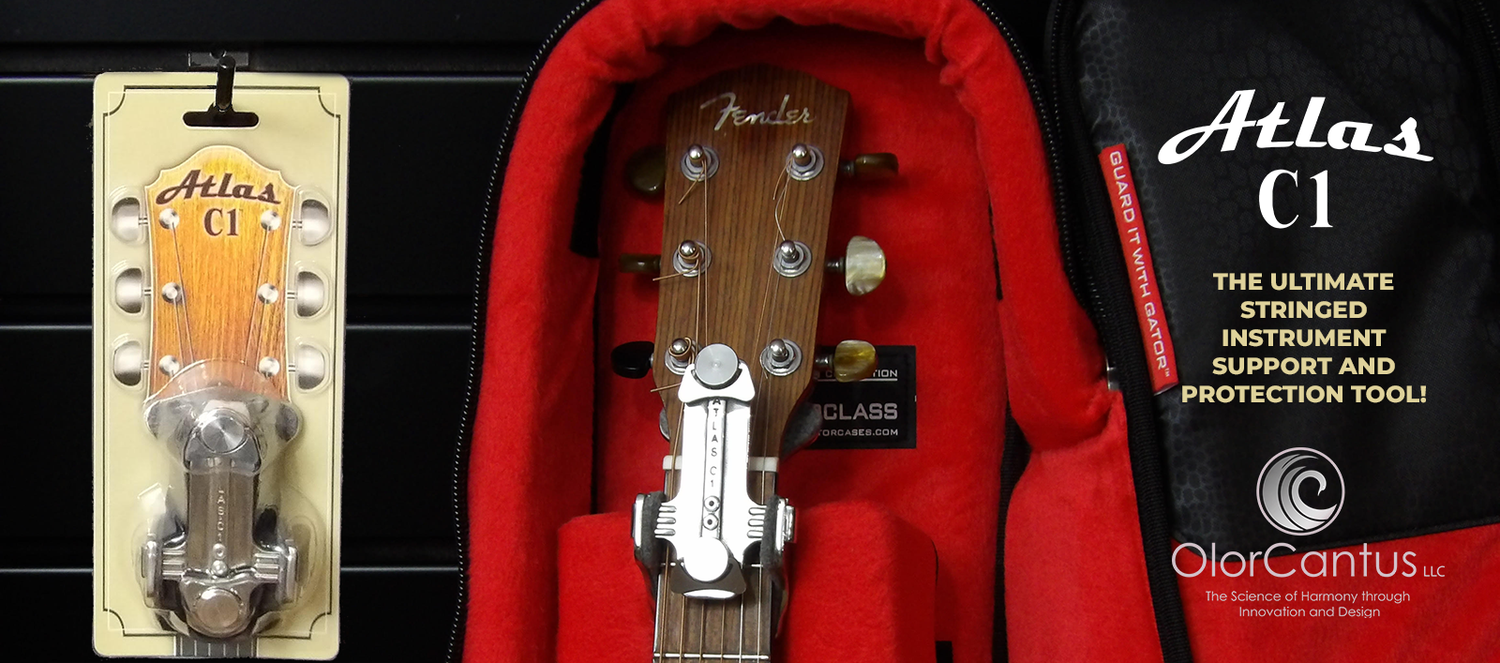
The headstock is the most vulnerable part of your guitar. Ensure that the case provides firm support at the neck-headstock junction. This is where breaks occur during rough baggage handling. Consider using the Atlas C1 headstock protection tool before packing your guitar. It provides unparalleled support to the vulnerable headstock-neck junction, preventing the 130+ pounds of string pressure tension from causing damage during flight.
Climate and Pressure Changes During Flight
Aircraft cabins are pressurized and maintained at controlled humidity, but the environment still differs from ground level. Rapid pressure changes can cause wood to expand or contract, which stresses the glue joints in your guitar.
A hard flight case buffers these pressure and humidity changes. The sealed interior maintains a more stable environment than the cabin air. This is one reason hard cases outperform soft gig bags for air travel.
If you're flying internationally with a valuable guitar, consider using a humidity-controlled case or packing a small humidity pack inside the case. This adds another layer of protection against environmental stress.
How to Pack a Guitar for Shipping: Step-by-Step Process
Shipping a guitar requires the same protection as flying with it. The steps below apply to both air travel and ground shipping.
Securing the Headstock and Neck
The headstock is the most fragile part of your guitar. Before packing, secure the headstock to prevent movement inside the case.
Use a neck rest or padding to support the headstock at a slight angle. The goal is to position the headstock so it doesn't rest directly on the case interior. This reduces stress on the neck joint during impacts.
If you're shipping a Gibson-style guitar with an angled headstock, pay special attention to the headstock angle. The case should support the headstock at the same angle as the guitar's natural neck angle. Packing it at an incorrect angle stresses the neck joint.
Consider using the Atlas C1 as a pre-flight preparation tool. It doubles as a repair jig and provides the precise support needed to protect your headstock during packing and shipping. The universal design works with most guitar shapes, and it counteracts the 130+ pounds of string pressure that threatens the headstock during travel.
Filling Empty Space and Preventing Movement
After securing the headstock, fill any empty space inside the case with padding or blankets. The goal is to eliminate movement.
Wrap the guitar body loosely with a blanket or towel, leaving enough space that the padding doesn't compress the guitar. The padding should fill gaps but not squeeze the instrument.
Check the case by gently shaking it. If you hear or feel movement, add more padding. A guitar that doesn't move inside the case is protected. A guitar that shifts inside the case is at risk.
For valuable guitars, consider double-boxing: place your hard flight case inside a larger cardboard box with padding between the case and the outer box. This adds another layer of impact protection during shipping.
Protecting your guitar during air travel and shipping requires the right equipment and careful packing. The cases covered here, Crossrock Poly Carbon, Gator hard-shell, G2X, and Calton, represent different price points and use cases, but they all provide the hard-shell protection that soft gig bags cannot match.
The choice depends on your budget, travel frequency, and guitar type. Classical players benefit from Crossrock's specialized design. Road warriors choose Gator's military-grade durability. Frequent flyers prefer the G2X's lightweight construction. Collectors invest in Calton's premium craftsmanship.
Beyond selecting the right case, use the Atlas C1 as part of your protection strategy. It provides precision support for the vulnerable headstock-neck junction, preventing costly damage during travel and shipping. The Atlas C1 doubles as a pre-aligned repair jig, giving you a lifetime solution for instrument care. Combine a quality flight case with proper packing techniques and the Atlas C1's protective support, and your guitar will arrive safely every time you fly. When you order your flight case, take advantage of free shipping on your first purchase and receive a 10% product discount to help you build a complete protection system for your instrument.
Frequently Asked Questions
What should I look for in a guitar flight case?
A flight case must have a hard protective shell, interior padding that supports the neck and headstock, secure latches, and dimensions that fit your guitar shape. Check that the case accommodates your instrument's body width and headstock angle. For valuable guitars, look for cases with water-resistant materials and reinforced corners. Weight matters too, lighter cases reduce baggage fees on long trips. Ensure the case meets airline standards for checked baggage, though some cases qualify for carry-on if dimensions allow.
Is a hard case enough protection for air travel?
A hard case provides excellent impact protection during baggage handling, but it's not always sufficient alone. The headstock and neck junction remain vulnerable points even in a hard case if the guitar shifts inside. Proper interior padding, foam inserts, and neck support are equally critical. Many professionals add extra protection like a headstock support tool to prevent the 130+ pounds of string tension from stressing the neck junction during rough handling or pressure changes at altitude.
Can I take a guitar as carry-on luggage?
Yes, most airlines allow guitars as carry-on luggage if the case fits within their carry-on dimensions, typically 22 x 14 x 9 inches. However, space is limited, and you may need to check with your airline before boarding. For international flights, confirm the specific airline's policy, as rules vary. A hard flight case usually exceeds carry-on limits and must be checked. Soft gig bags are more likely to fit overhead bins, though they offer less protection during baggage handling.
How do I know if a case will fit my guitar?
Match your guitar's shape and size to the case's interior dimensions. Dreadnought acoustics need wider cases; classical guitars require deeper cases for the larger body. Electric guitars fit in narrower cases. Measure your guitar's body width, depth, and headstock style before purchasing. Most manufacturers specify which guitar types each case accommodates. Arched-top and vintage guitars may need specialized cases designed for their unique shapes. When in doubt, contact the case manufacturer with your guitar's model and measurements.
Should I loosen my guitar strings before flying?
Loosening strings slightly can reduce tension on the neck during altitude and pressure changes, especially for valuable instruments. Lower tension by one or two semitones rather than removing all tension. This protects the headstock-neck junction from stress caused by the 130+ pounds of string pressure combined with cabin pressure fluctuations. Even with loosened strings, a protective support tool designed for the headstock provides additional insurance against damage during rough baggage handling.