
Table of Contents
- Padding vs Structural Support: Understanding the Difference
- Hard Case vs Gig Bag Protection: Which Stops Impact Better
- Guitar Neck Support in Case: Preventing Headstock Damage
- Padding Materials: Density, Thickness, and Compression Over Time
- How to Pack a Guitar for Shipping: Combining Both Methods
- Guitar Case Fit and Movement: The Hidden Risk Factor
- Choosing Between Padding and Structure: A Decision Framework
- Frequently Asked Questions
Last Updated: October 7, 2026
Padding vs Structural Support: Understanding the Difference
When protecting a guitar during travel or storage, two distinct mechanisms work together to prevent damage: the distinction between padding vs structural support is essential, as padding absorbs impact energy while structural support resists crushing forces. Understanding how each works, and where they fall short alone, is essential to choosing the right protection strategy.
Padding is a cushioning layer that compresses when force is applied, slowing down the transfer of energy to your instrument. Structural support comes from rigid walls or reinforced materials that distribute force across a wider area, preventing concentrated crushing. Most guitarists assume that more padding automatically means better protection, but the reality is more nuanced.
The key insight: padding and structural support solve different problems. Padding handles sudden impacts and shock. Structural support handles sustained pressure and crushing forces. The best protection combines both, which is why understanding each mechanism matters before you pack your guitar for travel or storage.
Hard Case vs Gig Bag Protection: Which Stops Impact Better
A hard case and a gig bag represent opposite approaches to guitar protection, each with distinct strengths.
How Rigid Shells Resist Crush Forces
Hard cases feature rigid walls, typically made from wood, plastic, or composite materials, that resist deformation when external pressure is applied. When your guitar case is stacked under other luggage or pressed against a wall, the rigid shell distributes that force across its entire surface rather than concentrating it at a single point.
The structural resistance of a hard case is its primary advantage. If your guitar case is crushed between two pieces of luggage, the rigid shell maintains its shape and protects the instrument inside.
However, rigid shells have a trade-off: they transfer impact energy more directly to the interior. When a hard case is dropped, the shell absorbs less energy through deformation and passes more of that force to the padding inside. This is why hard cases require adequate interior padding to be effective.
How Padding Absorbs and Dissipates Energy
Padding works by compressing when struck, converting kinetic energy into heat through friction and material deformation. Thicker padding compresses more gradually, which slows the deceleration of your guitar and reduces peak force.
Think of padding as a shock absorber. When your case is dropped from waist height, the padding has a fraction of a second to slow your guitar's momentum. Thicker padding extends this deceleration time, which reduces the maximum force your instrument experiences. Standard foam padding typically compresses under impact. Memory foam returns to its original shape more slowly, which can provide better energy dissipation over time.
The limitation of padding alone: it cannot prevent crushing forces. If your guitar is in a soft gig bag and someone sits on it or stacks heavy objects on top, the padding will compress fully and your guitar will be crushed. Padding is excellent for protecting against sudden impacts but offers almost no protection against sustained pressure.
Guitar Neck Support in Case: Preventing Headstock Damage
The headstock-neck junction is the most vulnerable part of your guitar. This area bears the full tension of the strings, over 130 pounds of pressure on a standard six-string set, and the joint between the headstock and neck is inherently weak because it involves a grain change in the wood. A fall or a sudden shift inside the case concentrates force at that junction, and the result is often a hairline crack that is expensive to repair and permanently weakens the instrument.
Why Headstock-Neck Junctions Are Vulnerable
The headstock hangs freely from the neck. During transport, any movement or impact concentrates force at this junction. A guitar resting loosely inside a case can shift during travel, and if the case is tilted or dropped, the headstock swings like a pendulum, putting tremendous stress on the joint. Even minor impacts can cause hairline cracks at the headstock-neck junction. These cracks are expensive to repair and can compromise the structural integrity of your instrument permanently.
The failure mode is not just the initial impact. It is the secondary impact when the headstock rebounds and strikes the case interior. A headstock that is unsupported or has too much clearance will move, strike the lid or side wall, and transfer that force directly into the neck joint. Padding alone does not solve this if the headstock is free to travel.
Fit and Support Checks for Safe Transport
Before packing your guitar, verify that the headstock is properly supported inside your case. The case should hold your guitar snugly enough that it cannot shift side to side or front to back. If your guitar moves inside the case, the headstock is at risk. Use this repeatable checklist every time you pack:
- Headstock clearance: The headstock should not touch the case lid, but it should have minimal space to move. If there is more than a quarter-inch of clearance, your guitar can shift during transport. A common pattern is to place a soft cotton cloth or acid-free tissue between the headstock and the lid to confirm contact without pressure.
- Neck support: The neck should rest on padding or a support surface along its full length. A neck resting on only two points creates a lever that amplifies headstock stress. Run your hand under the neck from nut to body; you should feel continuous support, not a gap.
- Body support: The body should be cradled by the case interior, not resting on a single point. Uneven support concentrates pressure on the bout or cutaway. Check that the lower bout and waist are in contact with the case contours.
- Lateral movement: Gently push the neck side to side. It should not move more than a sixteenth of an inch. If it does, add padding along the neck rest.
- Front-to-back movement: Press down lightly on the headstock and release. It should not rock or bounce. If it does, the neck support is insufficient.
- Headstock contact with lid: Close the case and press down on the lid above the headstock. You should feel firm resistance, not a soft gap that allows the headstock to move upward.
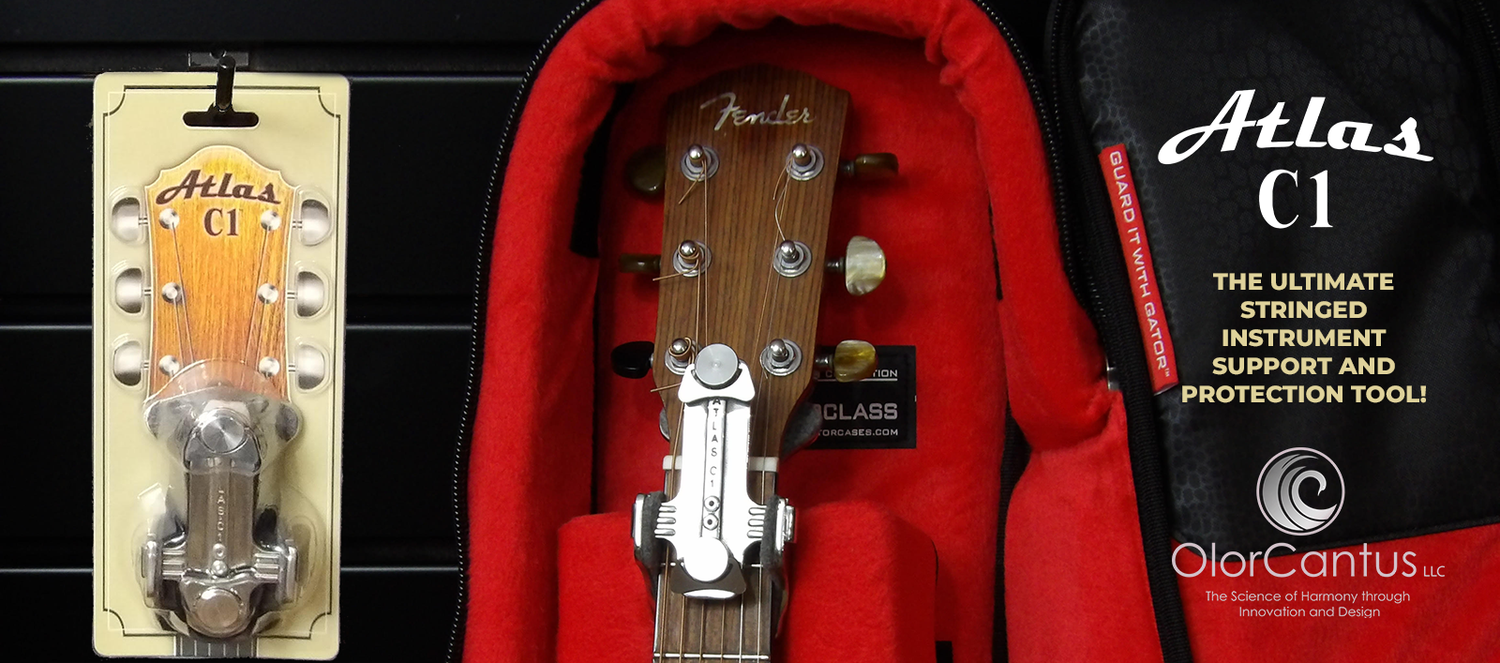
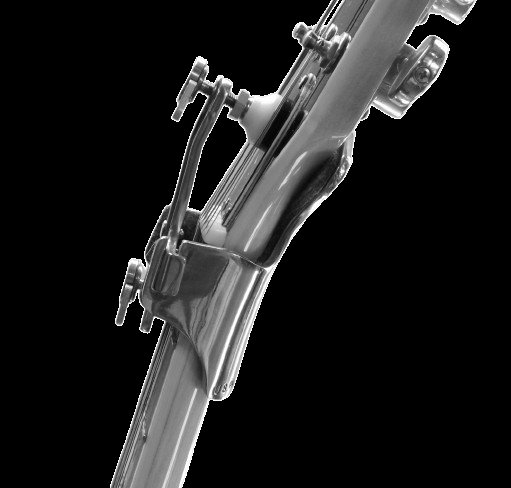
If your case allows movement, consider adding supplemental support. A rolled towel placed under the neck or around the headstock can prevent shifting. However, this is a temporary solution. A dedicated headstock support tool like the Atlas C1 provides engineered support specifically designed to counteract string tension and prevent neck-junction damage during travel and storage. The Atlas C1 is shaped to hold the headstock in a neutral position, which reduces the pendulum effect and keeps the neck joint from absorbing rebound forces.
How Impact Direction Changes the Risk
Not all impacts are equal. A drop that lands flat on the back of the case sends force through the body and the neck rest. A drop that lands on the headstock end sends force directly into the neck joint. A drop that lands on the side can cause the guitar to rotate inside the case, which is when the headstock strikes the lid. The most dangerous scenario is a corner drop, because the case rotates and the headstock becomes a lever. Padding helps by slowing the guitar down, but structural support at the headstock is what prevents the lever from reaching the joint. This is why a hard case alone is not enough if the headstock is unsupported, and why a gig bag with thick padding can still fail if the guitar shifts.
Support Checks by Case Type
A hard case with a molded interior often has a neck cradle and a headstock recess. Check that the neck sits fully in the cradle and that the headstock does not touch the lid. A gig bag relies on padding and straps. Check that the neck strap is snug and that the headstock is not pressed against the top of the bag. A universal hard case may have too much space around the headstock; add foam or a dedicated support tool to fill the gap. In all cases, the goal is the same: the guitar should not move, and the headstock should not be able to swing.
Padding Materials: Density, Thickness, and Compression Over Time
Not all padding performs equally. The material, thickness, and density of padding determine how well it absorbs impact and how long it remains effective.
Memory Foam vs Standard Foam: Which Lasts Longer
Standard foam padding is inexpensive and provides immediate cushioning. However, standard foam compresses over time and loses its ability to absorb impact.
Memory foam is denser and retains its shape better over time. It compresses more slowly during impact, which extends the deceleration time and reduces peak force. Memory foam also recovers more fully after compression, maintaining its protective properties longer than standard foam.
The trade-off: memory foam is heavier and more expensive. For a touring musician who travels 200+ days per year, the durability of memory foam justifies the cost. For a casual player who travels a few times per year, standard foam padding may be sufficient.
Padding thickness matters as well. A gig bag with 0.3-inch padding offers basic protection for light bumps. A case with 1-2 inches of padding provides substantially better shock absorption.
How to Pack a Guitar for Shipping: Combining Both Methods
Effective guitar protection combines structural support, adequate padding, and secure positioning inside the case.
Step-by-Step Packing for Air Travel
-
Start with a hard case. A hard case provides the structural foundation. Soft gig bags are not recommended for air travel because baggage handlers will crush them.
-
Inspect the interior. Verify that padding is intact and that the case is clean. Remove any debris that could scratch your guitar.
-
Position the guitar carefully. Place your guitar in the case with the neck fully supported. The headstock should rest on padding without touching the case lid.
-
Add supplemental support at the headstock. Use a soft cotton shroud, rolled towel, or dedicated headstock support to prevent movement. This is critical for angled headstocks and valuable instruments.
-
Secure the body. The body should be cradled by the case interior. If there is space around the body, use acid-free tissue or soft padding to fill gaps and prevent movement.
-
Close and test. Close the case and gently shake it. Your guitar should not move. If you hear or feel movement, reposition the guitar and add more support.
Securing Movement Inside the Case
Movement inside a case is the primary cause of damage during shipping. Even a quarter-inch of movement can result in impact when the case is handled roughly.
Use these techniques to eliminate movement:
- Neck support: Place padding under the neck along its full length. The neck should not rest on only two points.
- Body cradling: Use the case's interior contours to support the body. Add soft padding to fill any gaps.
- Headstock isolation: Wrap the headstock loosely in soft cotton or acid-free tissue. Do not wrap tightly, as this can create pressure points. The goal is to prevent direct contact with the case interior while allowing the headstock to rest on padding.
- String tension: Loosen the strings slightly before packing. This reduces tension on the headstock-neck junction and lowers the risk of damage if the guitar shifts.
For high-value instruments or angled-headstock guitars, a dedicated support tool like the Atlas C1 provides engineered protection that is difficult to replicate with improvised materials. The Atlas C1 doubles as a repair jig, so it serves as both a protective device during travel and a tool for addressing headstock damage if it occurs.
Guitar Case Fit and Movement: The Hidden Risk Factor
Many guitarists focus on padding thickness and case material but overlook fit, how snugly your guitar sits inside the case. Poor fit is one of the most common causes of damage during travel.
A guitar that fits loosely inside a case can shift during transport.
Test your case fit by placing your guitar inside and gently shaking the case side to side and front to back. Your guitar should not move at all.
Cases vary in fit. A Hiscox case is known for tight, protective fit due to its custom interior design. A generic gig bag may have significant space around your guitar, especially if your instrument has a thinner body or narrower headstock.
For instruments with unusual body shapes or for collectors with vintage guitars, a case with customizable interior support is essential.
Choosing Between Padding and Structure: A Decision Framework
The right protection strategy depends on your instrument's value, how often you travel, and what type of transport you use. But the more useful question is which failure mode you are protecting against. Padding limits movement and absorbs some impact. Structural support resists crushing and penetration. Use the framework below to match the protection to the risk.
Protection by Transport Scenario
Everyday storage and local transport: A quality gig bag with adequate padding and good fit is sufficient.
Car travel: A gig bag or hard case both work if the guitar is secured so it cannot slide or fall over.
Public transit and walking: A gig bag is often the practical choice because of weight and portability.
Overhead storage: A hard case or a well-padded gig bag with a rigid frame is best. The risk is other passengers forcing bags into the same space.
Checked baggage: A hard case is essential. Commercial baggage handling includes dropping, stacking, and crushing. A hard case provides the structural support needed to survive this environment.
Shipping via mail or courier: A hard case plus supplemental headstock protection is mandatory. Your guitar will be dropped, stacked, and potentially crushed.
Professional touring: A hard case, supplemental headstock support, and a dedicated protective tool like the Atlas C1 provide the highest level of protection.
Instrument Value and Risk Tolerance
Affordable instruments (under $500): A quality hard case with good padding is sufficient protection. The cost of supplemental support tools may exceed the cost of professional repair if damage occurs. If you travel rarely, a well-fitted gig bag may be enough.
Mid-range instruments ($500-$2,000): A hard case with good padding and supplemental headstock support is recommended. The cost of a dedicated support tool is justified by the instrument's value and the cost of professional headstock repair.
High-value instruments (over $2,000) or vintage guitars: A hard case, supplemental headstock support, and a dedicated protective tool like the Atlas C1 are essential. The Atlas C1 provides precision-engineered support specifically designed to counteract string tension and prevent headstock damage. For collectors and professional musicians, the Atlas C1 doubles as a pre-aligned repair jig, making it a lifetime investment that protects your instrument and simplifies repairs if damage occurs.
Decision Matrix: Matching Protection to Risk
Use this matrix to balance impact risk, crush risk, portability, and fit. The key is to identify which failure mode is most likely for your situation.
| Scenario | Impact Risk | Crush Risk | Recommended Structure | Recommended Padding | Headstock Support |
|---|---|---|---|---|---|
| Local storage | Low | Low | Gig bag or hard case | Standard foam, 0.3" | Rolled towel or none |
| Car travel | Medium | Low | Gig bag or hard case | Standard foam, 0.3-0.5" | Supplemental padding |
| Public transit | Medium | Low | Gig bag with rigid panel | Memory foam, 0.35-0.5" | Supplemental padding |
| Overhead storage | Medium | Medium | Hard case or semi-rigid | Memory foam, 0.5" | Supplemental padding |
| Checked baggage | High | High | Hard case | Memory foam, 0.5-1" | Dedicated support tool |
| Shipping | High | High | Hard case | Memory foam, 1-2" | Dedicated support tool |
| Professional touring | High | High | Hard case | Memory foam, 1-2" | Dedicated support tool |
How to Read the Matrix
Start with the scenario. If crush risk is high, structural support is non-negotiable. If impact risk is high, padding and headstock support matter most. If both are high, you need a hard case, adequate padding, and a dedicated headstock support tool. Portability is the trade-off: hard cases and memory foam are heavier, but they address the failure modes that cause the most expensive damage. Fit is the multiplier: even the best case fails if the guitar can move inside it. Test the fit before every trip using the checklist in the neck support section.
A Simple Rule of Thumb
If the case will be stacked, squeezed, or handled by someone else, prioritize structural support. If the case will be carried by you and bumped, prioritize padding and fit. If the instrument is valuable or has an angled headstock, add dedicated headstock support regardless of the case type. The Atlas C1 is designed for that last step: it holds the headstock in a neutral position, counteracts string tension, and prevents the pendulum movement that cracks neck joints. It is not a replacement for a good case, but it closes the gap that padding and structure alone leave open. When you order the Atlas C1, you'll receive a 10 % product discount and free shipping, making it an even more practical investment in your instrument's long-term protection.
Frequently Asked Questions
What matters more in a guitar case: padding or a rigid shell?
Both matter, but they protect differently. Rigid shells stop external crushing forces and prevent case collapse under stacked luggage. Padding absorbs impact energy and reduces vibration. The best protection combines both: a hard outer structure with adequate internal padding. For high-value instruments or frequent shipping, this combination is essential. Neither alone provides complete protection against all damage types.
Does more padding make a guitar case safer?
More padding improves shock absorption for light bumps and vibration, but excessive padding can actually create problems. Thick padding may allow the guitar to shift and move inside the case during transport, putting stress on the neck and headstock. The ideal padding thickness balances cushioning with a snug, secure fit. Memory foam or high-density materials compress less over time, maintaining protection longer than standard foam.
How should a guitar neck and headstock fit in a case?
The neck and headstock must be secure without movement during transport. Check fit by gently trying to shift the guitar side-to-side and front-to-back inside the closed case. There should be no audible shifting or rattling. Dedicated neck support at the headstock-neck junction prevents the most common damage. Padding should fill gaps without compressing under the instrument's weight, and the case lid should close without forcing the guitar.
Are hard-shell cases safer than gig bags for shipping a guitar?
Hard-shell cases offer significantly better protection for shipping. They resist crushing forces from stacked baggage and provide structural protection that gig bags cannot match. Gig bags rely on padding alone, which is adequate for everyday transport and light bumps but insufficient for air travel or rough handling. For shipping valuable instruments, a hard case with quality padding is the standard choice among professionals and collectors.
How can you protect a guitar headstock during travel?
Use multiple layers of protection: secure the guitar in a hard case with quality padding, ensure the headstock has dedicated support that prevents it from shifting, and add a specialized headstock support tool that stabilizes the vulnerable neck junction. When packing for air travel, wrap the headstock area with soft cotton or acid-free tissue inside the case. Avoid cases where the headstock can move freely, as this causes the most expensive damage.