
Last Updated: November 21, 2026
Quick Summary
Securing a guitar collection from theft means building a layered defense: deter thieves with lighting and cameras, delay them with locks and anchored cabinets, detect intrusions with alarms and motion alerts, and document every instrument with photos and serial numbers. Concealment is the cheapest win, so keep guitars out of sight from windows and off social media.
- Most stolen instruments are taken by someone who already knows the guitar is there.
- A guitar collection inventory should include serial numbers, distinguishing marks, receipts, and six to ten photos per instrument.
- Use a disc lock on storage units, not a padlock with an exposed shackle.
- Label cases with your name, not the guitar's model, so thieves cannot identify contents.
- File the police report first after a loss, then contact your insurer with your inventory in hand.
Table of Contents
- Why Guitar Collections Are Targets and How Thieves Operate
- How to Prevent Guitar Theft: The Layered Defense Framework
- Securing Guitars at Home: Locks, Rooms, and Concealment
- Building a Guitar Collection Inventory That Holds Up
- Hidden Identification and Tracking Devices: What Works and What Backfires
- Protecting Guitars in a Storage Unit
- Keeping Guitars Safe at Gigs, in Transit, and in Cases
- Insurance Documentation and Claims Preparation
- What to Do When a Guitar Is Stolen: A Recovery Checklist
- Equipping Your Collection for the Long Haul
- Frequently Asked Questions
Why Guitar Collections Are Targets and How Thieves Operate
Securing guitar collections from theft starts with understanding the threat. Most stolen instruments are taken by someone who already knows the guitar is there: a guest, a contractor, a roommate's friend, or a thief who watched the house for a week. A guitar collection is a target because it is portable, recognizable, and easy to sell.
Thieves rarely smash a window for one guitar. They take several at once, because a collection stored together is a collection lost together.
Opportunistic Theft vs. Targeted Burglary
Two very different criminals steal guitars.
The opportunistic thief acts fast. An open door, a garage left up, a guitar visible through a window. This thief grabs what is closest and leaves. Loud alarms and locked doors stop them cold.
The targeted burglar plans. They know your schedule, your gear, and your weak point. They bring tools and a van. They may follow you home from a gig. Against this person, concealment and documentation matter more than a sticker on the window.
Both types share one habit: they look for the easiest instrument to move. Your job is to make every guitar in the house hard to find, hard to reach, and hard to sell.
How to Prevent Guitar Theft: The Layered Defense Framework
Learning how to prevent guitar theft comes down to one idea: no single measure works alone. Security professionals call this defense in depth, and it applies to instruments exactly as it does to a house or a safe.
A layered approach covers the gaps any single measure leaves.
Deter, Delay, Detect, Document
- Deter: Make the target look like too much trouble. Lighting, signage, a dog, a visible camera.
- Delay: Slow a thief down. Locks, anchored cases, a bolted cabinet. Every extra minute raises the chance they leave empty-handed.
- Detect: Know the moment something happens. Alarm sensors, door contacts, motion alerts on a phone.
- Document: Prove what you owned. Photos, serial numbers, receipts. This layer recovers value after a loss.
Most players stop at deterrence. A locked front door feels like enough. It is not. The players who recover instruments, or at least get paid for them, are the ones who finished all four layers before anything went missing.
The framework rests on four layers, each covering a gap the others leave open.
| Layer | Goal | Example measures |
|---|---|---|
| Deter | Make the target look like too much trouble | Lighting, signage, a dog, a visible camera |
| Delay | Slow a thief down | Locks, anchored cases, a bolted cabinet |
| Detect | Know the moment something happens | Alarm sensors, door contacts, motion alerts on a phone |
| Document | Prove what you owned | Photos, serial numbers, receipts |
Securing Guitars at Home: Locks, Rooms, and Concealment
Home is where most collections are lost, and concealment is the cheapest win. If a thief cannot see a guitar, they usually stop looking. Keep instruments out of sight from windows, doorways, and social media photos.
A practical home setup looks like this:
- A lockable room or cabinet. A bolted steel cabinet beats a closet with a hollow door. Anchor it to a wall stud or floor so it cannot be tipped or carried out.
- Hard cases, latched and stored high. A case on a top shelf takes effort to reach. Stack heavier cases at the bottom and lighter ones up top so nothing shifts.
- Cable locks through handles, anchored to a wall stud. Good for delay, not for real security. Use them to tie several cases together so a thief cannot grab just one.
- A camera covering the entry point. Cheap models send phone alerts and record clips. Place one at the main entry and one covering the gear room if budget allows.
- No public gear tours. Do not post your collection online with location tags. Turn off geotagging on photos and avoid showing room layouts.
Concealment has a cost. Guitars stored out of sight get played less and checked less often. Build a routine: open the cabinet, look at every instrument, and note anything that changed. A quick weekly check catches a missing instrument before a thief has time to move it.
A layered home plan works best when you match measures to your risk level and budget. Start with the free steps: keep guitars out of window sightlines, stop posting gear photos with location data, and close blinds before you leave. Next, add low-cost physical barriers: a bolted cabinet, disc locks on cases, and a door sensor that chimes when the gear room opens. Then invest in detection: a camera with phone alerts and a motion sensor aimed at the cabinet. Finally, document everything so a loss can be proven. The first two tiers tend to deter opportunistic thieves, while detection and documentation matter most against a targeted burglar.
Watch out: a locked cabinet in a room with a flimsy door only delays a determined thief by seconds. If the room itself is weak, put the budget into the cabinet anchor and a solid-core door before adding more cameras. For more storage options, see our guide to the best guitar storage solutions for home and studio.
Building a Guitar Collection Inventory That Holds Up
A guitar collection inventory is a written record of every instrument you own, with enough detail to prove ownership and identify a guitar if it turns up for sale. Build it before you need it, because after a theft it is too late.
Your inventory should capture, for each instrument:
- Make, model, and year
- Serial number, photographed close up
- Distinguishing marks: finish cracks, repaired headstocks, aftermarket parts
- Purchase receipt or appraisal
- Six to ten clear photos, including the back of the headstock
Store the file in two places: a cloud folder and a copy with a trusted person. Add a new entry the day a guitar arrives. A common mistake is waiting until the collection is "complete." Collections are never complete, and the newest guitar is often the one taken first.
Hidden Identification and Tracking Devices: What Works and What Backfires
Hidden identification works best when it is quiet. A mark inside a control cavity, under a pickup, or in the neck pocket lets you prove a recovered guitar is yours. Keep the location of that mark out of public posts.
Tracking devices are more complicated. A small tracker tucked in a case can help police locate gear after a theft. But a tracker is not a guarantee, and it carries real trade-offs:
- Battery life and signal. Trackers need a nearby phone to relay their location, and batteries die.
- Thieves find them. A determined burglar will search a case. A tracker that gets discovered tells the thief exactly which guitar matters most.
- They do not stop theft. A tracker helps recovery. It does nothing to prevent the loss.
A tracker works best as a backup, not a plan. Spend your effort on locks and concealment first. Then add one tracker in a case you rarely open, and log its serial number in your inventory.
Protecting Guitars in a Storage Unit
Protecting guitars in a storage unit means treating the unit as a second crime scene waiting to happen. Storage facilities are common targets because tenants come and go, and staff cannot watch every door.
Choose a facility with gate codes, cameras at the entry, and a unit that is not visible from the street. Then:
- Use a disc lock, not a padlock with an exposed shackle.
- Keep guitars in hard cases, stacked away from the door.
- Visit on an irregular schedule so nobody learns your pattern.
- Never store the whole collection in one unit.
Watch out: a climate problem can ruin a guitar just as fast as a thief. Ask the facility about temperature and humidity control before you sign. For a deeper look at long-term storage, read our long-term guitar storage best practices.
Keeping Guitars Safe at Gigs, in Transit, and in Cases
Gigs are where gear walks away most often, because everyone backstage looks like they belong. A stranger carrying a guitar case out the loading door raises no alarm. That is the whole trick.
A few habits close the gap:
- Never leave a guitar unattended in a shared green room. If you must step away, lock it in a case and take the key.
- Load out in pairs, and keep cases closed until the moment you need them. An open case invites a quick grab.
- Label cases with your name, not the guitar's model. A case that says "Fender Stratocaster" tells a thief what is inside.
- Use a hard case with a lock for transport, and keep the case in sight at load-in. Park close to the door and move gear in one trip when possible.
- At hotels, bring instruments inside. A guitar left in a van is a guitar on loan. If you must leave gear in a vehicle, cover it and park in a well-lit spot.
A step-by-step load-in and load-out routine reduces the window for theft. On load-in, assign one person to watch the gear pile while others carry. On load-out, move cases to the vehicle first and load the most valuable instruments last so they are not sitting unattended. Keep a mental count of every case at each stage, and do a final sweep of the green room, stage, and loading area before you drive away.
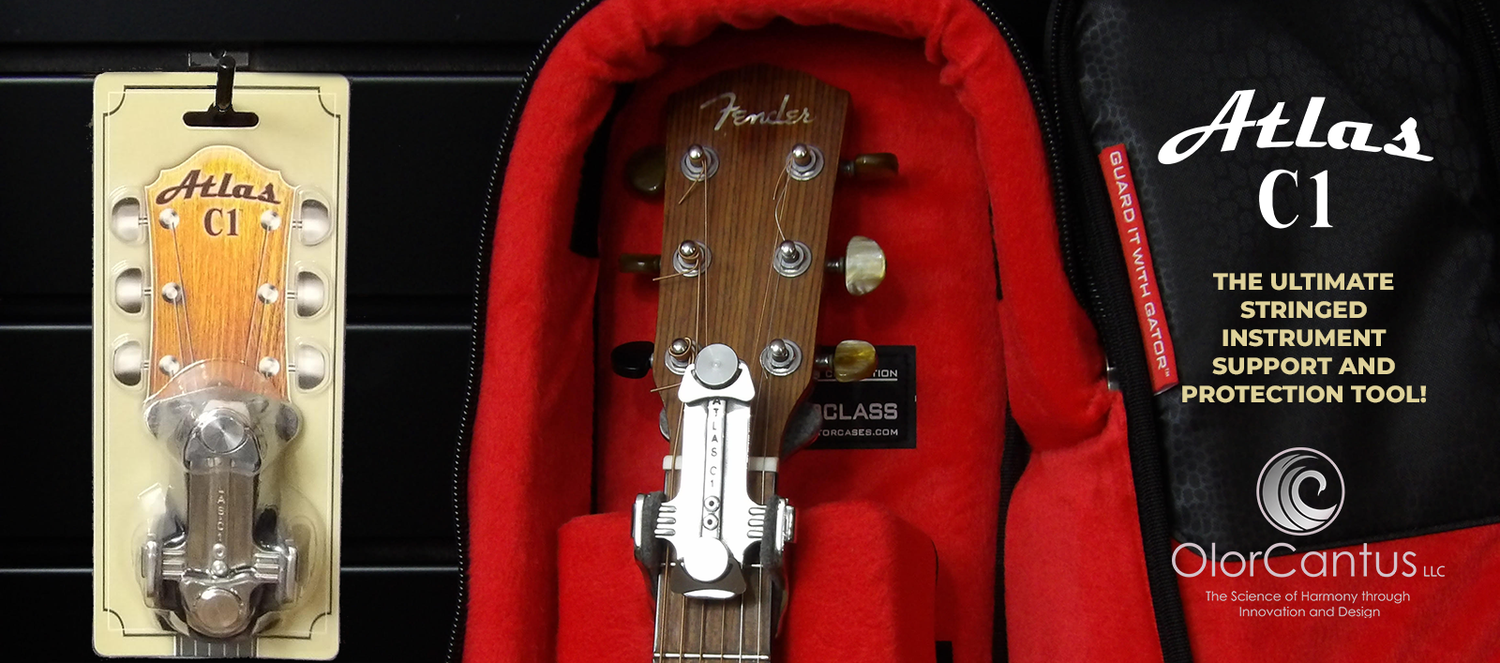
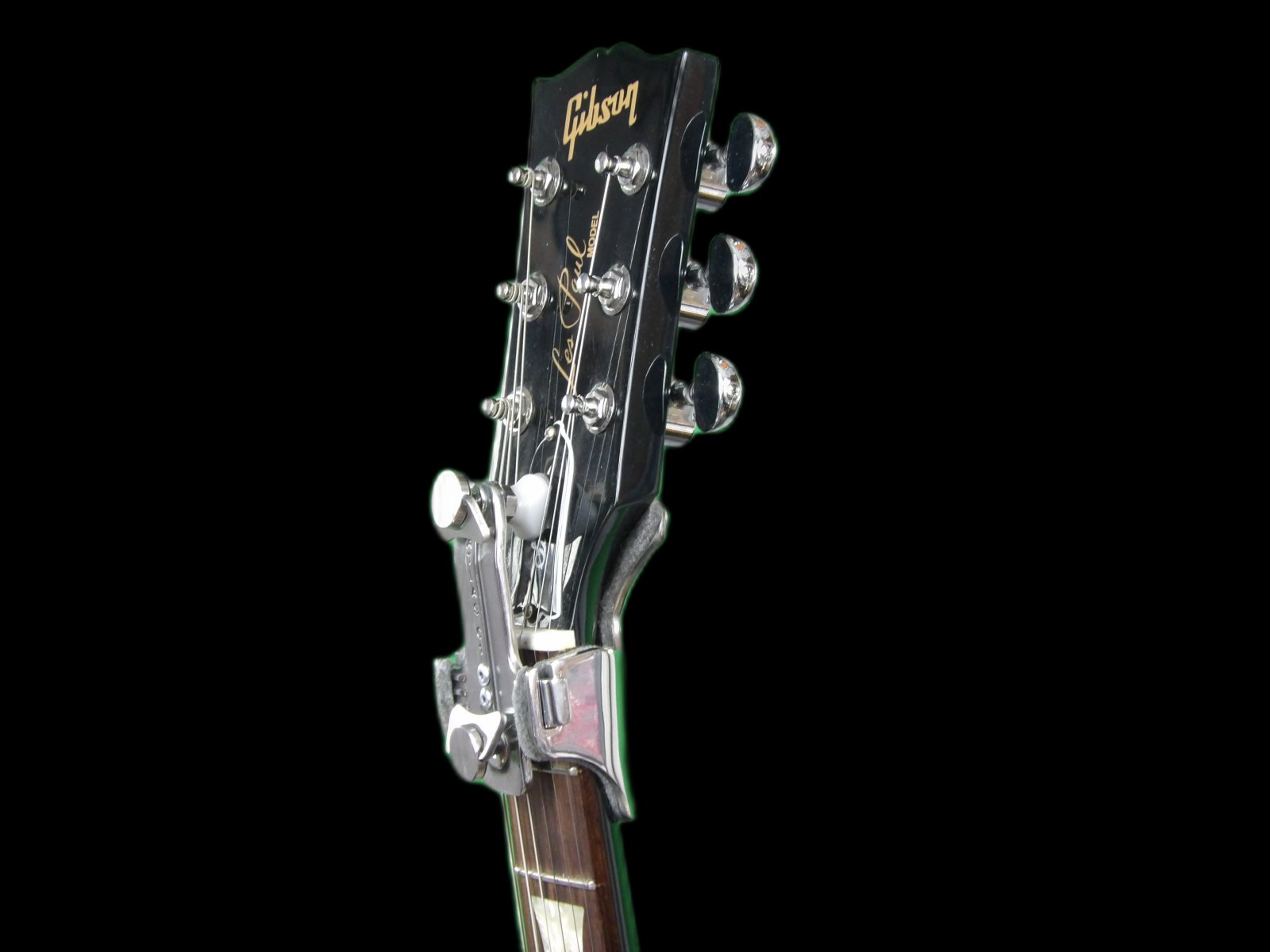
Inside the case, the headstock is the weak point. Angled headstocks carry heavy string tension, and a fall can snap the neck junction. That is the problem the Atlas C1 was built to solve: a patented support that braces the headstock during travel and doubles as a repair jig if a break happens anyway. For a fuller touring checklist, see our guide to touring musician guitar safety.
Watch out: a locked hard case is only as strong as its latch. Cheap cases pop open when dropped, so check the latches before every trip and replace any that feel loose.
Insurance Documentation and Claims Preparation
Insurance pays claims, not stories. A claims adjuster needs proof of ownership, proof of value, and a police report. If you cannot show those three things, expect a long fight.
Before anything happens:
- Photograph every instrument and every serial number.
- Keep receipts and appraisals for high-value and vintage guitars.
- Ask whether your policy covers instruments away from home, and get the answer in writing.
- Store the documentation off-site, not in the same house as the guitars.
After a loss, file the police report first. Then contact your insurer with your inventory, photos, and receipts in hand. A complete file speeds the claim and reduces disputes. Choosing the right coverage is its own decision, and our guide to which insurance policy best protects a vintage guitar walks through the options.
What to Do When a Guitar Is Stolen: A Recovery Checklist
What to do when a guitar is stolen: act fast, and work the list in order. The first 48 hours matter most, because stolen instruments move quickly.
- File a police report and get the report number.
- Call your insurer and open a claim.
- Post the serial number and photos to local music shops and pawn shops.
- List the guitar on stolen-gear registries and forums.
- Watch online marketplaces for the model, and check photos for your identifying marks.
- Contact venues and haulers if the loss happened on the road.
- Update your inventory file so the record stays accurate.
Speed is the advantage. A serial number in a pawn shop's hands on day one is a recovered guitar. The same number on day thirty is usually a closed case.
Equipping Your Collection for the Long Haul
Security is a habit, not a purchase. The players who keep their collections intact are the ones who lock the cabinet every night, log every new guitar, and check the alarm before a trip. None of that is expensive. All of it works.
The physical side matters too. A hard case protects against impact, and a headstock support protects against the break that ends a guitar's life on the road. The Atlas C1 is a U.S. patent-protected tool that braces the headstock-neck junction and counteracts string tension, and it doubles as a pre-aligned repair jig for a previously broken headstock. Professional touring musicians use it, and it has been featured in Premier Guitar Magazine. Buyers can also take advantage of free shipping and a 10% product discount.
Protecting a guitar collection is a series of small, boring decisions made before anything goes wrong. Make them now, and your instruments stay where they belong: in your hands.
The Science of Harmony through innovation and design. Long Live the Six String TM
A stolen guitar is a loss you can prevent, but only if the protection is already in place. Atlas C1 builds the Atlas-C1 to guard the most fragile point on any guitar, the headstock-neck junction, during travel, shipping, and storage. The patented design braces the headstock, doubles as a pre-aligned repair jig, and carries an unlimited transferable lifetime warranty. Get started with Atlas C1 and give every guitar in your collection the support it needs.
Frequently Asked Questions
How can I protect my guitars from theft at home?
Start with layered defenses: keep guitars out of sight from windows, lock them in a dedicated room or cabinet, and anchor the cabinet so it cannot be carried off. Add a door sensor or motion camera that alerts your phone, and store the most valuable instruments in hard cases when not in use. A guitar collection inventory with photos and serial numbers makes recovery and insurance claims far easier if a break-in happens.
How do I document a guitar collection for insurance?
Photograph each instrument from multiple angles, including the front, back, headstock, and any serial number or distinguishing marks. Record purchase receipts, appraisals, and model details in one file, and update the guitar collection inventory whenever you buy or sell. Many homeowners policies cap coverage for musical instruments, so confirm the limit and ask about a scheduled rider for high-value pieces before you need to file a claim.
What should I do when a guitar is stolen?
File a police report immediately and give the officer your serial numbers, photos, and any hidden identification marks. Then notify your insurer, alert local music stores and pawn shops with a description, and post the details to stolen-gear registries and collector forums. Check online marketplaces daily for the first few weeks. Documenting the instrument in advance is what makes this recovery checklist move quickly.
How can I keep guitars safe while traveling or shipping them?
Use a hard case, loosen string tension slightly, and support the headstock so it cannot flex against the neck junction during impact. Carry on when flying if the airline allows it, and never check a vintage instrument in a gig bag. Photograph the packed case before shipping, insure the shipment, and keep the guitar collection inventory updated so a carrier claim has proof of ownership ready.