
Table of Contents
- 1. Maintain Ideal Storage Environment With Humidity and Temperature Control
- 2. Guitar Humidity Control for Storage Using Two-Way Systems
- 3. Should You Loosen Guitar Strings for Storage
- 4. Preventing Headstock Damage During Storage
- 5. Choose Hard-Shell Case Storage Over Soft Gig Bags
- 6. Prepare Your Guitar Before Long-Term Storage
- 7. Select the Right Storage Location
- 8. Store Guitars Vertically or Horizontally: Orientation Best Practices
- 9. Re-Acclimate Your Guitar After Storage
- Conclusion
- Frequently Asked Questions
Last Updated: September 24, 2026
Proper long term guitar storage demands more than just closing a case and hoping for the best. The difference between a guitar that emerges from storage sounding pristine and one that requires expensive repairs often comes down to five core practices that most players overlook until it's too late.
Whether you're storing a vintage Les Paul worth more than a car, a collection of touring instruments, or a cherished acoustic you play once a year, the stakes are real. Wood expands and contracts with temperature swings. Humidity fluctuations crack finishes and corrode hardware. String tension warps necks. Neglect any of these factors, and you're inviting headstock breaks, fretboard damage, and tuning instability that can sideline an instrument for months.
This guide from Atlas C1 breaks down the five best practices for long term guitar storage, the science behind each one and exactly how to implement them. We've focused on what actually matters when protecting guitars during extended storage, whether you're a touring musician, a serious collector, or someone who simply wants their instruments to stay playable.
1. Maintain Ideal Storage Environment With Humidity and Temperature Control
The most common storage mistake is treating temperature and humidity as afterthoughts. They're not. Wood is hygroscopic, it absorbs and releases moisture based on its environment. When humidity swings wildly, the wood moves. This movement causes finish checking (fine cracks in the lacquer), fretboard separation, and structural stress that can take months to reverse.
Why Relative Humidity Matters
The ideal relative humidity for guitar storage sits between 45% and 55%. This range keeps the wood stable without adding or removing moisture. Too dry (below 40%), and the wood shrinks, causing frets to sprout and the neck to bow. Too humid (above 60%), and you risk mold growth, oxidation on hardware, and swelling that raises action to unplayable heights.
Most storage spaces, attics, basements, closets in uncontrolled environments, swing between these extremes seasonally. A basement might hit 75% humidity in summer and drop to 35% in winter. That 40-point swing is catastrophic over months.
Monitoring humidity is non-negotiable. A basic hygrometer costs under twenty dollars and takes thirty seconds to read. Place one inside your case or storage area. Check it monthly. If it drifts outside the 45-55% band, adjust your humidity control method immediately.
Temperature Stability and Ambient Conditions
Temperature swings matter less than humidity swings, but stability still counts. Aim for a consistent ambient temperature between 65°F and 75°F. Avoid storage spaces near heating vents, air conditioning units, or windows where direct sunlight creates micro-climates inside the case.
Rapid temperature changes can cause condensation inside a sealed case, moisture pooling on the fretboard and hardware. If you're moving a guitar from a cold garage into a warm house, let it acclimate inside its case for two hours before opening it. This prevents condensation damage.
2. Guitar Humidity Control for Storage Using Two-Way Systems
Two-way humidification systems actively regulate moisture levels, making them the gold standard for serious storage. Unlike passive methods, they add moisture when the environment is too dry and absorb moisture when it's too humid.
Two-Way Humidification vs. Desiccants
Two-way systems (like Boveda humidity control packs) maintain a precise 49% relative humidity. They're sealed packets that regulate bidirectionally. Drop one in your case, and it handles fluctuations automatically. No monitoring. No refilling. They last months before needing replacement. For touring musicians or collectors storing multiple instruments, this is the simplest approach.
Desiccant packs (silica gel) work one direction only, they absorb moisture. They're effective in humid climates but useless in dry ones. In a desert climate or a heated room in winter, silica gel will over-dry your guitar, causing the same damage you're trying to prevent. Use desiccants only if you're certain your storage environment runs consistently humid.
The choice depends on your climate. If your region experiences seasonal humidity swings (most of the country), two-way systems are worth the investment. If you live in a consistently dry or humid zone, desiccants may suffice, but verify your local humidity patterns first.
Monitoring With a Hygrometer
A hygrometer is your insurance policy. Place one inside the case alongside your humidity control method. Check it monthly. If humidity drifts above 60% or below 40%, your humidity system isn't working, either it's expired, the case seal is compromised, or the room conditions have shifted.
Digital hygrometers with memory functions (showing high/low readings) are ideal. They cost thirty to fifty dollars and provide data you can actually use.
3. Should You Loosen Guitar Strings for Storage
This is where opinions divide. The conventional wisdom says loosen the strings to reduce neck stress. The reality is more nuanced.
String Tension and Neck Relief
Strings exert roughly 130 pounds of cumulative pressure on the headstock and neck. Over months, this tension can cause the neck to bow forward (lose relief) or, in extreme cases, damage the headstock-neck junction. Loosening strings reduces this tension.
However, a neck with proper truss rod adjustment is designed to handle string tension indefinitely. The real risk isn't the tension itself, it's combined stress from humidity changes, temperature swings, and inadequate support at the headstock.
If your guitar is stored in a stable climate-controlled environment with proper humidity control, leaving strings at full tension is fine. If your storage conditions are variable (uncontrolled basement, attic, garage), loosen strings to half tension. This reduces cumulative stress without creating the problem of sudden tension release, which can also damage the neck.
Tuning Stability During Long Storage
A guitar stored at half tension will take time to re-stabilize when you bring it back into use. Expect 24-48 hours of tuning drift as the wood and hardware adjust. This is normal and reversible. Bring the guitar to pitch gradually over a few days rather than tuning to full pitch immediately.
4. Preventing Headstock Damage During Storage
The headstock-neck junction is the most vulnerable point on any guitar. It's where maximum string tension concentrates on a narrow section of wood. A fall, a case shift during transport, or even the weight of the guitar resting against a case wall can snap the headstock clean off.
Headstock-Neck Junction Vulnerability
Angled headstocks (Gibson-style) are more prone to breaks than straight headstocks (Fender-style) because the angle creates a stress concentration. But any headstock can break under impact.
During storage, the headstock can shift inside the case with vibration or settling. Even a soft gig bag offers almost no protection. A hard case helps, but if the interior padding doesn't support the headstock specifically, it can still move.
Support Solutions for Angled and Straight Headstocks
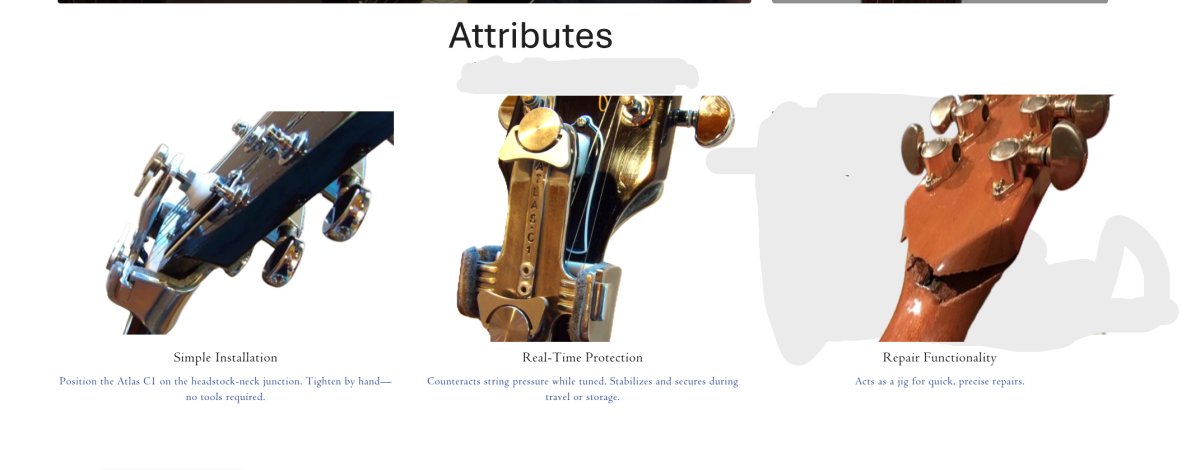
The most reliable solution is a dedicated headstock support tool. The Atlas C1 is purpose-built for this: it clamps to the headstock-neck junction and prevents any movement inside the case. It's universal, fitting both angled and straight headstocks, and doubles as a pre-aligned repair jig if a break ever occurs. For players storing high-value instruments or traveling frequently, this single tool eliminates the biggest storage risk.
For budget alternatives, use soft foam wedges or pool noodles cut to length, positioned to support the headstock without pressing directly on the finish. The key is preventing movement, not cushioning impact, the case itself should absorb impact.
5. Choose Hard-Shell Case Storage Over Soft Gig Bags
This one is straightforward: hard-shell cases outperform soft gig bags for long-term storage by a wide margin.
Impact Resistance and Thermal Insulation
Hard cases (like Hiscox Pro-II or Gator Deluxe Wood Series models) protect against physical damage, drops, pressure, case stacking. They also provide thermal insulation, buffering the guitar from rapid temperature swings. The rigid structure prevents the guitar from shifting inside.
Soft gig bags are portable and convenient for gigging, but they offer minimal protection and zero thermal insulation. In a storage setting, they leave the guitar vulnerable to pressure, impact, and temperature fluctuations.
Interior Lining and Padding Quality
Not all hard cases are created equal. Check the interior lining. High-quality cases use plush fabric or specialized foam that won't degrade or off-gas chemicals onto the finish. Cheap cases sometimes use materials that can stick to lacquer or leave marks over months.
Open the case and smell it. If there's a chemical odor, the off-gassing could damage the finish. Quality cases like Hiscox use inert materials that won't harm the guitar.
| Case Type | Protection | Thermal Insulation | Long-Term Storage |
|---|---|---|---|
| Hard-shell composite | Excellent | Very good | Best choice |
| Wooden hard case | Excellent | Very good | Best choice |
| Soft gig bag | Poor | Poor | Not recommended |
| Gigbag with hard shell | Good | Good | Acceptable |
6. Prepare Your Guitar Before Long-Term Storage
The weeks before storage are your last chance to prevent problems. A clean guitar with protected hardware stands a far better chance of emerging in good condition.
Cleaning and Fretboard Conditioning
Clean the fretboard with a specialized fretboard oil or conditioner. This prevents the wood from drying out and checking. Use a microfiber cloth and apply sparingly, you're conditioning, not soaking. A product like MusicNomad Premium Guitar Care System includes fretboard oil formulated to protect without leaving residue.
Wipe down the entire body with a soft cloth to remove dust and oils. These accumulate and can trap moisture against the finish. Polish the body if the finish is dull, but avoid aggressive polishing compounds that can damage vintage finishes.
Protecting Hardware From Oxidation and Corrosion
Metal hardware, tuning machines, bridge hardware, pickups, oxidizes over time, especially in humid storage. Wipe down all metal parts with a dry cloth, then apply a light coat of oil or a corrosion-inhibiting product. This creates a barrier against moisture.
For vintage instruments with original hardware, use only products designed for instrument care. General-purpose oils can leave stains or attract dust.
7. Select the Right Storage Location
Where you store matters as much as how you store. The wrong location can sabotage even perfect humidity control.
Climate-Controlled Closets vs. Basements and Attics
A climate-controlled closet inside your home is ideal. Temperature and humidity are stable. No direct sunlight. No pests. No seasonal swings.
Basements are problematic. They're typically humid, especially in spring and summer. Mold and mildew thrive. Water leaks are a real risk. If basement storage is your only option, invest heavily in humidity control and place the case on a shelf well above floor level.
Attics are even worse. They swing wildly between temperature extremes, freezing in winter, baking in summer. Humidity fluctuates with seasonal changes. Pests (rodents, insects) are common. Avoid attic storage if possible.
Garages are a middle ground but problematic for similar reasons: temperature and humidity swings, potential chemical exposure from fuel or solvents, and pest access.
Avoiding Dust, Pests, and Light Exposure
Dust accelerates finish oxidation and can scratch the guitar when the case is opened. Store cases away from air vents and ceiling fans that circulate dust.
Pests, mice, insects, are attracted to stored spaces. Ensure the storage area is sealed and regularly inspected. A hard case provides some protection, but pests can still enter if given time.
Direct sunlight fades finishes and causes finish checking. Keep cases in dark storage or cover them with a cloth if they must sit near a window.
8. Store Guitars Vertically or Horizontally: Orientation Best Practices
This is simpler than most guides suggest: horizontal storage (case lying flat) is safer than vertical storage for long-term storage.
Vertical storage (case standing upright) puts all the guitar's weight on the bottom bout of the body. Over months, this can cause stress at the body-neck joint. It also makes the headstock vulnerable if the case shifts.
Horizontal storage distributes weight evenly across the case bottom. The guitar is cradled and stable. Headstock support is easier to manage. This is the standard for professional storage and shipping.
If you're storing multiple guitars, stack cases horizontally with soft padding between them. Never stack more than three cases high, the weight of upper cases can compress the padding and create pressure points.
9. Re-Acclimate Your Guitar After Storage
Bringing a guitar out of long-term storage isn't as simple as unzipping the case and playing. The wood has been stable in a controlled environment. Sudden exposure to ambient humidity and temperature will cause it to shift, affecting playability.
Gradual Temperature and Humidity Adjustment
Remove the guitar from the case and let it sit in the room where you'll play it for 24-48 hours before tuning to full pitch. This allows the wood to gradually adjust to the new environment. If you tune to full pitch immediately, the sudden tension change can cause tuning drift or even damage.
Monitor humidity during this acclimation period. If the room is significantly drier or more humid than your storage environment, the adjustment will take longer. A stable room temperature (65-75°F) accelerates the process.
Structural Integrity Check and Action Height Adjustment
Before playing, inspect the guitar for any visible damage: finish checking, fret sprout, or headstock cracks. Check the neck relief with a straightedge. If the neck has bowed excessively during storage, the truss rod may need adjustment.
Have the action measured. Storage can cause the neck to shift slightly, raising or lowering action height. A luthier can measure and adjust this in minutes. Action heights above 2.5mm on the bass side (at the 12th fret) indicate the neck has shifted and needs attention.
Tune slowly, bringing the guitar to pitch over 15-20 minutes rather than all at once. This gives the hardware time to settle.
Conclusion
Long-term guitar storage protects your investment and keeps instruments playable for decades. The five practices covered here, humidity and temperature control, two-way humidification systems, thoughtful string tension management, headstock protection, and proper case selection, work together to prevent the most common storage failures.
For high-value instruments or frequent travelers, headstock protection deserves special attention. The Atlas C1 eliminates this risk entirely. It stabilizes the vulnerable headstock-neck junction during storage and doubles as a pre-aligned repair jig if damage ever occurs. For any guitarist serious about long-term instrument preservation, it's a one-time investment that pays for itself by preventing a single costly repair.
When you're ready to protect your guitars, take advantage of free shipping on your first order, plus a 10% product discount to get started with Atlas C1 and store your guitars with confidence, knowing they'll emerge from storage ready to play.
Frequently Asked Questions
How should I store a guitar for long term to prevent damage?
Store your guitar in a hard-shell case in a climate-controlled environment with 45-55% relative humidity and stable temperature. Clean and condition the instrument before storage, loosen strings slightly to reduce neck stress, and use a headstock support tool to prevent headstock damage. Check humidity levels with a hygrometer and use two-way humidification systems like Boveda packs to maintain ideal moisture levels throughout long-term storage.
Should you loosen guitar strings for storage?
Loosening strings by a half-step to a full step reduces neck tension and helps prevent warping during long-term storage. However, completely unstringing a guitar is unnecessary and can affect truss rod adjustment and fretboard conditioning. Slight string tension reduction balances neck relief and structural integrity while keeping your guitar stable and ready to play when you retrieve it from storage.
What is the best guitar humidity control for storage?
Two-way humidification systems like Boveda packs maintain precise relative humidity by both adding and removing moisture as needed. These are superior to one-way desiccants alone because they actively regulate humidity rather than just absorbing excess moisture. Monitor humidity with a hygrometer to ensure levels stay between 45-55%. For larger collections, consider electronic climate control systems in your storage closet or room.
Can a guitar be stored vertically or should it be horizontal?
Guitars can be stored either vertically or horizontally, but the choice depends on your space and headstock design. Vertical storage on a padded stand or wall hanger saves space and keeps guitars visible. Horizontal storage in a case provides maximum protection and is ideal for valuable instruments or those with angled headstocks. Whichever orientation you choose, ensure the headstock is properly supported to prevent neck junction stress and potential damage.