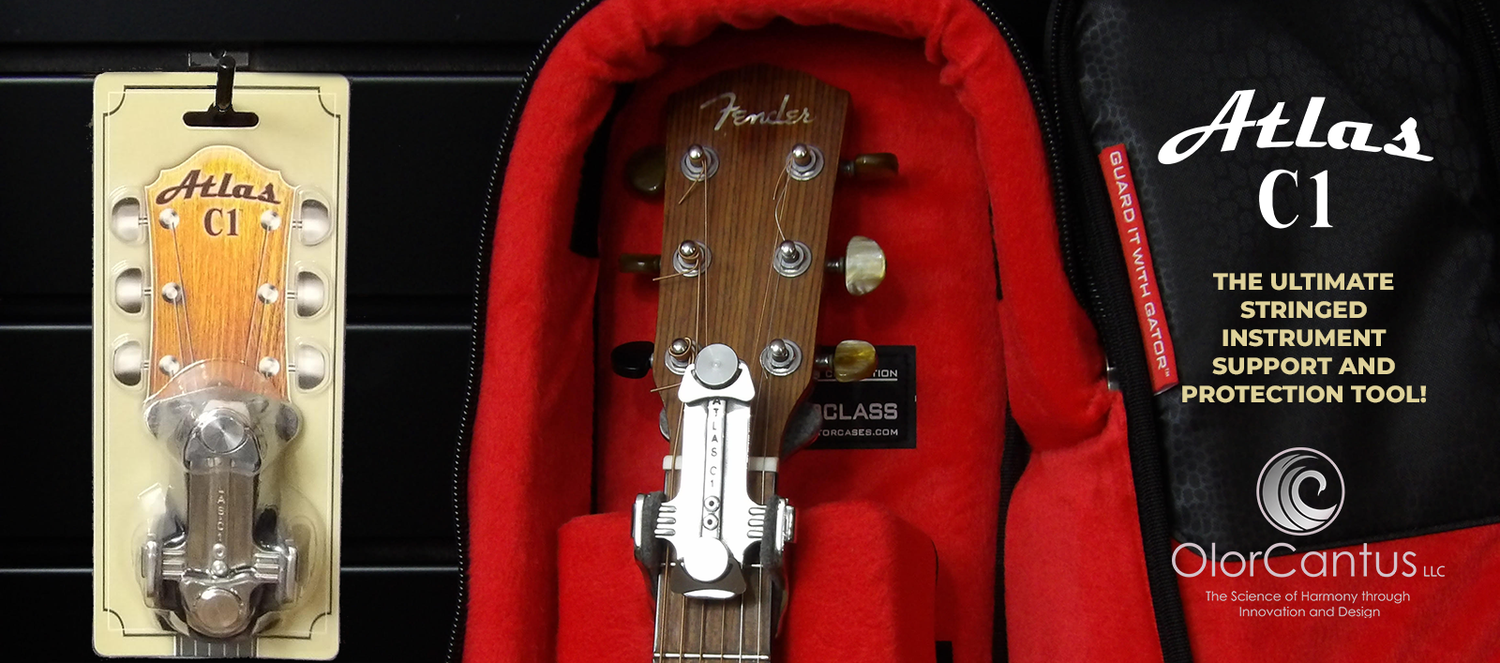

Quick Summary
A headstock repair is usually the better choice when the wood is still present and the break stays in the headstock, while replacement makes sense when fragments are missing or the fracture reaches the neck joint. The decision also depends on whether the neck is straight, whether tuner holes sit on the break line, and what the instrument is worth relative to the work.
- Clean breaks, partial cracks, and neck breaks each change how serious the repair will be.
- Stop and get a professional assessment if the pieces shift or the neck appears to lean or twist.
- Plan tuner hole plugging and re-drilling before glue goes on, since repositioning tuners later is difficult.
- Replacement scope ranges from a headstock graft to a full neck replacement, so clarify which applies before ordering.
- Get the replacement details, including what is reused and how the finish is matched, in writing before work begins.
Table of Contents
- Why Headstock Breaks Happen and How to Assess the Damage
- Broken Guitar Headstock Repair: The Process Step by Step
- Guitar Headstock Repair Strength: What a Repaired Joint Can Hold
- Guitar Headstock Replacement: Scope, Compatibility and Process
- Repair vs Replacement Comparison: Cost, Tone, Value and Durability
- Using a Headstock Repair Jig and When to Hand the Job to a Luthier
- Protecting Your Guitar Before Your Next Break
- Frequently Asked Questions
Why Headstock Breaks Happen and How to Assess the Damage
Last Updated: October 27, 2026
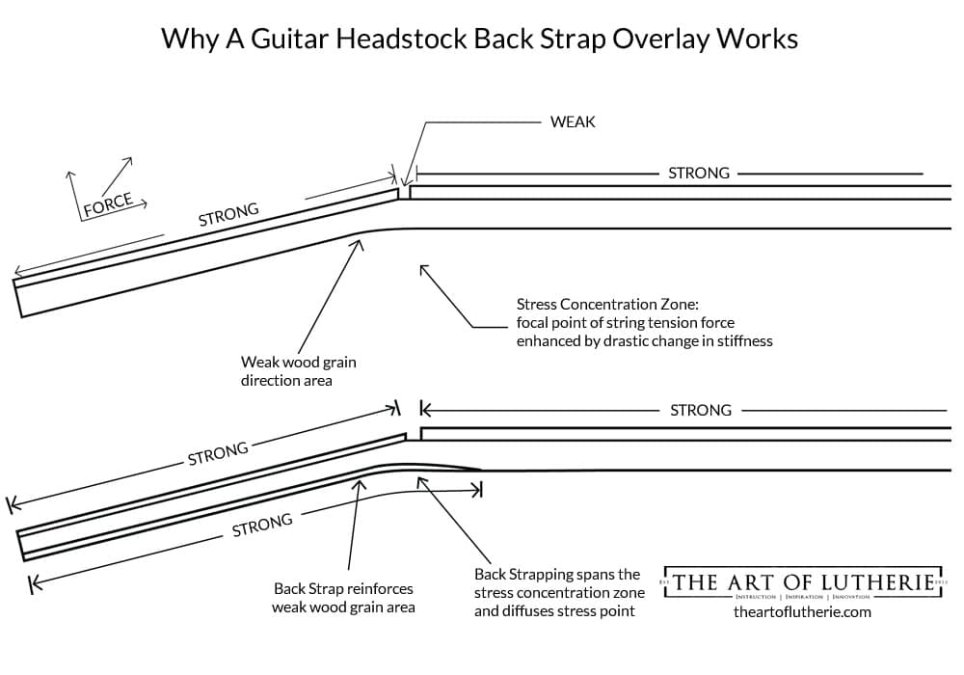
A guitar headstock can break for several reasons. Atlas C1 has built its protection tools around the headstock-neck junction. Understanding how a break happens makes the repair-or-replace decision much clearer.
Headstock damage can take different forms. A drop or impact on the headstock face can crack the wood along the grain. The angled headstock on many Gibson-style guitars is vulnerable at the neck joint.
Causes and types of headstock damage
Most breaks fall into three types:
- Clean break: A fracture that runs cleanly across the headstock, often from a drop or a sharp impact.
- Partial crack: A crack that starts at the surface or along a glue line and has not yet separated.
- Neck break: A fracture at the junction where the headstock meets the neck, which usually involves the neck joint itself.
Each type changes how serious the repair will be. A partial crack that has not separated may need only a clean glue joint and clamping. A neck break often involves structural wood and may push the job toward replacement. A careful look after any impact is worth the time. If your guitar has an angled headstock, see how to support angled headstocks to avoid costly repairs.
Assessing a crack or break before you touch it
Before you apply any glue or clamp, inspect the break in good light. Check whether the pieces move, whether any wood is missing, and whether the fracture reaches the neck joint.
Be honest about what you can see. If the pieces shift, or if the neck appears to lean or twist, stop and get a professional assessment.
Broken Guitar Headstock Repair: The Process Step by Step
A headstock repair is a sequence of careful steps. Work slowly, and do not start gluing until you have confirmed the pieces fit together. Learn which clamps, adhesives, and jigs professionals use for headstock breaks.
Removing strings and tuners
Clean out the old tuner holes and check whether any bushings have loosened. If a hole sits directly on the break line, you may need to fill it or re-drill it after the repair. Plan this step before the glue goes on, because repositioning tuners after the joint cures is difficult.
Glue selection, clamping and alignment
The Atlas C1 can serve as a pre-aligned repair jig.
Guitar Headstock Repair Strength: What a Repaired Joint Can Hold
Plan for the repaired joint to be the weakest point of the neck for some time. Avoid heavy impacts, watch humidity closely, and check the joint periodically for any new movement or hairline separation. A repair that holds in the first month does not guarantee long-term durability, so monitoring matters. For the broader picture, read our guide to what happens when a guitar headstock breaks.
Guitar Headstock Replacement: Scope, Compatibility and Process
"Replacement" covers different jobs. Clarify which one applies before ordering anything.
Three scopes of replacement
- Headstock replacement (splice or graft): The damaged headstock is cut away and a new headstock is grafted onto the existing neck. The neck shaft, fretboard, and neck joint stay original. This preserves the instrument's feel and is the least invasive replacement option.
- Headstock repair with graft: Missing wood is replaced with a matching block while most of the original headstock remains. This is technically a repair, but it is priced and scheduled like a small replacement.
- Full neck replacement: The entire neck is removed at the neck joint and a new neck is fitted. This is the largest scope and changes the most about the instrument.
Compatibility factors that decide feasibility
- Scale length: The new neck or headstock must preserve the scale length, or intonation and fret placement will be wrong.
- Neck joint profile: Set-neck, bolt-on, and neck-through constructions use different joints. A replacement neck must match the joint type and dimensions.
- Headstock angle and thickness: The angle affects string break over the nut and tuning stability. A different angle changes feel and may require a different nut or string tree.
- Tuner layout and spacing: Post spacing, bushing size, and screw locations must match the new headstock or be re-drilled.
- Fretboard radius, fret count, and material: These affect feel and playability and should match the original or be chosen deliberately.
- Nut width and slot: A new nut is usually required; the slot must match the neck.
- Finish and color match: Matching an aged finish is a craft in itself and should be quoted separately.
Do not order a replacement neck or headstock before a luthier confirms the joint type and dimensions. Returns are difficult once parts are drilled or finished.
The replacement process
Ask the luthier what will be replaced, what will be reused, and how the finish will be matched. Get those answers in writing before work begins, and keep the invoice for insurance and resale records.
Repair vs Replacement Comparison: Cost, Tone, Value and Durability
Choosing between repair and replacement depends on the instrument and the damage.
A repair-versus-replacement decision framework
- Is all the wood still present and dry-fitted cleanly? If fragments are missing or crushed, a repair needs a graft or spline, which raises skill and cost. Large missing sections often favor replacement.
- Does the fracture stay in the headstock, or does it reach the neck joint? Headstock-only breaks are usually repairable. A break that compromises the neck shaft or truss rod channel pushes toward neck replacement.
- Is the neck straight and does the truss rod work? A twisted neck or a frozen truss rod is a separate problem that a headstock repair will not fix.
- Do tuner holes or bushings sit on the break line? If so, plan for plugging and re-drilling, which adds labor.
- What is the instrument worth relative to the repair? On a low-value instrument, a complex repair can approach or exceed replacement cost. On a valuable or vintage instrument, preserving original wood usually justifies the repair.
- Will the repair be visible, and does that matter for resale? A well-matched finish hides most repairs; a visible scar should be disclosed and priced into resale expectations.
Itemized cost anatomy
| Cost line | Typical repair | Typical replacement |
|---|---|---|
| Teardown (strings, tuners, hardware) | Included | Included |
| Woodwork (glue-up, spline, graft) | Main cost driver | Main cost driver |
| Finish touch-up or refinish | Often partial | Often full headstock or neck |
| Parts (headstock, neck, tuners, nut) | Rarely needed | Often needed |
| Setup (nut, relief, intonation, action) | Usually included | Always included |
| Turnaround time | Shorter | Longer, especially if parts are ordered |
Structural and tonal outcomes over time
On tone, be careful with claims. A repaired headstock that aligns correctly generally has no audible effect, because the headstock's mass and stiffness change only slightly. A replacement neck can change tone and feel if the wood, scale length, or fretboard differs. Treat dramatic tone claims in either direction with skepticism and judge the instrument after a proper setup.
Value, insurance, and disclosure
Atlas C1's product is a pre-aligned repair jig.
Using a Headstock Repair Jig and When to Hand the Job to a Luthier
The Atlas C1 doubles as a pre-aligned repair jig.
Protecting Your Guitar Before Your Next Break
Atlas C1 designed its protection tool to support the vulnerable headstock-neck junction during travel, shipping, and storage, and to counteract string pressure tension.
Use a sturdy hard case, avoid placing the guitar where it can be bumped or dropped, and keep it away from sudden humidity changes. You can also review a headstock support and protection tool designed for travel and storage. Atlas C1 offers a 10 percent product discount and free shipping, so it is worth checking its site for current availability.
Frequently Asked Questions
Is it better to repair or replace a broken guitar headstock?
A luthier can assess the damage before any work starts.
Can a cracked guitar headstock be repaired?
A luthier can assess the crack before deciding how to proceed.
Can a guitar with a repaired headstock stay in tune?
A luthier can assess the repaired headstock and its tuning stability.
Protecting a guitar you care about starts with understanding the break and choosing the right fix. Atlas C1 makes a headstock protection and repair tool that supports the neck junction during travel and doubles as a pre-aligned jig for repairs. Explore the Atlas C1 range to see whether it fits your next repair or your long-term protection plan.