
Last Updated: October 31, 2026
Quick Summary
To protect a guitar headstock during shipping, loosen the strings to slack, wrap the headstock in a soft cloth, and pack crumpled paper or closed-cell foam around it so it cannot rock forward, back, or side to side. Support the neck along its length and fill every gap in a hard case, then box the case with at least two inches of padding on every face.
- Tune strings down roughly a whole step to a fourth below pitch before packing.
- Never bridge a hard object directly across the headstock face; cushion around it instead.
- A hard case is the only safe choice for shipping a guitar; gig bags offer minimal impact protection.
- Line the outer double-wall box with at least two inches of padding on every face.
- Photograph the guitar and each packing layer before shipping to document pre-ship condition.
Table of Contents
- Why the Headstock-Neck Junction Breaks in Transit
- How to Pack a Guitar for Shipping: Step-by-Step
- Shipping a Guitar in Its Case: Hard Case vs. Gig Bag
- Guitar Shipping Box and Packing Materials That Protect the Finish
- Choosing a Guitar Shipping Protection Device
- Fit Checks and Measurable Packing Criteria
- Headstock Designs and Instrument-Specific Risks
- Carrier Rules, Insurance, and What to Do If Damage Happens
- Common Packing Mistakes That Break Necks
- Order the Atlas C1 and Ship With Confidence
- Frequently Asked Questions
Why the Headstock-Neck Junction Breaks in Transit
The headstock-neck junction is the weakest point on most guitars, and it is the first thing to fail when a case takes a hit. The joint carries the full pull of string tension, and on angled-headstock designs it also sits at a sharp transition in the wood grain. A drop that a body would shrug off can snap the headstock clean off.
Guitar headstock breaks follow a predictable pattern. The case stops moving. The guitar inside does not. That lag sends the instrument forward, and the headstock, which has the most mass and the least support at the top of the case, absorbs the impact.
If you want the full picture of what a break means for repair costs and playability, read our guide on what happens if a guitar headstock breaks.
How to Pack a Guitar for Shipping: Step-by-Step
Packing a guitar for shipping means locking the instrument in place so nothing moves inside the case, then cushioning the case inside a sturdy outer box. The goal is simple: no shift, no impact, no load on the neck. The sequence below takes about 20 minutes and works for electric, acoustic, and bass guitars. Each step includes a check you can actually perform, so you are not guessing whether the pack is tight enough.

Step 1: Loosen the Strings and Prep the Instrument
- Tune the strings down until they are slack but still on the tuners. Aim for roughly a whole step to a fourth below pitch, enough to remove most of the pull on the neck joint without letting the strings fall off the posts and scratch the top.
- Remove the strap, capo, slide, and any loose accessories from the case pockets. Loose metal in a case becomes a projectile in a drop.
- Wipe down the finish with a soft microfiber cloth and let it dry fully. Trapped moisture under padding is a finish risk.
- If the guitar has a tremolo, block or detune it so the bridge does not shift under slack tension.
Slack strings matter more than most people think. Full tension plus a drop is a recipe for a cracked neck, and the headstock-neck junction carries that load directly.
Step 2: Support the Headstock and Fill the Case
- Wrap the headstock in a soft cloth or microfiber towel. This is a barrier layer, not the support itself, it keeps hard materials off the finish.
- Pack crumpled paper or closed-cell foam around the headstock so it cannot rock forward, back, or side to side. The critical zone is the gap between the back of the headstock and the case lid, and the space under the neck heel.
- Support the neck along its length so the headstock is not cantilevered. A rolled towel under the neck at the nut and around the 12th fret spreads load instead of concentrating it at the junction.
- Fill every empty space between the body and the case walls. Pack from the bottom up so nothing settles downward in transit.
- Close the lid and press gently. If you feel the guitar move, add more packing.
Step 3: Seal the Case and Box It for the Carrier
- Tape the case shut so the latches cannot pop open. Run tape across the latch line, not around the whole case.
- Line the bottom of a sturdy double-wall outer box with at least two inches of padding.
- Set the case inside and fill all four sides and the top with at least two inches of padding on every face. The case should not touch the box wall directly.
- Shake the box. Nothing should rattle, and the case should not shift when you tilt the box from corner to corner.
- Seal with packing tape along all seams and mark it "Fragile: Handle With Care." Add a second label inside the box with the destination address in case the outer label is damaged.
Pass/Fail Checks Before You Seal
Run these before the tape goes on. If any check fails, open it up and add cushioning.
- Case shake test: close the case and shake it gently. No movement means the guitar is locked in.
- Headstock gap test: press a finger into the space around the headstock. If you can move the headstock more than a hair, add packing.
- Neck support test: press down gently on the neck at the nut. It should not flex or dip toward the case floor.
- Box shake test: shake the sealed outer box. Any rattle means the case is loose.
- Lid pressure test: the case lid should close with slight resistance, not slam shut.
Ten extra minutes here beats a repair bill later.
Shipping a Guitar in Its Case: Hard Case vs. Gig Bag
A hard case is the only safe choice for shipping a guitar. A gig bag is fine for carrying an instrument to a local gig, but it offers almost no protection against impact or stacking pressure.
Here is how the two compare:
| Feature | Hard Case | Gig Bag |
|---|---|---|
| Impact protection | Rigid shell absorbs hits | Minimal |
| Headstock support | Built-in neck cradle | None |
| Stacking strength | High | Low |
| Best for | Shipping, air travel | Local gigs, storage |
| Needs outer box | Yes | Yes, always |
Padding alone does not stop a headstock break. The shell has to resist the hit. Our comparison of guitar case padding vs structural support explains why the rigid shell matters more than the foam inside it.
Guitar Shipping Box and Packing Materials That Protect the Finish
The right guitar shipping box and packing materials protect two things: the instrument's finish and its structure. The wrong materials can do damage of their own.
Use these materials:
- Double-wall corrugated box sized a few inches larger than the case on every side
- Crumpled packing paper for filling gaps around the headstock
- Closed-cell foam for blocking the body in place
- Microfiber cloth or soft cotton between the headstock and any hard surface
- Packing tape rated for heavy boxes
Avoid these:
- Newspaper, which can leave ink marks on a finish
- Bubble wrap directly against a nitrocellulose finish, which can trap moisture and leave marks over time
- Loose foam peanuts around the headstock, which shift and settle in transit
- Used boxes that have lost their rigidity
Watch out: never let bare foam or hard plastic touch a guitar finish for long periods. Use a soft cloth barrier.
Choosing a Guitar Shipping Protection Device
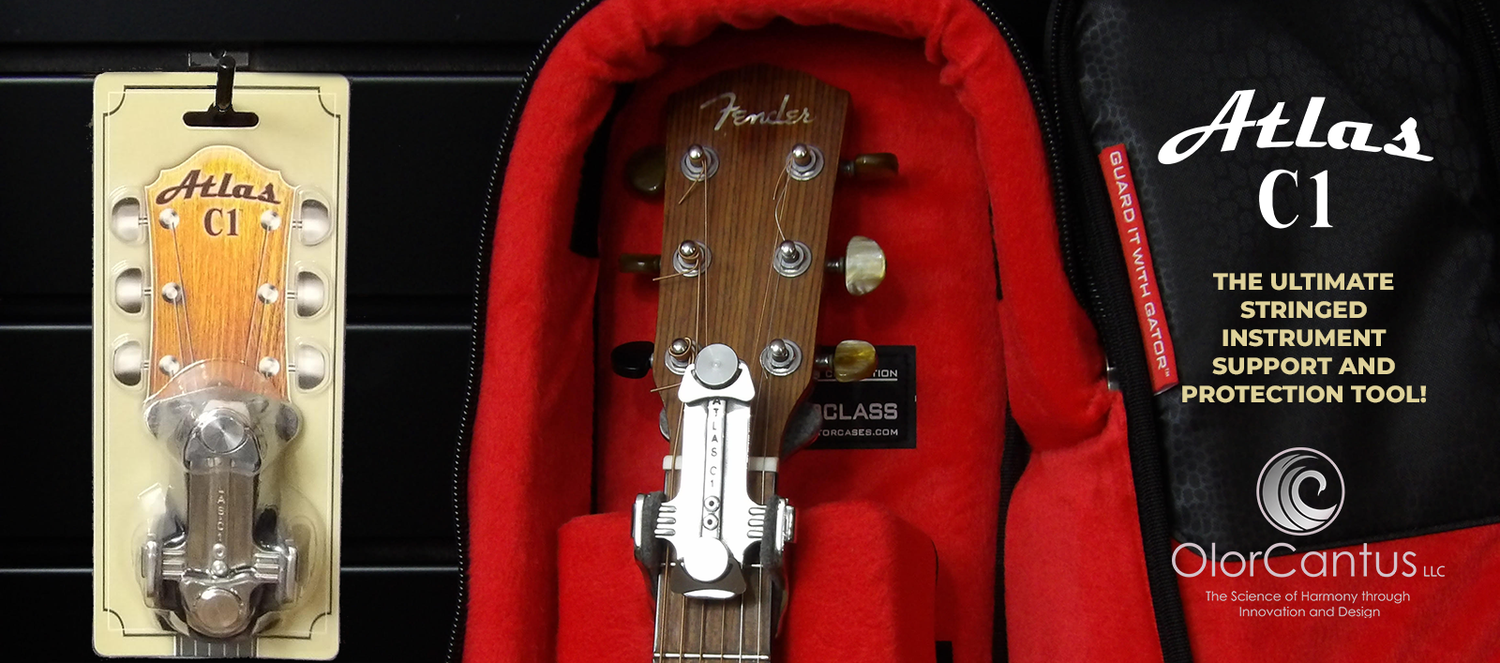
A guitar shipping protection device is a dedicated tool that supports the headstock-neck junction so the joint cannot flex or snap during transport. The Atlas C1 is one dedicated option for supporting the headstock-neck junction.
The Atlas C1 is a U.S. patent-protected, universal tool that targets and protects the vulnerable headstock-neck junction. It counteracts the string tension that pulls on the joint, and it doubles as a pre-aligned repair jig if a break does happen. It is built for lifetime use.
For a closer look at how it performs, read our Atlas guitar headstock protection review.
Best for: touring musicians, collectors, and anyone shipping a high-value instrument. Skip if: you only move a guitar between rooms at home and never ship or fly with it.
Fit Checks and Measurable Packing Criteria
Fit checks are simple tests you run before the box leaves your hands. They turn packing from guesswork into something you can actually verify.
Run these four checks:
- Case shake test: close the case and shake it gently. No movement means the guitar is locked in.
- Headstock gap test: press a finger into the space around the headstock. If you can move the headstock more than a hair, add packing.
- Box shake test: shake the sealed outer box. Any rattle means the case is loose.
- Lid pressure test: the case lid should close with slight resistance, not slam shut.
If any check fails, open it up and add more cushioning. Ten extra minutes here beats a repair bill later.
Headstock Designs and Instrument-Specific Risks
Headstock design changes the risk. Angled headstocks, common on Gibson-style guitars, sit at a sharp angle to the neck. That angle is great for tone and string break, but it creates a weak spot at the junction.
Straight headstocks, common on Fender-style guitars, are more forgiving. They still break, but the joint is less used.
- Angled headstocks: highest risk, needs firm support at the junction
- Straight headstocks: lower risk, still needs the headstock blocked in place
- Scarf joints: a glued joint at the headstock, strong but still vulnerable to impact
- Acoustic and bass guitars: heavier necks mean more force in a drop
The Atlas C1 is universal, so it works across these designs, including straight-headstock guitars.
Carrier Rules, Insurance, and What to Do If Damage Happens
Carrier rules and insurance decide who pays when something goes wrong. Read the carrier's packing requirements before you ship, and follow them closely. The practical move is to pack to the strictest standard you can meet and to document that you did.
Before You Ship
- Check the carrier's packing guidance for musical instruments. Check the carrier's packing guidance for musical instruments, and follow the cushioning minimums it states.
- Declare the value. If the instrument is worth more than the carrier's default liability limit, declare the full value and pay for the coverage.
- Photograph the guitar before packing, front, back, headstock face, headstock back, serial number, and any existing wear. Timestamped photos establish pre-ship condition.
- Photograph each layer of packing as you build it. A photo of the headstock cushioned in the case and the case blocked in the box is your proof the pack met the standard.
- Keep the receipt and tracking number. Save the drop-off receipt, not just the tracking link.
If Damage Happens
- Photograph the box and instrument immediately on arrival, before moving anything. Shoot the box from all sides, then open it and photograph the packing in place, then the damage.
- Keep all packing materials for inspection. Carriers may require them, and discarding them can void a claim.
- File the claim right away. File the claim as soon as possible, since carriers set claim deadlines.
- Describe the damage in mechanical terms, where the crack starts, how the headstock moved, what the packing looked like, rather than just "broken." A clear cause-and-effect description supports the claim.
For a full walkthrough of what to do when a guitar arrives damaged, see our guide on steps to take when a guitar arrives damaged. The U.S. Federal Trade Commission's consumer advice on shipping and delivery explains your rights when a package arrives damaged.
Common Packing Mistakes That Break Necks
Most headstock breaks trace back to a handful of packing mistakes. Fix these and you remove most of the risk.
- Leaving the headstock unsupported. The number one cause of breaks.
- Shipping at full string tension. Slack strings first.
- Using a gig bag as the only protection. Always use a hard case for shipping.
- Skipping the outer box. A case alone is not a shipping container.
- Packing loose. Any movement inside the case invites impact.
- Reusing a weak box. Crushed cardboard offers no protection.
Order the Atlas C1 and Ship With Confidence
Shipping a guitar safely comes down to one idea: stop movement and support the headstock-neck junction. Do that, and you protect the most fragile part of the instrument.
The Atlas C1 is built to make that job simple. It braces the headstock-neck junction, counteracts string tension, and doubles as a repair jig if the worst happens. It offers lifetime use. You can order the Atlas C1 headstock protection tool and ship with confidence, and when you order, you can take advantage of a 10 % product discount and free shipping.
The Science of Harmony through innovation and design
Long Live the Six String™
Atlas-C1, The Science of Harmony through innovation and design. Long Live the Six String™
Frequently Asked Questions
How do you protect a guitar headstock when shipping?
Loosen the strings about a half step to a full step, then support the headstock so it cannot move or bear weight against the case. Fill the gap around the headstock-neck junction with crumpled paper or foam, make sure the neck is supported along its length, and confirm the guitar does not shift when you gently rock the closed case. A dedicated guitar headstock support, like the Atlas C1, holds the junction steady and removes the leverage that causes most transit breaks.
Should you loosen guitar strings before shipping?
Yes. Slackening the strings reduces the tension pulling on the headstock-neck junction, which is where most shipping breaks start. Drop tuning by roughly a half step to a full step, enough to relieve pressure without letting the strings go slack and rattle against the frets. Do not remove the strings entirely; light tension keeps the neck stable and the bridge in place during transit.
Is it safe to ship a guitar in its original case?
An original hard case is a good starting point, but it is not protection on its own. Many factory cases leave space around the headstock, so the instrument can shift inside the shell during rough handling. Add internal cushioning, confirm the case fits snugly, and place the whole case inside a sturdy outer shipping box with at least two inches of padding on every side. A gig bag alone is not suitable for carrier shipping.
Can a guitar headstock break during shipping even in a hard case?
It can. A hard case stops punctures and crushing, but it does not stop the guitar from moving inside it. When a loaded case is dropped, the instrument's momentum carries the headstock forward until it hits the case wall, and the angled headstock-neck junction takes the force. That is why internal support and a no-movement fit check matter as much as the case itself.
Ship your next guitar knowing the headstock is braced, not just padded. Get started with Atlas C1 and give your instrument the support it was missing. The Science of Harmony through innovation and design. Long Live the Six String™