
Table of Contents
- Why Neck Tension Damage Happens During Storage
- Understanding Headstock and Neck Junction Vulnerability
- How to Store a Guitar Long Term Without Damage
- Proper Guitar Neck Support in Case and Storage Setup
- Guitar Storage Temperature and Humidity Requirements
- Should You Loosen Guitar Strings for Storage
- Positioning Your Guitar to Prevent Neck Strain
- Packing and Transporting Guitars Safely
- Using a Headstock Support Tool for Maximum Protection
- Frequently Asked Questions
Last Updated: October 16, 2026
Why Neck Tension Damage Happens During Storage
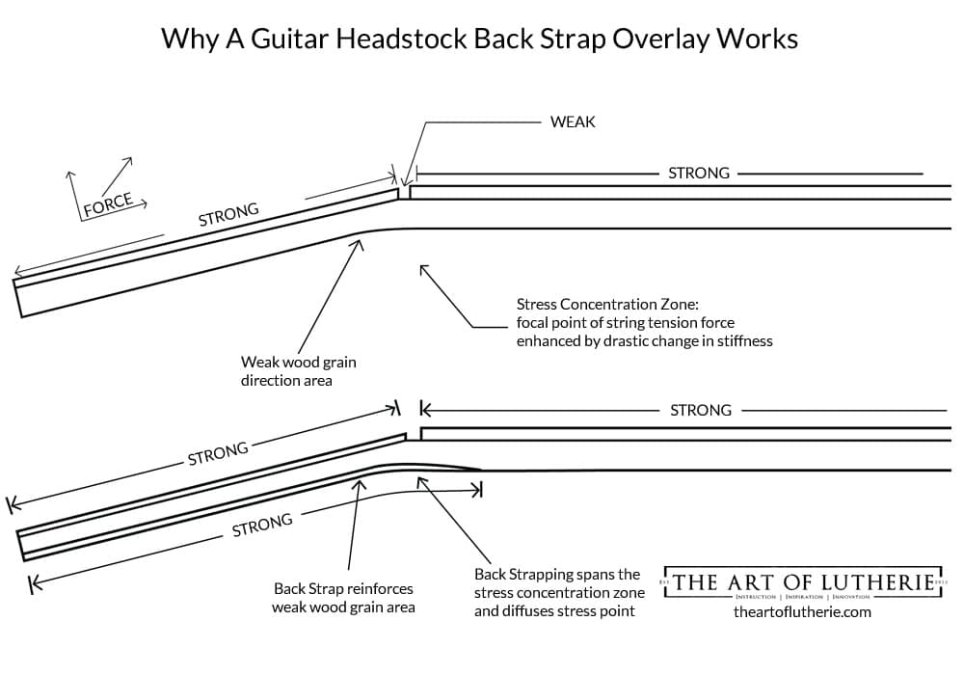
The most vulnerable part of any guitar is the headstock-neck junction. This area bears enormous stress from string tension, which exerts over 130 pounds of force pulling down on the neck. When a guitar sits in storage for weeks or months, that constant pressure works against the wood grain, especially in instruments with angled headstocks like Gibson-style guitars.
The real problem happens during transport and storage changes. Temperature swings, humidity shifts, and vibration from moving can cause wood to expand and contract unevenly. If the headstock isn't properly supported during these transitions, micro-fractures can develop at the junction. These tiny cracks often go unnoticed until they become expensive repairs.
Most players don't realize that preventing neck tension damage during storage starts before the guitar ever leaves your hands. The way you pack it, position it, and support it determines whether it arrives intact or damaged.
Understanding Headstock and Neck Junction Vulnerability
The headstock-neck junction is where the neck meets the peghead. This joint carries all the string tension. In angled headstock designs, the stress concentrates on a small area of wood grain, making breaks more likely than with straight headstocks.
Wood is strongest along its grain direction. When string tension pulls at an angle to the grain, the wood fibers separate rather than bend. This is why angled headstocks break more often than straight ones. The angle multiplies the shear force at the junction.
Humidity changes make this worse. When wood dries out, it shrinks. When it absorbs moisture, it swells. These movements create internal stress. If the headstock isn't braced during these shifts, the junction can crack silently inside the wood before any visible break appears.
The vulnerability increases with guitar value and age. Vintage instruments have wood that's already lost some flexibility. Modern guitars with quality wood hold up better, but no guitar is immune to damage at this junction if it's unsupported during storage or transport.
How to Store a Guitar Long Term Without Damage
Long-term storage is not a single decision; it is a workflow. The guitar passes through packing, carrying, shelving, and retrieval, and each step loads the headstock-neck junction differently. Most damage happens in the transitions, not while the instrument sits still. A storage plan that only addresses the resting position misses the moments when strain actually accumulates.
Start with the case, then build the workflow around it. A quality hard case with a dedicated headstock cradle protects better than a gig bag, but the case only works if the guitar is packed, moved, and shelved correctly. Treat the following as a sequence rather than a checklist.
Packing workflow. Work in short sessions rather than one long push. Prolonged static posture while leaning over a case is a common source of neck and shoulder tension, so break packing into 15- to 20-minute blocks and stand up between them. Use smaller containers and cases where possible; a lighter case is easier to keep close to the body and reduces the reach and twist that strain the neck. Before closing the lid, confirm the headstock is cradled in padding, the neck rests flat along its length, and nothing shifts when you gently rock the case.
Lifting and carrying technique. Keep the load close to your torso, use both hands, and avoid twisting at the waist while carrying. Turn with your feet instead of your spine. For heavy or awkward cases, use a cart or ask for assistance rather than muscling the load. A common pattern is to carry a case on one side for too long; alternate sides or use a cart to avoid asymmetric strain that pulls on the neck and shoulder.
Shelf height and access. Place frequently used and heavy items between knee and shoulder height. Reserve overhead shelves and floor-level storage for light, rarely used items. Repeated overhead reaching and floor-level retrieval are two of the most reliable ways to load the neck, so reduce both by planning the layout before anything goes on a shelf. Keep a clear route to the storage area so you are not stepping over or around obstacles while carrying a case.
Retrieval workflow. When pulling a case from a shelf, slide it forward with both hands, then lift with the load close to the body. Do not yank a case from an overhead shelf or twist to set it down. If the case has been sitting for months, check the headstock support before moving it, since padding can compress or shift over time.
Storage environment. Keep the case in a climate-controlled room, ideally 65-75°F and 40-50% relative humidity. Avoid basements, attics, and garages where temperature and humidity swing widely. Check the guitar monthly, even if it is not being played, and loosen the strings slightly if storage will exceed three months. Never stack other items on top of the case.
If you are storing multiple guitars, give each one its own case. Leaning guitars against walls or stacking them in a closet creates unnecessary stress on the neck. The few dollars saved on cases is not worth the risk of damage.
Music industry best practices for instrument storage emphasize that long-term storage requires both physical support and environmental control. Neither alone is enough.
Proper Guitar Neck Support in Case and Storage Setup
The headstock needs active support, not just passive cushioning. Passive support (regular foam padding) helps, but it doesn't counteract string tension. Active support means using tools or techniques that actively brace the headstock against the pull of the strings.
This is where preventing neck tension damage during storage becomes specific. The goal is to keep the headstock and neck aligned in a straight line, with the stress distributed evenly across the junction rather than concentrated in one spot.
The best setup includes:
- A case with a dedicated headstock pocket that cradles the peghead
- Foam padding that wraps around the headstock without crushing it
- The neck resting flat along its entire length on padded support
- No twisting or angling of the headstock inside the case
If your case doesn't have adequate headstock support, add it. Wrap soft cloth around the headstock, then add foam padding. The goal is to immobilize the headstock so it can't shift during transport or storage.
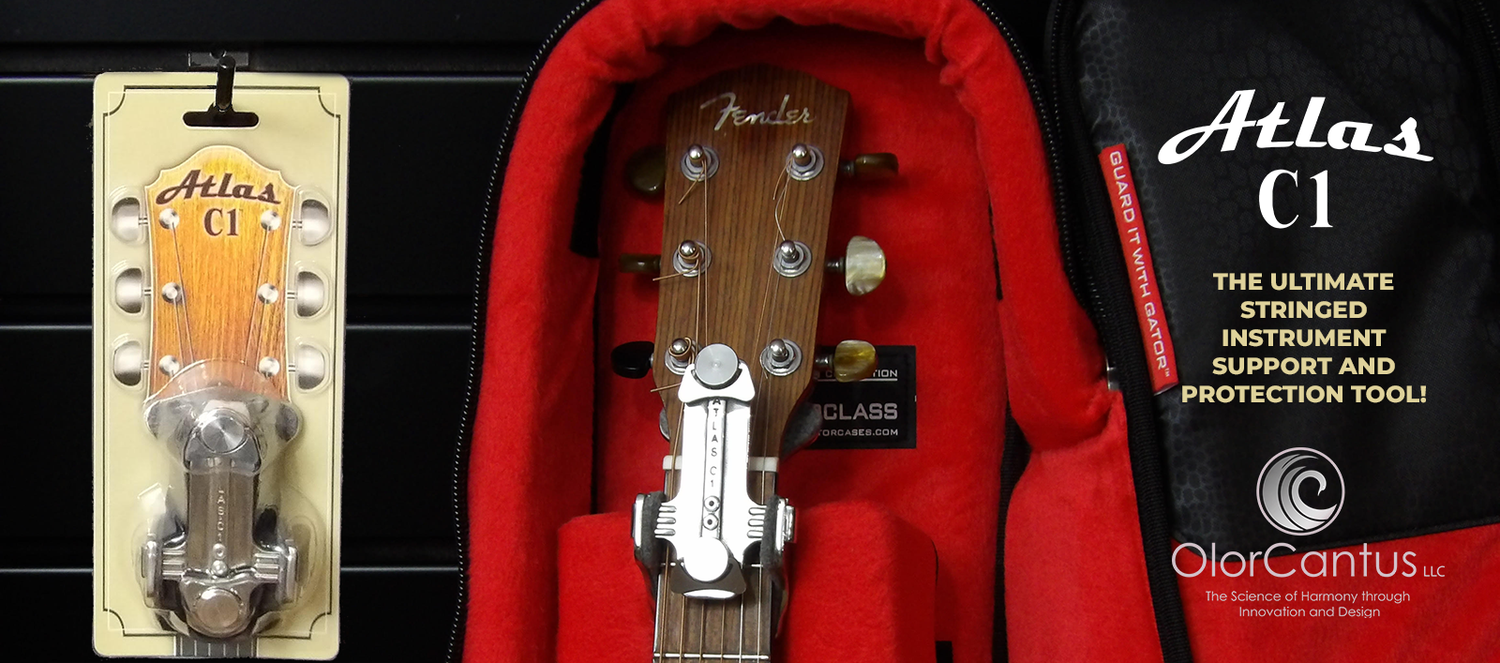
For guitars with angled headstocks, consider using a specialized support tool. Tools like the Atlas C1 are designed to cradle the headstock and counteract string tension. They work by distributing the load across a wider area, preventing stress concentration at the vulnerable junction. These tools can stay in place during storage or be used during transport.
Guitar Storage Temperature and Humidity Requirements
Wood is hygroscopic, it absorbs and releases moisture based on the air around it. Guitars are made from wood, so they expand and contract with humidity changes. Large swings in humidity create internal stress that can crack the wood, especially at stress points like the neck junction.
The ideal storage environment stays between 40-50% relative humidity and 65-75°F. This range is stable enough that the wood doesn't experience constant expansion and contraction cycles.
Why this matters for preventing neck tension damage during storage: humidity swings cause the wood to move. If the headstock is unsupported during these movements, the junction can crack. If it's properly braced, the support absorbs the stress instead of the wood.
Avoid these storage locations:
- Basements (humidity too high, temperature unstable)
- Attics (temperature extremes, dry in winter)
- Garages (unheated, humidity swings with seasons)
- Cars (extreme heat, rapid temperature changes)
- Windows (direct sunlight, temperature fluctuations)
Climate-controlled closets, bedrooms, and living rooms are ideal. If you must store in a less-than-ideal location, use a case with a humidity gauge. Monitor it monthly and adjust if needed. Some players use silica gel packets or small humidifiers inside cases to maintain stable humidity.
Temperature matters less than humidity for preventing neck tension, but stability is key. A constant 60°F is better than swinging between 50°F and 80°F.
Should You Loosen Guitar Strings for Storage
This question divides guitarists. Some say always loosen the strings for long-term storage. Others say it doesn't matter if the guitar is properly supported. The answer depends on how long you're storing it.
For storage under three months, you don't need to loosen the strings if the guitar is in a quality case with proper headstock support. The strings maintain the neck's straight shape, and the supported headstock prevents damage.
For storage over three months, loosen the strings by a half-turn or full turn. This reduces the tension pulling on the neck and headstock. It won't hurt the guitar, and it gives the wood a slight break from constant stress.
Never fully detune the strings (loosen them completely). This changes how the wood settles and can actually cause problems when you retune. A partial loosening is the sweet spot.
Here's the practical approach:
- Under 3 months: leave strings at normal tension if headstock is supported
- 3-6 months: loosen strings by half a turn
- Over 6 months: loosen strings by a full turn
- Always retune gradually when bringing the guitar back into use
The key insight: proper headstock support matters more than string tension. A guitar with full string tension in a well-supported case is safer than a fully detuned guitar in a case with poor headstock support.
Positioning Your Guitar to Prevent Neck Strain
How you position the guitar inside the case affects long-term storage safety. The headstock should never rest directly on the case bottom or against the case wall. It should be cradled in dedicated padding or support.
The neck should lie flat along its length, not twisted or angled. If the case is designed for the guitar to lay flat, use that position. If it's designed for the guitar to sit upright, position it so the headstock is at the top with support underneath.
Avoid these positioning mistakes:
- Laying the guitar on its side with the headstock unsupported
- Tilting the case so the headstock is lower than the body
- Resting the headstock on a hard surface with only thin padding
- Twisting the neck to fit the case
The correct position distributes string tension evenly. The headstock stays aligned with the neck. The body rests on padded support. Nothing is bent, twisted, or angled unnaturally.
If you're storing the guitar vertically in a stand or rack, make sure the headstock is supported from below. Wall-mounted hangers are risky because they put stress on the headstock. A guitar stand with a headstock cradle is safer.
Packing and Transporting Guitars Safely
Transport concentrates every risk at once: vibration, temperature change, and handling. The headstock-neck junction is most exposed during these transitions, so packing and carrying technique matter as much as the case itself. This is the part of storage most guides skip, and it is where a focused workflow pays off.
Before the case closes. Loosen the strings by a quarter turn to reduce tension, place the guitar so the headstock is fully cradled, and add padding around the headstock, neck, and body. Close the case and gently rock it; if anything shifts, repack. A snug fit is safer than a loose one because a guitar that can move inside the case can load the junction on every bump.
Lifting and carrying. Keep the case close to your body, use both hands, and turn with your feet rather than twisting your spine. For heavy or awkward cases, use a cart or ask for help. A common pattern is to carry a case one-handed on the same side for an extended period; alternate sides or use a cart to avoid asymmetric strain on the neck and shoulder. When setting the case down, bend at the knees and keep the load close rather than reaching forward.
Loading and unloading. Plan a clear route before you lift. Move obstacles first so you are not stepping over or around them while carrying. When loading a vehicle, slide the case in rather than lifting it over a lip, and secure it so it cannot slide during a hard stop. When unloading, slide the case out with both hands and set it down close to the body.
Air travel. Use a flight case with reinforced corners. Check the airline's policy on instrument cases; some allow them as carry-on, others require checking. Carry-on is safer because the case is not handled by baggage staff. TSA guidelines for traveling with musical instruments provide official guidance on air transport. Always check your airline's specific rules before traveling.
When tension becomes something more. Ordinary muscle tension from packing and carrying usually settles with rest, gentle movement, and a break from the task. Seek professional assessment if pain persists beyond a couple of weeks, or if you notice weakness, numbness, tingling, or symptoms that began after an injury or a sudden strain. Those signs point to something beyond routine tension and are worth evaluating rather than stretching through.
Using a Headstock Support Tool for Maximum Protection
A headstock support tool is designed specifically to prevent neck tension damage during storage and transport. These tools cradle the headstock and counteract string pressure, distributing the load across a wider area.
Tools like the Atlas C1 work by:
- Cradling the headstock at the vulnerable junction
- Counteracting the 130+ pounds of string tension
- Distributing stress evenly instead of concentrating it at one point
- Protecting the headstock during transport and storage
The Atlas C1 is universal, it works with straight headstocks (Fenders, Teles) and angled headstocks (Gibsons, other brands). It's precision-engineered to fit most guitars and provides support without damaging the finish.
Beyond protection during storage, these tools double as repair jigs. If a headstock does break, a pre-aligned repair jig makes the fix easier. The tool holds the broken pieces in alignment while the repair sets, reducing the chance of misalignment.
For touring musicians, collectors, and anyone storing valuable guitars, a headstock support tool is a smart investment. It's a one-time purchase that lasts a lifetime. Compared to the cost of repairing a broken headstock, it pays for itself after preventing just one break.
Premier Guitar Magazine review of guitar headstock protection methods discusses various approaches to headstock protection, including specialized support tools.
Preventing neck tension damage during storage comes down to three things: proper support, climate control, and smart handling. The headstock-neck junction is vulnerable because it bears all the string tension. Without support, that tension can cause cracks during storage or transport.
Start with a quality case that cradles the headstock. Keep the guitar in a climate-controlled space. Check it monthly. If you're storing for more than three months, loosen the strings slightly. For valuable guitars or frequent travelers, use a headstock support tool like the Atlas C1 to actively counteract string pressure and protect the vulnerable junction.
The Atlas C1 provides precision support designed to prevent headstock breaks while doubling as a repair jig. Its U.S. patent-protected design works with any guitar style, and it's built for a lifetime of use. When you order the Atlas C1, you'll also receive free shipping and a 10% product discount to help you protect your investment from costly headstock damage.
Frequently Asked Questions
How should I store a guitar to protect its neck from tension damage?
Store your guitar in a hard case with the neck properly supported using padding or a specialized support tool. Keep the headstock level and avoid placing weight on the headstock-neck junction. Store the case horizontally in a climate-controlled environment away from direct sunlight, temperature fluctuations, and humidity extremes. Support the neck at multiple points to distribute pressure evenly and prevent the string tension from pulling on the neck joint.
Should you loosen guitar strings for storage?
Yes, loosening strings before long-term storage reduces tension on the neck and headstock. Loosen all strings gradually and evenly to relieve the 130+ pounds of pressure they exert on the neck. You don't need to remove strings entirely, but reducing tension significantly decreases the risk of neck warping or headstock damage. Tighten strings again slowly when returning the guitar to playing condition.
What temperature and humidity are best for storing a guitar?
Maintain storage temperatures between 65-75°F and humidity levels between 45-55%. Avoid rapid temperature swings and direct sunlight, which cause wood expansion and contraction leading to cracks and neck damage. Fluctuating humidity is more damaging than consistent conditions outside the ideal range. Use a hygrometer to monitor conditions and consider a humidifier or dehumidifier in your storage space.
Can storing a guitar improperly damage the neck?
Yes, improper storage causes significant neck damage. Storing a guitar upright without neck support allows string tension to pull the headstock forward, stressing the neck joint. Storing it flat without support underneath causes the neck to sag under its own weight. Exposure to humidity and temperature swings causes wood movement that cracks the headstock or warps the neck. Poor storage is one of the most common causes of costly headstock repairs.