
Table of Contents
- Why Gibson Guitar Headstocks Break So Easily
- How to Protect Angled Guitar Headstocks During Travel
- Guitar Neck Support for Shipping Your Instrument
- Understanding Gibson Headstock Repair Cost and Prevention
- The Atlas-C1: A Professional Headstock Support Solution
- Preventive Care Strategies for Your Guitar Headstock
- Conclusion
Last Updated: August 27, 2026
Why Gibson Guitar Headstocks Break So Easily
Gibson guitars, particularly the iconic Les Paul, have a design vulnerability that sets them apart from other instruments. The angled headstock, typically at 17 degrees, creates a structural weak point where the headstock meets the neck. This angle means the headstock experiences concentrated stress from string tension, which can exceed 130 pounds of cumulative force pulling downward and backward simultaneously (peer-reviewed research).
When a guitar is dropped or experiences sudden impact, the headstock snaps from the inertia and kinetic energy released in that split second. A quality hard shell case protects against bumps and scratches, but offers zero defense against these invisible forces. The neck acts as a lever, and the headstock becomes the failure point.
Gibson Les Paul's are notorious for easily broken headstocks, and it's only a matter of time before many Les Paul owners will likely have to deal with the inconvenience of needing a headstock repair, reset, or complete reconstruction. This isn't a flaw unique to one model year, it's a structural reality of the design that affects vintage instruments and new ones equally.
The mahogany neck construction, while prized for tonal characteristics, compounds the vulnerability. Mahogany is relatively brittle compared to other tonewoods, and the volute provides only partial protection (peer-reviewed research). Once a crack initiates at the headstock-neck junction, it propagates quickly through the grain.
How to Protect Angled Guitar Headstocks During Travel
Protecting an angled headstock during travel requires a multi-layered approach. The goal is to stabilize the headstock-neck junction so it doesn't flex or experience unsupported movement inside your case.
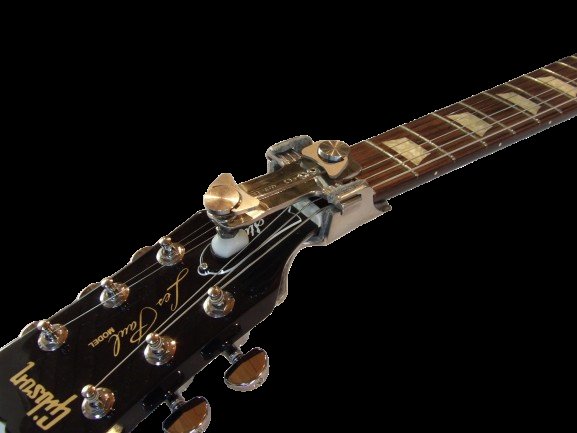
Guitar Headstock Support and Protection Tool Atlas-C1-A
Case Selection and Padding Density
Start with a hard shell case, never rely on soft gig bags for travel or shipping. Hard shell cases provide the foundation, but interior padding density matters enormously. Standard cases often use 10-15mm foam, which compresses under the instrument's weight and offers minimal shock absorption (peer-reviewed research).
Look for cases with sufficient padding density, particularly around the headstock area. The case interior should have a custom or semi-custom fit for your instrument type. A Gibson Les Paul requires different support geometry than a Fender Stratocaster. Oversized cases create dead space where the guitar can shift, defeating the purpose of the case entirely.
Consider cases specifically designed for angled-headstock instruments. Some manufacturers offer reinforced headstock compartments with additional padding and support structures, providing superior protection compared to generic cases.
Securing the Instrument Inside
Use the case's latches and straps to secure the guitar. Most quality cases include neck support cradles and body support blocks. Position padding on both sides of the headstock-neck junction, and consider wrapping the headstock area with an additional layer of bubble wrap or foam before placing the guitar in the case.
The tuning pegs should face upward or to the side, never downward. When the headstock points down, gravity pulls the headstock away from the neck, creating tension on the joint. Check that case latches are secure before transport, and test them regularly for wear.
Guitar Neck Support for Shipping Your Instrument
Shipping presents unique challenges because your guitar experiences prolonged movement and vibration. Commercial shipping involves multiple handling points and unpredictable impacts. The headstock-neck junction is most vulnerable during the first few hours of transit.
Shipping Logistics and Packaging
Use a double-box shipping method for valuable instruments. The inner box contains your guitar in its hard case, surrounded by at least 3 inches of packing material on all sides. Fill all void spaces with packing peanuts, crumpled paper, or foam blocks to eliminate movement during transit.
Include a "Fragile" label on multiple sides of the package, and consider "This Side Up" indicators if the case has a natural orientation. Declare the full value of the instrument to your shipping carrier to ensure proper insurance coverage. Take photographs of the guitar and case before shipping, with serial numbers visible.
Impact Protection During Transit
Consider specialized guitar shipping services rather than standard parcel carriers. These services understand the unique requirements of stringed instruments and handle them accordingly. If shipping internationally or across the country, ask the carrier about their handling procedures for fragile items. Many retailers offer free shipping on protective equipment and accessories, making it affordable to invest in proper packing materials for your valuable instrument.
Understanding Gibson Headstock Repair Cost and Prevention
A fractured Gibson headstock repair typically costs between $200-$400 at a professional luthier, depending on severity. Complete headstock reconstruction can exceed $500. For vintage instruments, repair costs can double or triple because the work requires matching original finishes and maintaining structural integrity.
Even after professional repair, a broken headstock affects resale value. Collectors notice headstock repairs and factor them into valuation. A vintage Gibson with a repaired headstock might lose 15-25% of its value compared to an identical instrument with original headstock integrity.
Prevention is exponentially cheaper than repair. A single incident during travel or storage can create a financial loss that far exceeds the cost of protective equipment. Falls from guitar stands, dropped cases, or vehicle accidents can all result in headstock damage. These scenarios happen to musicians regularly.
The Atlas-C1: A Professional Headstock Support Solution
The Atlas-C1 is a precision-engineered tool designed specifically to address the vulnerability of angled headstocks. Unlike general protective padding, it provides active support to the headstock-neck junction by counteracting the mechanical forces that cause breaks.
The tool uses high-grade stainless steel construction with soft, thick felt lining to protect the guitar's finish. The design supports the headstock from both sides of the neck joint, distributing pressure evenly across the vulnerable junction area.
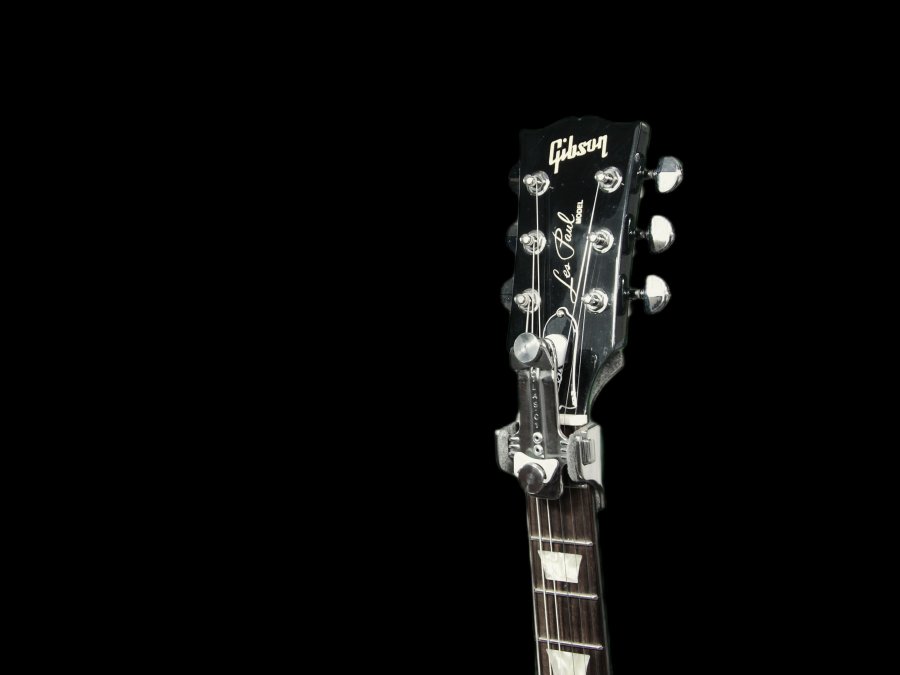
Atlas-C1-A
How It Works as Both Protection and Repair Tool
As a protective device, you position the Atlas-C1 around the headstock-neck junction before travel or storage. It remains in place during transport, providing continuous support and counteracting the 130+ pounds of string tension that would otherwise stress the joint.
As a repair jig, the Atlas-C1 becomes a pre-aligned support structure for headstock repairs. When a break occurs, a luthier can use the tool to hold the headstock in proper alignment while repair adhesive cures. This eliminates guesswork from headstock reconstruction and ensures the joint heals in the correct position.
The tool is patent-protected, making it the only device of its kind on the market.
Compatibility Across Guitar Brands and Styles
While designed with angled-headstock instruments in mind, the Atlas-C1 works across many brands and styles. It's compatible with Gibson, Epiphone, Gretsch, and other manufacturers that use similar headstock angles. The universal design accommodates nut widths from approximately 1.5 inches to 1.75 inches, covering most electric and acoustic guitars.
For straight-headstock instruments like Fender Telecasters and Stratocasters, the Atlas-C1 still provides protective support during travel and storage. A single purchase protects your entire collection, regardless of brand or style. When you order today, you'll receive a 10% product discount on the Atlas-C1 and all compatible accessories.
Preventive Care Strategies for Your Guitar Headstock
Beyond travel protection, daily storage and handling practices significantly impact headstock longevity.
Storage and Display Best Practices
Store guitars on stands that provide proper neck support. A quality guitar stand distributes the instrument's weight across the body and neck, preventing the headstock from hanging freely. Avoid wall mounts or hangers that support only the headstock or tuning pegs.
For long-term storage, use a case rather than a stand. Store the case in a climate-controlled environment where temperature and humidity remain stable. Keep the guitar away from heat sources, direct sunlight, and areas with high humidity.
Common Mistakes to Avoid
Don't lean your guitar against a wall without support, hang it by its headstock on wall pegs, or place heavy objects on top of a cased guitar. Never ignore small cracks or stress marks in the headstock area, as they can propagate quickly. Avoid rapid temperature changes by letting the guitar acclimate gradually to room temperature.
Conclusion
Gibson Les Paul's represent some of the most iconic and valuable guitars in existence, but their angled headstock design creates a structural vulnerability that affects every player who owns one. Gibson Les Paul's are notorious for easily broken headstocks, and it's only a matter of time before many Les Paul owners will likely have to deal with the inconvenience of needing a headstock repair, reset, or complete reconstruction.
Protection begins with understanding the physics of why these breaks occur, then implementing practical solutions. A quality hard shell case with proper padding provides the foundation. Proper storage practices and careful handling prevent accidental impacts. For musicians who travel frequently or own high-value instruments, active headstock support during transit and storage becomes essential.
The Atlas-C1 addresses this vulnerability directly. Its patent-protected design counteracts the mechanical forces that cause headstock breaks, providing continuous support during travel, shipping, and storage. The tool doubles as a pre-aligned repair jig, simplifying the repair process if damage does occur. For any guitarist with a Gibson-style instrument, the Atlas-C1 is the most practical way to safeguard your investment and ensure your headstock remains intact for decades of playing. Learn more about the Atlas-C1 and how it protects your guitar today.
Frequently Asked Questions
Q: How much does it cost to repair a Gibson headstock?
A: Gibson headstock repairs typically range from $200 to $500, depending on break severity and structural damage. A clean break at the volute may cost less, while multiple fractures or veneer damage increases expenses. Professional luthiers charge hourly rates plus materials. Prevention through guitar headstock support tools eliminates this cost entirely and protects your investment long-term.
Q: Why are Gibson Les Paul headstocks so prone to breaking?
A: Gibson Les Paul headstocks are vulnerable because of their angled design, which creates mechanical stress at the neck-body junction. The break angle—typically 13 to 17 degrees—concentrates string tension forces directly on a narrow area. When a guitar is dropped or knocked over, inertia and kinetic energy release suddenly, causing the headstock to snap before the case can absorb impact. Mahogany necks, while beautiful, are softer than some alternatives and more susceptible to fracture under stress.
Q: What is the best way to support a guitar neck during shipping?
A: Use a hard shell case with high-density padding designed for your guitar's headstock angle. Add extra shock absorption around the headstock-neck junction using foam blocks or specialized support tools. Wrap the guitar in bubble wrap before placing it in the case, and fill all empty spaces to prevent movement. For valuable instruments, consider a headstock support tool that counters inertia forces, not just impact. Never ship in a soft gig bag alone.
Q: Does a headstock support tool help with guitar repairs?
A: Yes. Headstock support tools function as pre-aligned repair jigs, holding fractured pieces in correct position during glue-up and curing. They maintain proper neck relief and break angle, ensuring structural integrity after repair. This is especially valuable for DIY repairs or when working with luthiers, as it eliminates guesswork and reduces the risk of misalignment that could weaken the repair or affect playability.