
Table of Contents
- Why Guitar Neck Support Matters
- How to Fix Broken Guitar Headstock: Professional vs. DIY
- DIY Guitar Neck Rest Solutions
- Essential Features for Guitar Neck Support Tools
- Stability, Non-Slip Design, and Finish Protection
- Ergonomic Height and Setup for Long-Term Maintenance
- Comparing Professional Tools to Homemade Alternatives
- Frequently Asked Questions
Last Updated: September 1, 2026
Why Guitar Neck Support Matters
A guitar's headstock is its most vulnerable point. When a guitar falls, gets knocked over, or experiences sudden pressure during travel, the headstock doesn't break from impact alone, it snaps from the forces of inertia and kinetic energy released in that split second. A quality case protects against bumps and scratches, but it offers zero defense against those invisible forces. This is why guitar neck support has become essential for musicians who take their instruments seriously.
The headstock-neck junction bears tremendous stress. String tension alone exerts over 130 pounds of force on that joint (peer-reviewed research). Add travel, temperature changes, or a sudden drop, and that junction becomes a fracture waiting to happen. Professional luthiers have long understood this vulnerability. They use specialized tools to stabilize the neck during repairs and to protect instruments during storage and transport.
For touring musicians, collectors, and anyone with a valuable guitar, the question isn't whether you need guitar neck support, it's which solution makes the most sense for your situation. Below, we'll show you exactly how to evaluate your options and choose the right approach for your needs.
How to Fix Broken Guitar Headstock: Professional vs. DIY
When Professional Repair Makes Sense
A broken headstock is serious business. If your guitar has already suffered a headstock break, professional repair is typically the best first step. A skilled luthier can assess the damage, determine if the break is clean or splintered, and execute a repair that restores both structural integrity and playability.
For vintage or high-value instruments, this investment is justified. A luthier has the experience to identify hidden damage, ensure proper alignment, and use the right adhesives for your guitar's finish type, whether that's nitrocellulose, polyurethane, or lacquer.
The repair process typically takes time because the glue must cure fully before the guitar can be played. During this time, the headstock is clamped in a precise jig to ensure perfect alignment. This is where professional equipment becomes invaluable.
DIY Repair Approach and Tools Needed
If you're confident in your skills and the break is relatively clean, DIY repair is possible. You'll need:
- A specialized neck jig or support block to hold the headstock in perfect alignment
- Two-part epoxy or hide glue appropriate for guitar repairs
- Clamps rated for the pressure needed without damaging the wood
- Sandpaper in multiple grits for cleanup after the glue dries
- A finishing product that matches your guitar's original lacquer or finish
The critical tool here is the jig itself. A neck jig holds the broken pieces in alignment while the glue cures. Without proper support, even a small misalignment will affect playability and potentially weaken the repair.

The DIY route demands patience and attention to detail. The advantage is cost savings on labor.
DIY Guitar Neck Rest Solutions
Materials: Cork vs. Rubber vs. Foam
If you're building your own guitar neck support, material choice matters. Each option has trade-offs in terms of grip, durability, and finish protection.
Cork-lined supports grip the neck reliably and won't slip under string tension. Cork is naturally grippy and won't damage nitrocellulose finishes. The downside: cork degrades over time, especially if exposed to moisture.
Rubber pads offer excellent non-slip performance and last longer than cork. Rubber won't degrade in humid environments. However, some rubber compounds can leave marks on vintage finishes if left in contact for extended periods. Test any rubber pad on an inconspicuous area first.
Foam padding is soft and won't scratch finishes, but it compresses over time and provides less stability. Foam works well for short-term support during storage but isn't ideal for active repair work where precision matters.
The best choice depends on your use case. For travel and storage, foam or cork works fine. For repair work where the guitar must stay perfectly still, rubber or cork is superior because it resists slipping under clamping pressure.
DIY Material Safety Considerations
When building your own support, safety matters. Here are the real considerations:
Adhesives: If you're gluing padding to a metal or wood base, use contact cement or spray adhesive rated for the materials you're bonding. Some adhesives emit fumes, work in a ventilated space. Allow full cure time before using the support, as uncured adhesive can transfer to your guitar's finish.
Metal edges: Sharp edges on metal components can damage your guitar. Sand all edges smooth or cover them with protective tape. Stainless steel is preferable to regular steel because it won't rust and won't stain your finish if moisture gets trapped.
Clamping force: If your support uses clamps, understand the pressure they apply. Too much pressure can dent wood or crack the headstock. Test with a guitar you don't care about first, or use protective cauls (blocks of soft wood) to distribute pressure evenly.
Material off-gassing: Some foam and rubber products release volatile organic compounds (VOCs) when new. If you notice chemical smells, let the support air out for 24 to 48 hours before using it near your guitar.
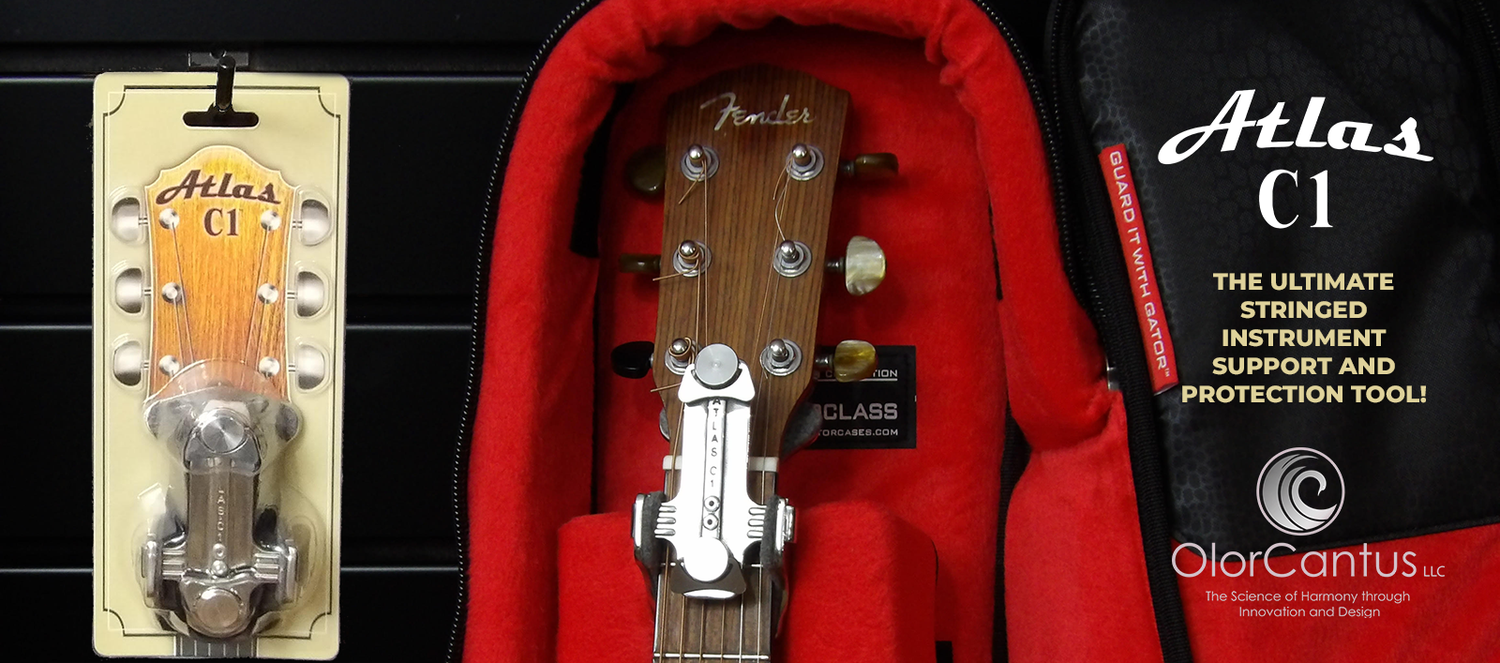
Atlas-C1 -A
The safest approach is to use materials that have been tested on guitars. Felt, cork, and closed-cell foam are proven safe. Avoid materials that might off-gas, stain, or degrade quickly.
Essential Features for Guitar Neck Support Tools
Whether you're buying or building, look for these features in any guitar neck support tool.
Universal fit: The support should work with multiple headstock angles. Straight headstocks (Fender-style) and angled headstocks (Gibson-style) require different geometry. The best tools accommodate both.
Protective lining: The contact surfaces must be soft enough to protect your finish. Felt or cork-lined surfaces won't scratch nitrocellulose, polyurethane, or lacquer finishes.
Stainless steel construction: If the tool uses metal, stainless steel resists rust and won't stain your guitar if moisture gets trapped. Regular steel can leave rust marks that are difficult to remove.
Adjustability: A universal support allows you to position different necks at different angles and heights. This flexibility is essential for both protection during travel and precision during repair work.
Stability under load: The support must stay put when string tension pulls on the headstock. A wobbly support is worse than no support at all, it can allow the neck to shift during curing, ruining your repair.
Ease of setup: If it takes too long to position your guitar properly, you won't use it consistently. The Atlas-C1 is designed exclusively for guitars .
Stability, Non-Slip Design, and Finish Protection
Non-slip design is where many DIY solutions fail. When you're clamping a guitar for repair, the headstock experiences pressure from multiple directions. If the support slips even slightly, your repair alignment is compromised.
The most effective non-slip designs use a combination of friction and geometry. Cork or rubber surfaces grip the wood naturally. A shaped cradle that matches the headstock profile prevents rotation. Clamping pressure applied perpendicular to the support surface keeps everything locked in place.
Finish protection requires a multi-layer approach. The primary contact surface should be soft, felt or cork works well. A secondary layer of protective padding absorbs vibration and distributes pressure. This dual-layer approach prevents both scratching and compression damage to the finish.
Temperature stability matters too. If your support expands or contracts with temperature changes, it can loosen its grip on the headstock. Metal supports are more stable than wood or plastic. Stainless steel is the best choice because it has low thermal expansion.
For travel and storage, a support that grips firmly but isn't clamped prevents the guitar from shifting inside a case or gig bag. For repair work, a support that can be clamped provides the precision needed for alignment.
Ergonomic Height and Setup for Long-Term Maintenance
How you position your guitar during maintenance affects both the quality of your work and your physical comfort. A support that's too low forces you to bend over for hours. A support that's too high puts strain on your shoulders and arms.
The ideal height places your work surface at elbow level when you're standing naturally. For most people, this means the guitar's neck should be between 36 and 42 inches from the floor (osha.gov). If you're sitting, the neck should be at chest height.
Angle matters equally. A neck tilted 15 to 20 degrees toward you makes fretwork easier because you can see the frets clearly and apply tools at the right angle (peer-reviewed research). A horizontal neck is fine for general maintenance but awkward for detailed fretwork.
Rotation capability is underrated. Being able to rotate the guitar so the headstock points in different directions lets you work on different areas without constantly repositioning yourself. This reduces fatigue and improves work quality.
For long sessions, a support that allows you to lock the guitar in place and then step away without worrying about it slipping is invaluable. This freedom lets you focus on your work instead of monitoring the setup.
Comparing Professional Tools to Homemade Alternatives
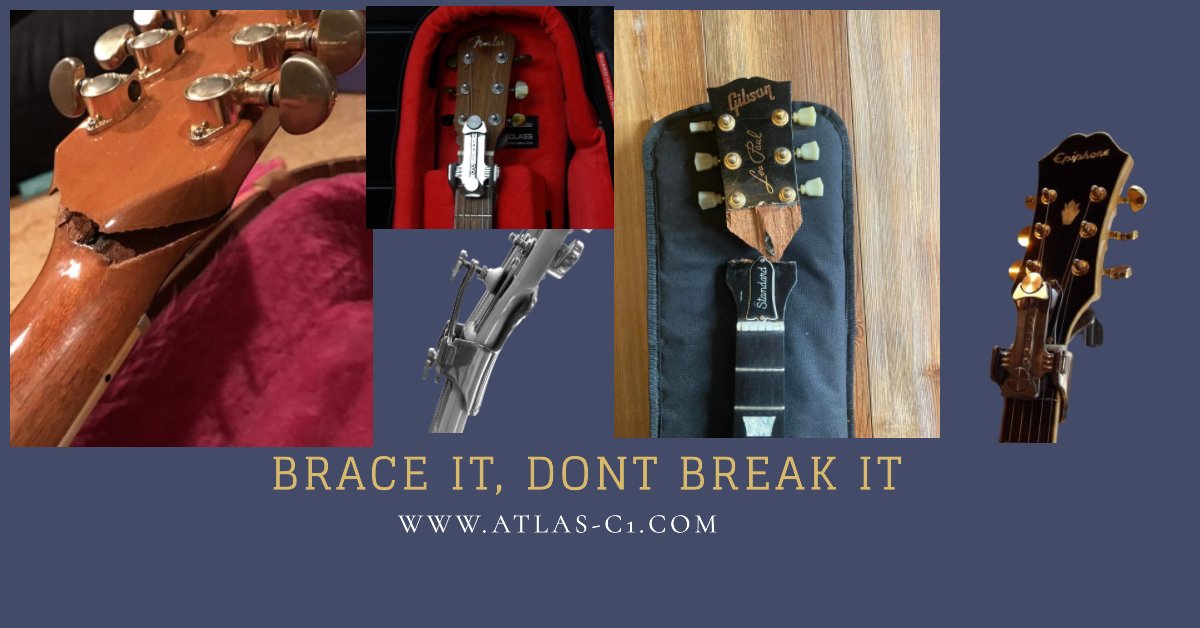
Professional guitar neck support tools like the Atlas-C1 represent years of design refinement. They're engineered for universal fit, tested on many of guitar models, and built to last a lifetime.
Homemade solutions offer flexibility and lower upfront cost. You can customize a DIY support to your specific guitars and workflow. The trade-off is time investment and uncertainty. A poorly designed homemade support can damage your guitar or fail to hold alignment during critical repair work.
Here's the practical breakdown:
Aspect |
Professional Tool |
Homemade Support |
|---|---|---|
Setup time |
2-5 minutes |
Variable |
Universal fit |
Yes, tested on 50+ models |
Limited to specific headstock shapes |
Finish protection |
Engineered padding system |
Depends on materials chosen |
Clamping precision |
Calibrated for consistent pressure |
Variable, requires adjustment |
Durability |
20+ years typical |
Variable |
Cost |
Competitive pricing |
Variable in materials |
Repair capability |
Pre-aligned jig for headstock breaks |
Possible but less precise |
Professional tools excel at consistency. Every time you use one, the guitar is positioned the same way. This consistency matters for repair work where precision determines success.
Homemade alternatives excel at customization. If you have unusual guitars or specific workflow needs, building your own lets you design exactly what you need. The catch: you're betting on your own engineering judgment.
For most guitarists, especially those with valuable instruments, a professional tool is the safer bet. The Atlas-C1, for example, is engineered to counter the specific forces that cause headstock breaks: inertia and kinetic energy, not just impact. It doubles as a pre-aligned repair jig, meaning if a break does happen, you have the right tool to fix it properly.
For casual players with affordable guitars, a well-built homemade support can work fine. But if you own a vintage guitar, a high-end instrument, or play frequently, the peace of mind from a professional tool justifies the investment.
Your guitar is worth protecting. Whether you choose a professional solution or build your own, the key is consistency: using the same support every time you travel, store, or work on your guitar. A guitar neck support prevents the costly, heartbreaking experience of a headstock break. The Atlas-C1 is purpose-built for this job, it protects your instrument during travel and shipping with free shipping on orders, and it doubles as a pre-aligned repair jig if a break ever occurs. Plus, take advantage of a 10% product discount when you order. It's a one-time investment that pays for itself the moment it prevents a single repair. Get started with the Atlas-C1 and protect your guitar's most vulnerable point.
Frequently Asked Questions
Q: What materials work best for a DIY guitar neck rest?
A: Cork, rubber, and foam each offer different benefits. Cork-lined supports provide excellent grip and protect nitrocellulose finishes without adhesive damage. Rubber offers durability and shock absorption, while foam is affordable but compresses over time. For a DIY neck rest, cork combined with thick felt padding delivers a good balance of protection and stability during fretwork or storage.
Q: How do I fix a broken guitar headstock without professional help?
A: Start by assessing the break's severity. Clean the joint, apply wood glue, and use a neck jig or homemade support to hold alignment while curing. Clamp gently to avoid over-tightening, which can damage the finish. Allow cure time. For complex breaks or high-value instruments, professional repair is safer. A proper guitar neck support tool ensures correct alignment and prevents additional stress on the repair joint.
Q: Can I use a DIY guitar neck rest for professional fretwork and leveling?
A: Yes, if it meets stability and ergonomic standards. A DIY neck rest works for fretwork and leveling when it provides non-slip support, correct height for your work surface, and protects the finish from scratches. Ensure the support is rigid enough to prevent movement during fret hammering or leveling. Many luthiers use custom-built jigs alongside commercial tools for specific tasks.
Q: How much does a professional headstock repair cost compared to buying a support tool?
A: Professional luthier repairs can be a significant investment. A quality guitar neck support tool like the [Atlas-C1](https://atlas-c1.com/products/atlas-c1) costs $129.99 and prevents breaks before they happen, protecting instruments during travel, shipping, and storage. For frequent travelers or collectors with high-value guitars, the tool pays for itself by preventing even one repair.