
Last Updated: November 5, 2026
Quick Summary
The best guitar humidifiers for touring musicians are in-case units that travel with the instrument, since a room humidifier cannot follow the guitar into a hotel, van or airline hold. Soundhole units suit acoustic players, case-interior units suit mixed cases, and two-way packs suit frequent flyers and shippers.
- A digital hygrometer inside the case shows the real humidity, so you are not guessing.
- Two-way humidity packs add or release moisture, preventing over-humidification in damp conditions.
- A refillable humidifier dried out mid-tour leaves the guitar less protected than you assume.
- Check the humidifier reservoir at every load-in rather than once per week.
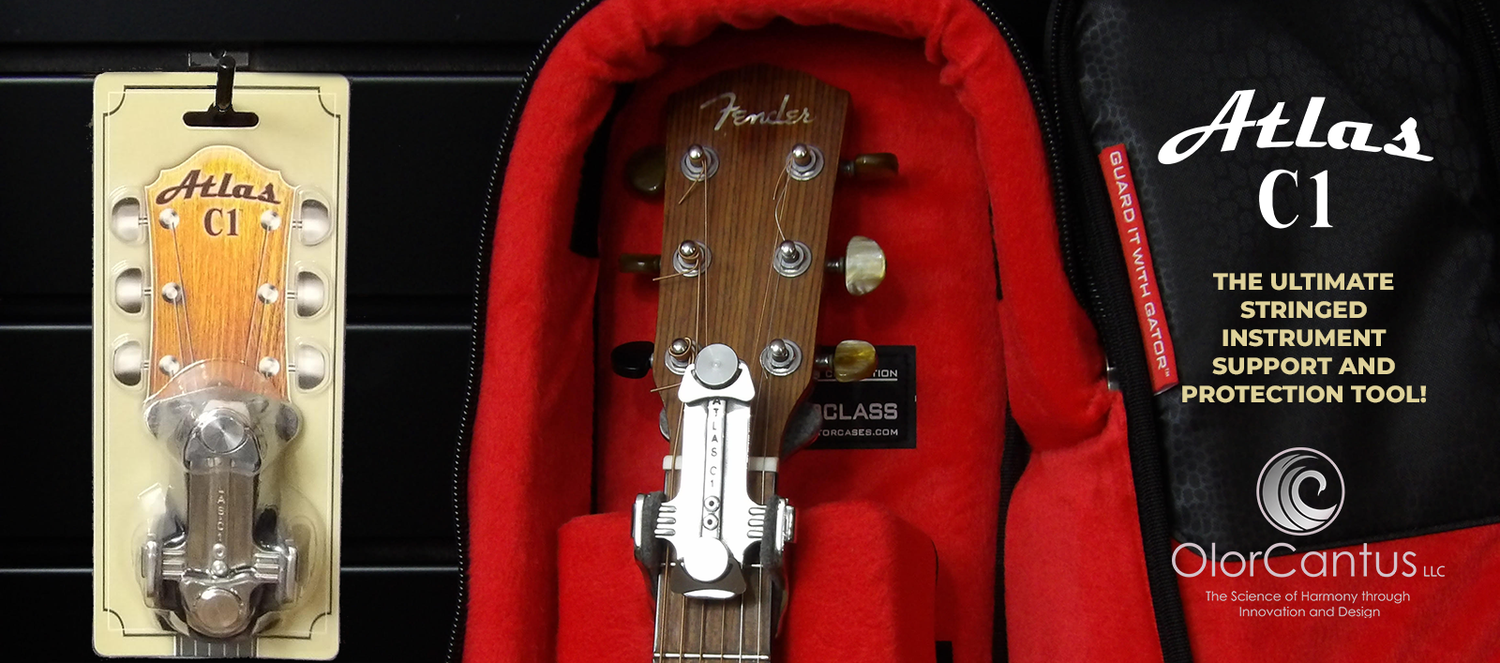
- Pair a headstock support tool like the Atlas C1 with a humidifier for transit protection.
Table of Contents
- Why Touring Guitars Need Humidity Protection
- How Guitar Humidifiers Work: In-Case Versus Room Humidification
- Types of Guitar Humidifiers for the Road
- Two-Way Humidity Control Explained
- Guitar Humidity Control Systems Compared for Touring
- Digital Hygrometer for Guitar Cases: What to Look For
- Humidity Changes During Travel, Airline Cases and Bus Trips
- How to Prevent Guitar Cracks While Touring
- Top Guitar Humidifier Picks for Touring Musicians
- Using and Maintaining Your Guitar Humidifier on Tour
- Protecting Your Touring Guitar Starts With the Next Step
- Frequently Asked Questions
Why Touring Guitars Need Humidity Protection
A touring guitar spends much of its life in places it was never built for. One night it sits in a climate-controlled venue, the next in a cargo hold or the back of a bus with the heat cranked up or switched off. Wood responds to that swing. Humidity control is part of the same problem that stresses the instrument during travel. Dry air pulls moisture out of the top, the neck and the braces, and that movement is what leads to cracks and loose joints.
Guitar humidifiers exist to hold moisture steady inside the case or the room. For a touring player, they matter most when the instrument moves between very different environments in a single week.
How Guitar Humidifiers Work: In-Case Versus Room Humidification
A guitar humidifier releases moisture into a closed space so the wood stays within a stable range. An in-case unit sits inside the instrument case, usually near the soundhole or in the case interior. A room humidifier conditions the whole space where the guitar is stored.
For touring, in-case units are usually the practical choice. A room humidifier cannot follow the guitar into a hotel, a van or an airline hold. An in-case unit travels with the instrument, so the humidity around the wood stays consistent wherever the case goes.
Types of Guitar Humidifiers for the Road
Most guitar humidifiers fall into three groups:
- Soundhole units drop into the soundhole of an acoustic guitar. They are simple and compact, which suits players who want something that stays out of the way.
- Case-mounted or case-interior units sit inside the case, away from the instrument's body. They work well for electric guitars and for players who carry several instruments.
- Refillable humidifier packs or kits use a reservoir or sponge that is recharged with water. These need a little more attention but can last through long tours.
Each type trades size, mess and maintenance against how precisely it holds humidity. Choose based on the instrument, the case and how much hands-on care you can manage on the road.
Two-Way Humidity Control Explained
Some systems add or release moisture as needed, which is called two-way humidity control. A basic humidifier only adds moisture. When the air inside the case is already damp, that can push humidity too high, and over-humidification can damage wood and finish just as dryness does.
Two-way systems use a buffer to hold relative humidity near a target level. If you ship guitars or fly often, the extra control can be worth it.
Guitar Humidity Control Systems Compared for Touring
When you compare systems, look at four things:
| Feature | Soundhole Units | Case-Interior Units | Two-Way Packs |
|---|---|---|---|
| Fits in a gig bag | Yes | Limited | Limited |
| Manages overly damp air | No | Limited | Yes |
| Maintenance on the road | Low | Moderate | Moderate |
| Best for | Acoustic players | Mixed instrument cases | Frequent flyers and shippers |
Use this as a starting point, then check the manufacturer's current specifications and pricing.
Digital Hygrometer for Guitar Cases: What to Look For
A digital hygrometer tells you what the humidity actually is, instead of guessing. For a touring player, a compact digital hygrometer that fits inside the case is the most useful monitoring tool. Look for:
- A clear, readable display of current humidity and temperature
- Min and max readings, so you can see what happened while the case was closed
- A sensor placed inside the case, not in the room
- Batteries that last through a tour, or an easy way to replace them
Check your hygrometer against a known reference when you first set it up. Consistent readings matter more than precise ones.
Humidity Changes During Travel, Airline Cases and Bus Trips
Travel exposes guitars to the widest humidity swings, and the mechanisms are worth understanding so you can plan around them. In an airline hold, the cargo area is typically unpressurized and can be much drier than the cabin; relative humidity there often drops well below the 40-50% range most acoustic guitars prefer. A bus or van parked in the sun can hit interior temperatures above 120°F, and when the doors are closed for hours, the air inside becomes both hot and dry. Backstage areas and hotel rooms with forced-air heat are similarly dry. Each of these environments pulls moisture out of the wood faster than a stable room would.
A hard-shell flight case gives better protection than a gig bag for airline travel because it resists crushing and holds a steadier internal climate. For carry-on scenarios, check the airline's current carry-on size limits before you fly; many major U.S. carriers publish maximum dimensions around 22 x 14 x 9 inches, and a standard acoustic flight case often exceeds that, so you may need to gate-check or check the instrument. If you check the guitar, use a flight case with a secure latch and place the humidifier so it cannot shift against the instrument. A two-way humidity pack is safer than a refillable sponge in checked luggage because it will not leak if the case is inverted.
On bus tours, the instrument often rides in the trailer or the back of the van, where temperature swings are extreme. Keep the guitar in its case with an in-case humidifier, and place a compact digital hygrometer inside the case so you can check the reading at each load-in. If the hygrometer shows a sharp drop after a long drive, let the instrument acclimate slowly before opening the case in a warm room; opening it immediately can cause condensation on cold wood. A common pattern among touring players is to log the hygrometer reading at soundcheck and again after the show, which helps you spot a failing humidifier before it causes damage.
Watch out: a humidifier that dries out mid-tour is worse than no humidifier, because you may assume the case is protected when it is not. Carry a spare refill or a backup two-way pack, and check the reservoir at every load-in.
How to Prevent Guitar Cracks While Touring
Cracks usually come from dryness, sudden temperature changes, or stress on the neck joint. Several habits help:
- Keep the instrument in its case whenever you are not playing.
- Place an in-case humidifier before every trip, and check it with a hygrometer.
- Avoid leaving the guitar in a hot vehicle or near a heater.
- Let the guitar acclimate gradually when moving between very different climates.
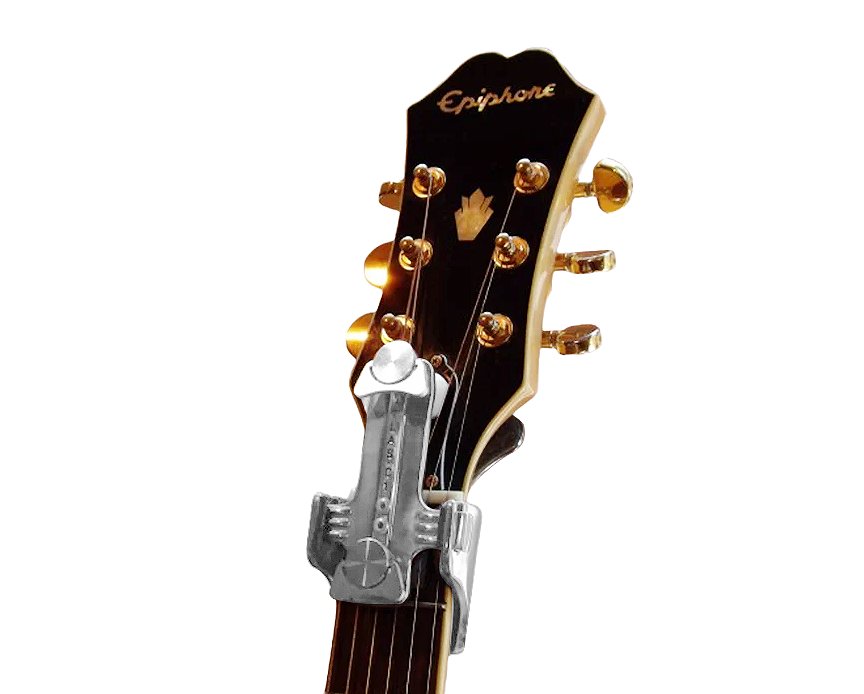
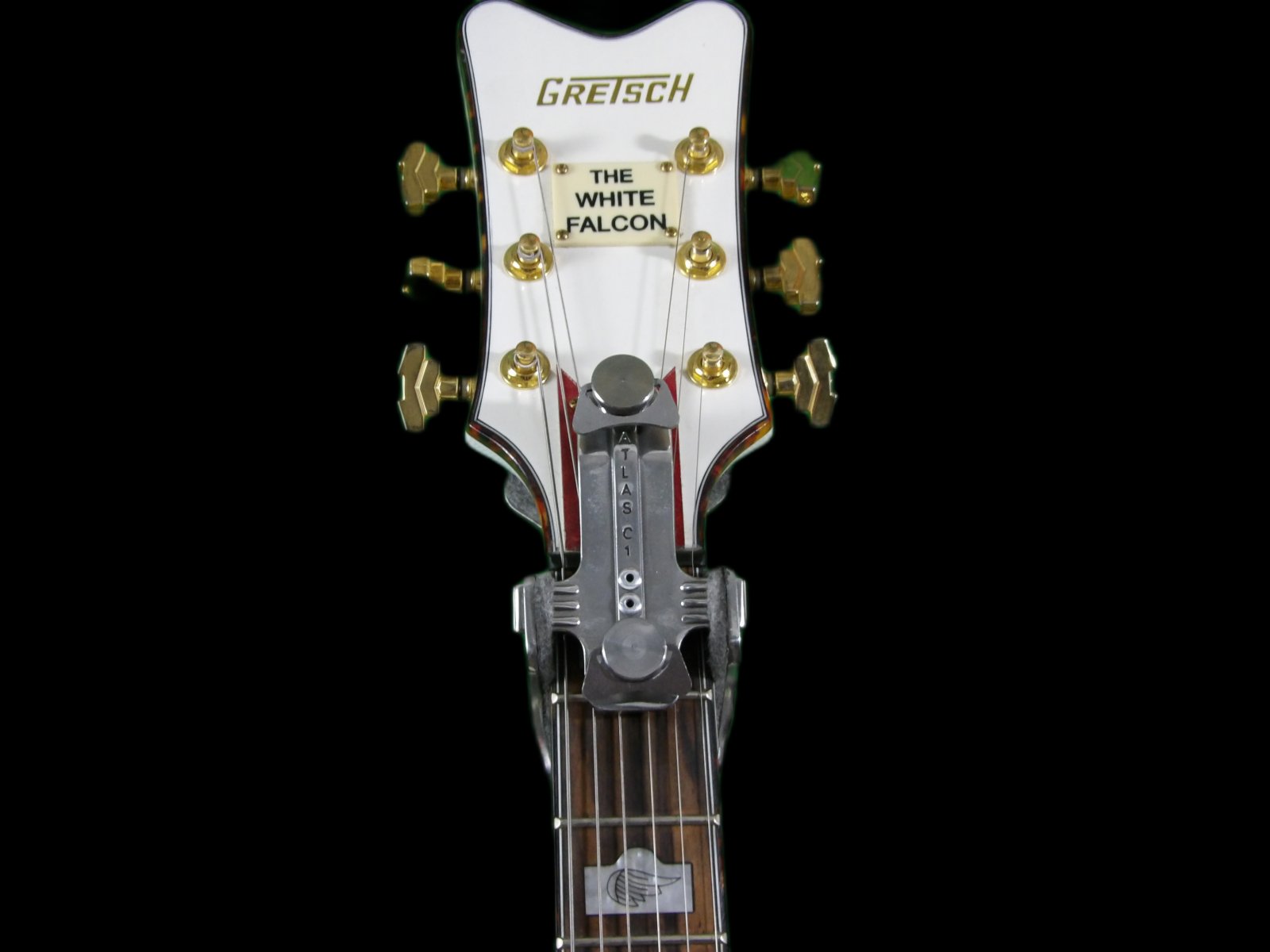
- Support the headstock and neck during transport, which is where the Atlas C1 headstock support and protection tool is designed to help.
Watch out: a guitar that cracks is often damaged long before anyone notices. Check the top and the neck joint at every soundcheck, not only when something sounds wrong.
Top Guitar Humidifier Picks for Touring Musicians
The Atlas C1 is a universal multi-function headstock tool designed to protect the headstock-neck junction during travel, shipping, or storage. It doubles as a pre-aligned repair jig and is a U.S. patent-protected design with lifetime use.
Humidity control is a separate job, so pair the Atlas C1 with a humidifier from the list below:
For current prices and availability, check each manufacturer's site directly. Atlas C1 pricing depends on quantity, delivery and current promotions; visit the Atlas C1 site for a quote.
Using and Maintaining Your Guitar Humidifier on Tour
A humidifier only works if you keep it working, and on tour the failure modes are predictable. Refillable sponges and reservoirs dry out faster in dry climates and heated vehicles; a common pattern is to need a refill every two to four days in winter or in desert conditions, and less often in humid summer air. Check the reservoir at every load-in rather than once per week. Two-way packs last longer but still have a finite life; most manufacturers publish a replacement interval, and you should carry a spare set on any tour longer than a few weeks.
Over-humidification is the other failure mode. If you use a basic humidifier in an already damp case, humidity can climb above 60%, which can swell wood and soften glue joints. A digital hygrometer inside the case is the only reliable way to know. If the reading stays above 55% for more than a day, remove the humidifier and let the case air out. Never place a humidifier directly against the instrument's finish; direct contact can leave water marks or cause localized swelling. Use the manufacturer's specified water (distilled is commonly recommended to avoid mineral buildup) and clean the reservoir on a schedule.
A simple checklist works well for touring:
- Reservoir or pack refilled or replaced
- Hygrometer batteries checked
- Case seals and latches inspected
- Headstock support tool in place for transit
- Reading logged after arrival
Watch out: a leaking humidifier can damage the instrument more than dry air. Test any new humidifier by filling it and leaving it outside the case for a few hours before you trust it in transit. If a humidifier dries out mid-tour, replace it with a spare rather than rushing a refill in a venue bathroom, where water quality and spill risk are both unpredictable.
Protecting Your Touring Guitar Starts With the Next Step
Humidity control and headstock protection work together. A humidifier keeps the wood stable, and a support tool protects the joint that takes the most stress during transport. Atlas C1 makes the protection tool, and it is built for players who travel as hard as they play. Visit the Atlas C1 site to see the current lineup, check pricing for your situation, and pick the setup that fits your next tour.
The Science of Harmony through innovation and design
Long Live the Six String™
Frequently Asked Questions
Do touring musicians really need a guitar humidifier?
Most touring musicians benefit from one. Guitars move between heated venues, cold vans, dry hotel rooms and cargo holds, and each shift changes the wood's moisture content. Acoustic guitars are the most exposed because their solid tops and necks respond to relative humidity. A humidifier keeps the case interior within a steadier range, which lowers the risk of cracks, lifted braces and neck movement. Electric guitars are less sensitive but still benefit in very dry conditions. A simple hygrometer lets you check whether your current setup is working before a problem shows up.
How do I maintain guitar humidity while traveling on a bus or plane?
Keep the guitar in its case with a humidifier sized for the case, and check the reading with a digital hygrometer before each leg of the trip. Avoid leaving the case in a cargo hold or a car trunk for long periods, where temperature swings are largest. On airlines, carry the instrument as cabin baggage when possible. Refill or replace the humidifier element before a long trip, and let the guitar acclimate gradually when you move it from a cold space into a warm venue.
What is the ideal humidity range for an acoustic guitar?
Most guitar makers and technicians point to a relative humidity range of roughly 45 to 55 percent for acoustic guitars, though the exact target depends on your instrument, climate and case. The more important goal is stability: sudden swings do more damage than a reading that sits slightly off target. A hygrometer inside the case shows the actual conditions, which can differ from the room. Check the manufacturer's guidance for your model before adjusting your setup.
Can a digital hygrometer help me monitor my guitar's health on tour?
Yes. A digital hygrometer placed inside the case shows the humidity your guitar actually experiences, which is more useful than a room reading. Many models display current humidity and temperature, and some record minimum and maximum values, so you can spot a dry hotel room or a damp load-in. Look for a model with a clear display and a sensor you can read without opening the case fully. Use the readings to decide when to add or remove moisture.