
Table of Contents
- When Does a Guitar Need a Neck Reset
- Understanding the Neck Reset Process
- DIY Guitar Neck Reset Risks You Should Know
- Professional Luthier Neck Reset: What to Expect
- Acoustic Guitar Neck Reset Cost Breakdown
- DIY Jig vs. Professional Luthier Service: The Real Comparison
- Tools Required for Neck Removal and Repair
- Signs of a Failing Neck Joint: Prevention First
- Protecting Your Guitar Investment During Travel
- Conclusion
- Frequently Asked Questions
Last Updated: September 26, 2026
When Does a Guitar Need a Neck Reset
A guitar needs a neck reset when the action becomes too high to play comfortably and can no longer be corrected through standard setup adjustments, a distinction that separates the neck reset jig vs luthier decision. This happens because the neck joint gradually loses its angle over decades of string tension and climate changes. The dovetail joint or bolt-on connection that holds the neck at its original angle slowly shifts, raising the strings farther from the fretboard.
Most acoustic guitars and vintage electrics develop this problem after 30-50 years of use. High action makes the guitar difficult to fret, causes hand fatigue, and can discourage playing altogether. If your guitar has always had playable action but recently became harder to play, and a luthier tells you the neck angle has changed, that's your signal that a neck reset may be necessary.
The key distinction: a neck reset is not the same as a simple setup. Setup adjusts the bridge height and nut slots to optimize playability. A neck reset physically changes the angle of the entire neck where it joins the body, addressing the root cause of chronically high action.
Understanding the Neck Reset Process
A neck reset involves removing the neck from the guitar body, re-angling it to its original position, and re-gluing it in place. This is one of the most invasive repairs a guitar can undergo, which is why understanding the process matters before you decide whether to attempt it yourself or hire a professional luthier.
The dovetail joint and heel cap
The neck attaches to the body through either a dovetail joint (common on acoustics and vintage Gibson-style guitars) or a bolt-on connection (typical on Fenders and modern electrics). The dovetail is a precisely cut interlocking joint where the neck's heel fits into a matching pocket in the body.
Above the dovetail sits the heel cap, a visible piece of wood that covers the joint and is often decorative. During a neck reset, the luthier must carefully remove this heel cap, separate the neck from the body by applying controlled heat and steam to soften the old glue, and then re-angle and re-glue the neck in its correct position.
The structural integrity of this joint determines whether the repair will hold long-term. A poorly executed reset can result in a weak joint that fails again within a few years, negating the entire investment.
Why action height matters
Action height is the distance between the strings and the fretboard, measured at the 12th fret. Ideal action for most guitars falls between 2.0mm and 2.4mm on the bass side. When the neck angle shifts, action gradually rises above this range.
High action forces your fingers to press harder to fret notes, which causes hand fatigue and makes the guitar feel unplayable. It also affects tone, excessive downward pressure can flatten notes and create unwanted finger noise. A neck reset restores the correct neck angle, which allows the bridge to sit at the proper height and brings action back into the playable range.
DIY Guitar Neck Reset Risks You Should Know
Attempting a neck reset without professional experience carries significant risks. The process requires precision alignment, controlled heat application, and knowledge of wood movement and glue chemistry. Most DIY attempts result in either a failed repair or lasting structural damage to the instrument.
Skill-level assessment matrix
Before you consider a DIY neck reset, use this framework to honestly assess whether you have the foundational skills required. A neck reset is not a beginner woodworking project, and overestimating your capability is the primary reason DIY attempts fail.
Beginner woodworkers (0-2 years experience): You have used basic hand tools and power tools on simple projects like shelving or cutting boards. You understand wood grain direction in theory but haven't worked extensively with glued joints or precision clamping. Risk level: Extremely high. Do not attempt a neck reset. The margin for error is too small, and the consequences of misalignment or joint failure are too costly. A failed reset will require professional correction at 2-3× the original repair cost.
Intermediate woodworkers (2-5 years experience): You have successfully repaired wooden furniture, replaced joints, or built instruments from scratch. You understand wood movement, can set up precision clamps, and have experience with hide glue or epoxy. You own or have access to quality hand planes, chisels, and measuring tools. Risk level: Moderate to high. A DIY reset is possible if you work on a guitar valued under $1000 and you invest in a pre-engineered jig like the Atlas C1 to reduce alignment variables. Even with intermediate skills, expect a 30-40% chance of a result that requires professional touch-up work.
Advanced woodworkers (5+ years, instrument repair experience): You have built or repaired guitars, violins, or other stringed instruments. You understand the specific demands of neck joint geometry, have experience with reversible adhesives, and can execute steam-heat softening without damaging finish. You own precision clamping fixtures and can measure angles to within 0.5 degrees. Risk level: Moderate. You have the skills to execute a neck reset successfully, though you still face the risk of unforeseen joint damage during removal. Even experienced luthiers occasionally encounter surprises when disassembling old instruments.
If you fall into the beginner or early-intermediate category, the financial and emotional risk of a failed reset outweighs the cost savings of a DIY approach. A single mistake, crushing the dovetail joint, misaligning the neck by 1 degree, or applying excessive heat to the finish, can transform a $700 repair into a $1800+ restoration project.
Finish damage and structural integrity concerns
The area around the neck joint is often finished with stain and lacquer that must be carefully preserved during a reset. Heat application to soften old glue can damage this finish, and any mishap during disassembly can crack or gouge the body. The finish damage alone can cost $200-400 to repair professionally.
More critically, the structural integrity of the guitar depends on the precision of this repair. If the neck is re-glued at even a slightly incorrect angle, say, 0.5 degrees off from the original, the action will still be high, and you'll have spent weeks on a repair that didn't solve the problem. Worse, you may have damaged the joint so severely that a professional luthier cannot salvage it without extensive additional work.
A failed DIY neck reset often costs more to correct professionally than the original luthier service would have cost. The luthier must now remove the neck again (risking further damage to an already-compromised joint), clean out incorrect glue residue, assess whether the dovetail surfaces are still usable, and potentially rebuild portions of the joint or even replace the neck entirely.
Professional Luthier Neck Reset: What to Expect
A professional luthier performs a neck reset with precision equipment, years of experience, and accountability for the result. The process typically takes 2-6 weeks depending on the shop's queue and the specific instrument.
Luthier repair turnaround time and setup
Most professional luthiers maintain a waiting list. When you drop off your guitar, expect to wait anywhere from 2-4 weeks before work begins, depending on how busy the shop is. The actual neck reset work takes 3-7 days, followed by additional time for glue curing, fret work, and final setup.
Total turnaround time from drop-off to pickup usually ranges from 4-8 weeks. During this time, the luthier will:
- Remove the neck using controlled steam heat to soften the old glue
- Clean the joint surfaces and inspect for damage
- Plane or sand the heel block to achieve the correct neck angle
- Re-glue the neck with modern, reversible adhesives
- Clamp the joint under precise pressure for 24-48 hours
- Plane the fretboard to ensure it's level after re-gluing
- Perform a complete setup including nut work and bridge adjustment
A professional luthier guarantees their work and stands behind the repair with liability coverage. If something goes wrong, they'll correct it at no additional charge.
Acoustic Guitar Neck Reset Cost Breakdown
Professional acoustic guitar neck reset costs vary based on the instrument's value, the complexity of the joint, and the luthier's experience level. Entry-level service shops charge between $600-900, while highly respected luthiers working on vintage instruments may charge $1200-1800 or more.
This cost typically includes the neck removal and re-gluing, fret leveling, nut replacement, bridge work, and a complete setup. Some shops charge separately for additional services like finish touch-up or fret replacement, which can add $200-400 to the total.
For vintage or high-value instruments, the cost of a professional reset is often justified because it preserves the instrument's structural integrity and resale value. For guitars worth less than $800-1000, the repair cost may exceed the instrument's market value, which is when you need to weigh whether restoration makes financial sense.
DIY Jig vs. Professional Luthier Service: The Real Comparison
The decision in a neck reset jig vs luthier comparison depends on your skill level, your guitar's value, and how much structural risk you're willing to accept.
A DIY jig can help if you have intermediate woodworking experience and are working on a lower-value instrument where a failed repair won't be a financial disaster. The Atlas C1 provides pre-aligned support that reduces some guesswork in the clamping and alignment process, but it does not eliminate the skill requirements for successful execution.
Professional luthier service is the right choice if your guitar is worth more than $1000, if you're emotionally attached to the instrument, or if you lack woodworking experience. The luthier's expertise, precision equipment, and warranty make the higher cost a worthwhile investment for valuable instruments.
Long-term structural impact and resale value
A professionally executed neck reset preserves the guitar's structural integrity and resale value. The work is documented, the joint is executed to exacting standards, and the instrument remains playable for decades afterward.
A DIY neck reset that succeeds still carries uncertainty about long-term durability. Even if the repair feels solid initially, the joint may weaken over years due to wood movement, temperature changes, or inadequate clamping pressure during the original glue-up. This uncertainty depresses resale value because future buyers will question the repair quality.
For vintage instruments or collectibles, a professional reset from a known luthier actually increases resale value because buyers trust the work. A DIY reset, even if successful, typically decreases value because buyers assume it may fail.
Total cost of ownership analysis
The total cost of ownership includes not just the immediate repair expense, but also the risk of failure and the potential for additional repairs.
DIY approach: For the Atlas C1, pricing depends on quantity, dates, and delivery. If the repair succeeds, your total cost is low. If it fails, you've now damaged the instrument and must pay a luthier $1200-1800 to fix both the original problem and the damage you caused, resulting in total out-of-pocket costs of $1500-2400.
Professional approach: $600-1800 for the service, with a guarantee and no risk of additional damage. Your total cost is known upfront.
For guitars valued above $1500, the professional service offers better risk-adjusted value. For guitars valued below $800, the DIY approach with a quality tool like the Atlas C1 may be defensible if you have the skill to execute it carefully.
| Comparison Factor | DIY Jig Approach | Professional Luthier |
|---|---|---|
| Upfront cost | $300-600 | $600-1800 |
| Time investment | 40-80 hours | 0 hours (you wait) |
| Risk of failure | High (without experience) | Very low |
| Structural guarantee | None | Full warranty |
| Resale value impact | Neutral to negative | Positive |
| Best for | Low-value guitars, experienced woodworkers | Valuable instruments, peace of mind |
Tools Required for Neck Removal and Repair
A successful DIY neck reset requires specialized tools that go beyond a basic toolkit. You'll need precision clamping fixtures, heat sources, alignment guides, and finishing supplies. More importantly, the quality and precision of these tools directly determine whether your reset will succeed or fail.
Critical tools and why each one matters
Heat source (steam gun or controlled heat gun): You must soften the old hide glue without damaging the finish or warping the wood. An uncontrolled heat gun can scorch the finish in seconds or cause the wood to swell unevenly. A steam gun provides more controlled, even heat but requires practice to avoid moisture damage. Why it matters: Excessive heat is one of the most common causes of finish damage in DIY resets. If you damage the finish during glue removal, you've added $200-400 in refinishing costs to your project before you've even begun the actual reset.
Heavy-duty bar clamps (minimum 500 lbs clamping force): You need at least two clamps rated for 500+ pounds of clamping force to hold the neck at the correct angle during the 24-48 hour glue cure. Undersized clamps won't provide enough pressure to create a strong joint, and the neck may shift during curing or fail months later. Why it matters: Insufficient clamping pressure is the second most common cause of failed DIY resets. The joint feels solid initially but weakens over months as the glue cures incompletely or wood movement stresses the weak bond.
Precision alignment fixture or pre-engineered jig (such as the Atlas C1): This is the tool that separates a DIY reset with a reasonable chance of success from a DIY reset that's essentially a gamble. A pre-engineered jig provides pre-calculated angles, repeatable clamping geometry, and alignment guides that reduce the number of variables you must control manually. Without a jig, you must calculate the correct neck angle, fabricate custom clamping blocks, and verify alignment using multiple measuring tools, a process where small errors compound. Why it matters: The jig reduces alignment error from ±2-3 degrees (typical for improvised fixtures) to ±0.25 degrees. This difference determines whether your reset is playable or requires professional correction.
Hand plane or belt sander for heel block adjustment: After removing the neck, you must plane or sand the heel block to achieve the correct neck angle.
The hidden cost of tool acquisition
If you don't already own quality clamps, a hand plane, and precision measuring tools, the cost of acquiring them can approach or exceed the cost of hiring a professional luthier. A quality bar clamp costs $40-80 each, and you'll need at least two. A hand plane capable of fine work costs $80-150. An angle finder costs $30-50. For the Atlas C1, pricing depends on quantity, dates, and delivery.
Signs of a Failing Neck Joint: Prevention First
Catching neck joint problems early can help you decide between preventive action and waiting until a full reset becomes necessary. Watch for these warning signs:
- Action gradually increases over months or years, despite setup adjustments
- The neck visibly tilts back away from the body when you sight down the fretboard
- The joint area shows visible cracks or separation between the heel cap and body
- The guitar sounds dull or loses sustain compared to its earlier tone
- The neck feels loose or moves slightly when you apply pressure to the headstock
Protecting Your Guitar Investment During Travel
Musicians who travel frequently with guitars face the highest risk of headstock damage, which can lead to neck joint failure. Proper travel protection is essential for preserving your instrument's playability and value.
Conclusion
The choice between a DIY neck reset jig and professional luthier service ultimately depends on your guitar's value, your woodworking skill, and how much structural risk you're willing to accept. For valuable vintage instruments or guitars you're emotionally attached to, professional service provides the expertise, precision, and warranty that justify the higher cost. For lower-value guitars and experienced woodworkers, a quality DIY jig can reduce costs while maintaining acceptable quality if executed carefully.
Frequently Asked Questions
How much does a professional guitar neck reset cost in 2026?
Professional luthier neck reset services typically start at $600 and vary based on instrument type, damage severity, and additional fretwork needed. Vintage or high-value guitars may cost more due to the precision required and finish protection. Contact a qualified luthier for a specific quote on your instrument. Pricing depends on the shop's location, reputation, and the complexity of your guitar's neck joint and playability issues.
What are the main risks of performing a DIY guitar neck reset?
DIY neck resets risk permanent finish damage, improper neck angle alignment, structural integrity failure, and loss of instrument value. Without professional fixtures and calibration tools, the dovetail joint may not re-glue correctly, causing the neck to fail under string tension. Mistakes are often irreversible and can cost more to fix than hiring a luthier initially. Most DIY attempts require professional correction afterward.
How long does a professional neck reset take to complete?
Luthier repair turnaround time typically ranges from 4-8 weeks, depending on the shop's queue and the repair's complexity. Simple neck resets may take 2-3 weeks, while vintage instruments requiring additional fretwork, nut replacement, or bridge height adjustment take longer. High-demand luthiers may have 3-month waiting lists. Contact your luthier for a specific timeline based on their current workload.
When does a guitar actually need a neck reset?
A guitar needs a neck reset when action height becomes unplayably high despite saddle adjustment, the fretboard extension separates from the body, or the neck angle changes due to wood movement or impact damage. Signs include buzzing frets that cannot be fixed by truss rod adjustment, visible gaps at the heel cap, or excessive relief in the neck. Professional evaluation is essential, many playability issues resolve with setup adjustments rather than invasive neck removal.
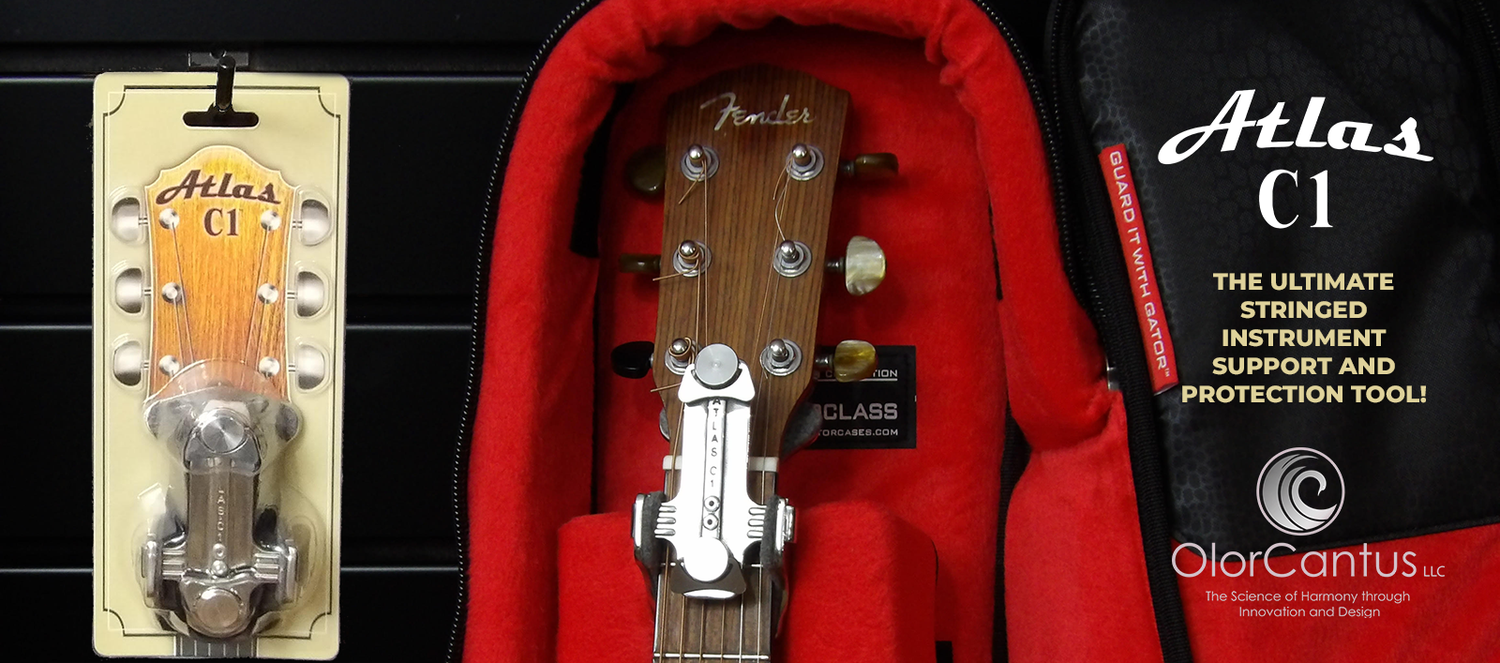
Protecting your guitar investment starts with prevention. The Atlas C1 headstock protection tool prevents costly repairs, provides peace of mind during travel, and doubles as a pre-aligned repair jig for quick fixes. Get started with the Atlas C1 and keep your guitar playing beautifully for decades.