
Table of Contents
- Why Guitar Headstock Safety Matters
- How to Protect Angled Guitar Headstocks
- Headstock Protection Tools Compared
- Using a Guitar Headstock Repair Jig
- How to Pack a Guitar for Shipping
- Headstock Protection During Daily Storage
- Choosing the Right Guitar Headstock Protection Tool
- Frequently Asked Questions
Last Updated: October 17, 2026
Why Guitar Headstock Safety Matters
A broken guitar headstock isn't just an inconvenience, it's a financial and emotional blow. The headstock-neck junction is where a guitar's most fragile structural point meets its most valuable component. String tension alone exerts over 130 pounds of force on this vulnerable area, and that pressure intensifies during travel, shipping, or even routine storage.
For touring musicians, collectors, and anyone who owns a valuable instrument, guitar headstock safety isn't optional. A single drop, turbulent flight, or poorly packed case can result in a break that costs hundreds to repair, or renders a vintage instrument permanently compromised. Professional luthiers regularly see preventable damage that could have been avoided with proper support and protection.
The good news: the right protection tool transforms how you safeguard your instrument. Whether you're flying across the country, storing guitars long-term, or working on repairs, having a dedicated solution means you're no longer gambling with your gear. Below, we'll show you exactly how to protect your headstock, what tools work best for different scenarios, and how to make informed decisions about which protection method makes sense for your situation.
How to Protect Angled Guitar Headstocks
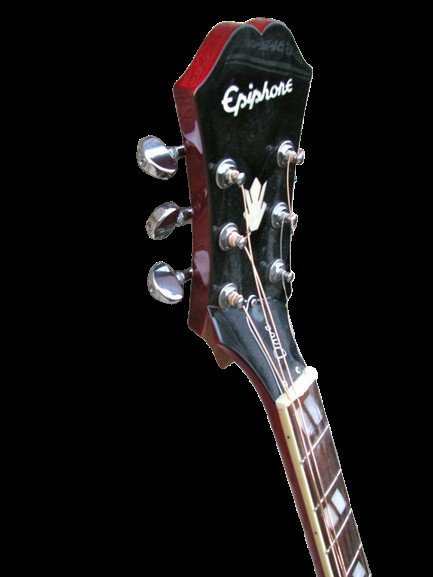
Angled headstocks, common on Gibson-style guitars and many other electric and acoustic models, face unique challenges. The angle creates a stress point where the headstock meets the neck, and that junction is where breaks most often occur. But not all angled headstocks are the same, and a protection tool that fits one shape may not fit another. This section gives you a practical fit guide by headstock shape and explains the finish-safe materials that prevent scratches while holding the headstock secure.
Why the angle matters
The vulnerability comes from the angle itself. When a guitar sits in a case or gets jostled during transport, gravity and impact forces concentrate at that junction. Standard padding and soft cases offer minimal protection because they don't address the structural support needed at that specific pressure point. String tension alone exerts over 130 pounds of force on this area, and that load intensifies during travel, shipping, or even routine storage.
Proper protection requires three elements: support from underneath to counteract string tension, stabilization to prevent lateral movement, and cushioning to absorb impact. Wrapping the headstock in bubble wrap alone won't cut it. You need active support that keeps the headstock aligned with the neck and prevents the angle from creating stress during movement.
Fit guide: matching the tool to your headstock shape
Headstock geometry varies widely, and the best tool for guitar headstock safety must adapt to the shape in front of you. Use this guide to assess compatibility before you buy.
- Angled (Gibson-style, 14-17 degrees): The break risk is highest here because the angle concentrates stress at the neck junction. Look for a tool that supports the headstock from underneath and holds the angle in its natural position. A universal cradle with adjustable contact points works better than a fixed block that forces the headstock flat.
- Straight (Fender-style, 0 degrees): Straight headstocks are less prone to angle-related breaks but still suffer from lateral movement in cases. A tool with side stabilizers prevents the headstock from shifting sideways. Because there is no angle, a flatter support surface is acceptable, but avoid tools that apply pressure only at the nut.
- Asymmetrical or offset (some boutique and acoustic models): These shapes can defeat one-size-fits-all cradles. Check that the tool's contact points can be positioned independently. If the tool clamps only at the centerline, it may rock on an offset headstock and create new pressure points.
- Acoustic vs. electric: Acoustic headstocks are often thicker and heavier, so support must handle more mass. Electric headstocks with locking tuners add hardware weight at the top, which increases leverage during a drop. In both cases, the tool should contact the neck and headstock, not just the tuner buttons.
- Slotted and paddle headstocks: Classical and some vintage-style headstocks have slots or a paddle shape that leave little flat surface. Soft, conforming contact pads are safer than hard clamps here.
Finish-safe materials and scratch prevention
Protecting the headstock from breaking is only half the job; the other half is protecting the finish. Nitrocellulose and polyurethane finishes react differently to contact materials, and some foams and plastics can leave marks or soften the finish over time.
- Avoid bare foam and vinyl: Certain foam blocks and vinyl case liners can outgas and stain or soften nitro finishes during long storage. If you use foam, wrap it in a soft, lint-free cloth first.
- Use felt or microfiber at contact points: These materials distribute pressure and reduce abrasion. Check that the tool's pads are clean and free of grit before each use.
- Watch pressure points: A tool that contacts only the tuner buttons or the very top of the headstock concentrates force. Look for broad contact across the neck and headstock face.
- Test fit before travel: Install the tool, close the case, and gently rock the guitar. Any movement means the contact points need adjustment.
Many musicians try DIY solutions, foam blocks, rolled towels, or custom padding, but these rarely provide the precision needed. The headstock continues to experience subtle movement inside the case, and over time or during rough handling, that movement compounds into damage. A tool designed around these fit and finish considerations removes the guesswork.
Headstock Protection Tools Compared
When it comes to dedicated headstock protection tools, the market offers several approaches. Some focus purely on travel and shipping protection, while others double as repair jigs for fixing breaks. Understanding the differences helps you choose what actually matches your needs.
Atlas C1: Multi-Function Protection and Repair
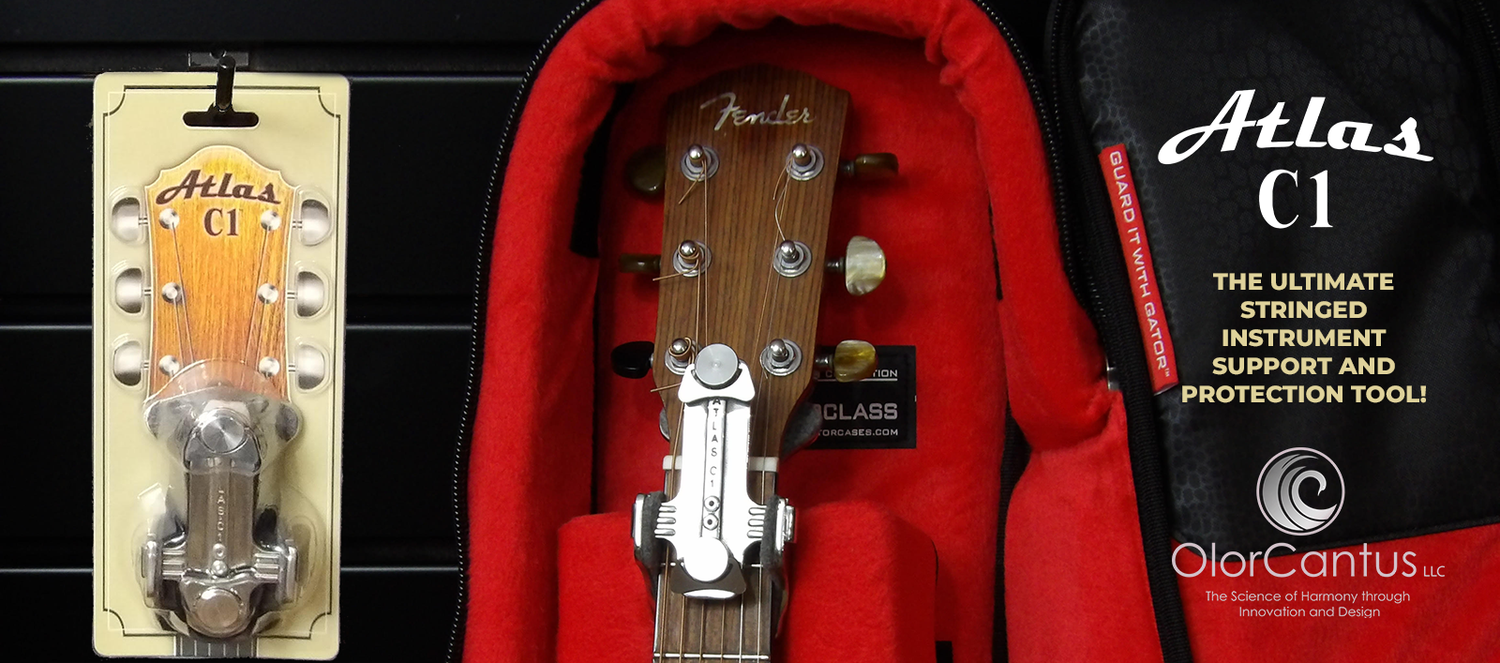
The Atlas C1 is a precision-engineered tool that serves dual purposes: protecting your headstock during transport and storage, and functioning as a pre-aligned repair jig when damage does occur. The U.S. patent-protected design targets the vulnerable headstock-neck junction with active support that counteracts the 130+ pounds of string tension constantly working on that area.
What sets the Atlas C1 apart is its universal compatibility. Whether you own Gibson-style angled headstocks, Fender-style straight necks, or any other configuration, the tool adapts to your instrument's geometry. That versatility matters if you own multiple guitars or work with different instrument types.
The repair-jig functionality is where the Atlas C1 proves its value beyond protection. If a headstock break does happen, having a pre-aligned jig means you can attempt repairs. The tool holds the broken pieces in proper alignment while glue sets, which is the critical factor in a successful repair. For collectors and touring musicians, this capability alone justifies the investment.
Professional musicians including Pete Townshend, Greg Martin, Vic Johnson, Elwood Francis, Kyle Daniel, and Clay Cook rely on the Atlas C1 for their touring gear. Featured in Premier Guitar Magazine and available at Guitar Center, the tool has earned credibility through real-world use by players who can't afford instrument failure on the road.
Dunlop NC65 Neck Cradle: Workbench Support
The Dunlop NC65 Neck Cradle takes a different approach, it's designed for workbench use, not travel protection. The cradle elevates your guitar's neck above the work surface, keeping the headstock off the bench during maintenance and setup work.
This tool excels at one specific job: providing stable support when you're working on your instrument at home. If you change strings, adjust truss rods, or perform other setup tasks, the cradle prevents the headstock from hanging off the edge of your workbench or resting on hard surfaces where it could get scratched or damaged.
The limitation is clear: this type of neck cradle doesn't address travel or shipping protection. It won't prevent headstock breaks during transport, and it's not designed to function as a repair jig. For musicians who need protection during everyday storage and touring, this type of tool fills only part of the puzzle.
Using a Guitar Headstock Repair Jig
If your headstock does break, and for touring musicians, it's often a matter of when, not if, having access to a repair jig changes everything. The difference between a successful repair and permanent damage comes down to alignment.
When a headstock breaks, the two pieces want to separate along the break line. Wood glue alone won't hold them if they're misaligned, and even a slight angle compounds into a visible, structurally weak joint. A pre-aligned repair jig holds the pieces in perfect alignment while the glue cures, which typically takes 24 hours.
The process is straightforward: apply wood glue to both surfaces of the break, position the pieces in the jig, and let time do the work. The jig's design ensures that the headstock sits in the exact same position it occupied before the break, so the repair is structurally sound and invisible once finished.
For musicians without luthier experience, a pre-aligned jig removes the guesswork. You're not trying to eyeball the alignment or rig up a temporary clamping system. The tool does the precision work for you, which is why professional repair shops rely on jigs rather than improvised solutions.
How to Pack a Guitar for Shipping
Shipping a guitar requires more than just throwing it in a case. Professional touring musicians and collectors have refined packing methods that minimize headstock risk during air or ground transport.
Start with a hard-shell case, soft cases offer minimal protection during shipping. Inside the case, the headstock needs dedicated support. This is where many musicians make mistakes: they pack the body securely but leave the headstock to shift inside the case. Every bump, drop, or pressure change during transport creates movement at that vulnerable junction.
The headstock should be supported from underneath and stabilized against lateral movement. Foam blocks, towels, or custom padding can work, but they require careful placement. The goal is zero movement, if you can shift the headstock when the case is closed, your packing isn't secure enough.
For high-value instruments or frequent touring, a dedicated headstock protection tool makes this step foolproof. Instead of improvising support, you're using a tool designed specifically for this purpose. The tool holds the headstock in place during the entire shipping process, eliminating the variable that causes most damage. Plus, when you order a headstock protection tool, you'll benefit from free shipping, making it easy to get the protection your instrument needs without extra costs.
Add padding around the body, secure the case latches, and your guitar is ready for transit. The investment in proper packing, whether with improvised materials or a dedicated tool, pays for itself by preventing a single break.
Headstock Protection During Daily Storage
Storage damage is often overlooked because it happens slowly. A guitar stored in a case for months or years experiences constant, subtle pressure from the case walls and any internal movement. String tension continues to work on the headstock even when the guitar isn't being played. But the bigger gap in most guides is everyday use: stands, crowded rooms, and routine handling cause more headstock accidents than shipping does. This section covers practical protection during daily storage and use, not just travel.
The overlooked risks of everyday use
Most headstock breaks don't happen on a plane. They happen at home: a guitar leaning against an amp, a stand tipping when a cable is pulled, a crowded rehearsal room where a case gets kicked. These scenarios share one trait: the headstock is unsupported and exposed.
- Stands: Most stands support the guitar at the body and neck, but some apply pressure at single points. A stand that contacts only the back of the neck can let the headstock swing into a wall or another instrument. Look for stands with neck yokes that cradle rather than clamp, and keep stands away from walkways.
- Crowded rooms: In a rehearsal space or studio, guitars on stands are vulnerable to being knocked. A case is safer, but only if the headstock is supported inside it. If you leave a guitar out, position it so the headstock faces away from traffic.
- Routine handling: Lifting a guitar by the neck or headstock is a common habit that stresses the junction. Lift by the body and neck heel instead.
- Long-term case storage: Even in a case, the headstock can shift if the case interior has worn or the guitar doesn't fit snugly. Check the fit periodically and add support if needed.
Finish-safe support for storage
The same finish-safe principles that apply to travel apply to storage. Contact materials matter over months and years.
- Avoid direct foam contact on nitro finishes: Use a soft cloth barrier between foam and finish.
- Keep contact points clean: Grit trapped between a pad and the finish can cause scratches over time.
- Distribute pressure: A tool that contacts a broad area of the neck and headstock is safer for the finish than a narrow clamp.
A practical storage checklist
- Decide whether the guitar will be out or cased. If out, use a stable stand with a neck yoke and place it out of traffic.
- If cased, confirm the headstock cannot move when the case is closed.
- For long-term storage, loosen string tension slightly to reduce load on the headstock-neck junction, but not so much that the neck relief changes dramatically.
- Inspect contact points and pads monthly for wear or grit.
- Store cases away from heat sources and direct sunlight, which can affect both finish and case materials.
Musicians who store guitars for extended periods often report that headstock issues develop gradually, a small crack that wasn't visible before, or a subtle misalignment that affects playability. These issues almost always stem from inadequate support during storage. Addressing everyday risks, not just travel, closes the gap that most protection advice leaves open.
Choosing the Right Guitar Headstock Protection Tool
The decision comes down to your specific situation. Ask yourself these questions:
How often do you travel with your guitar? If you're a touring musician flying or driving frequently, a tool designed for travel protection is non-negotiable. If you fly once or twice a year and keep your guitar in a case at home, your needs are different from someone on the road constantly.
Do you own multiple guitars with different headstock styles? If your collection includes both angled and straight headstocks, you need a universal tool that adapts to different geometries. Single-purpose tools designed for one headstock style won't work across your collection.
Are you prepared to handle repairs yourself, or would you always take a broken guitar to a luthier? If you're comfortable working on your instrument, a tool that functions as a repair jig adds significant value. If you always outsource repairs, that functionality matters less to your decision.
What's your budget for protection versus the value of your instruments? High-value guitars justify higher investment in protection. A $5,000 vintage instrument warrants more protection than a $500 practice guitar.
| Protection Method | Best For | Limitations | Durability |
|---|---|---|---|
| Improvised padding (towels, foam) | Casual players, occasional storage | Inconsistent protection, requires setup each time | Temporary solution |
| Workbench cradle (Dunlop NC65) | Home maintenance and setup | Workbench use only, no travel protection | Long-term home use |
| Dedicated headstock tool (Atlas C1) | Touring musicians, collectors, professionals | Higher upfront cost | Lifetime investment |
The Atlas C1 stands out for musicians who need protection across multiple scenarios, travel, storage, and repairs. The patent-protected design and universal compatibility mean you're not limited to one headstock style, and the dual functionality (protection plus repair jig) addresses both prevention and recovery.
For casual players who store guitars at home and rarely travel, a workbench cradle combined with careful case packing might suffice. But for anyone whose guitar leaves home regularly, or who owns valuable instruments worth protecting, a dedicated tool eliminates the guesswork and provides peace of mind that improvised solutions can't match.
A broken headstock is preventable, and the cost of prevention is a fraction of the cost of repair. The right protection tool, one designed specifically for the headstock-neck junction and compatible with your instrument, transforms how you approach guitar safety. The Atlas C1 combines that dedicated protection with repair-jig functionality, giving you a solution that works during travel, storage, and recovery from damage. Get started with the Atlas C1 today and protect your investment for a lifetime of playing. Take advantage of a 10% product discount on your order and enjoy the peace of mind that comes with professional-grade headstock protection.
Frequently Asked Questions
What is the best way to protect a guitar headstock during travel?
The most effective protection combines internal support and external cushioning. Use a dedicated guitar headstock protection tool inside your case to stabilize the vulnerable neck-junction area, then pack the case with padding around the headstock. Hard-shell cases offer better impact resistance than soft gigs. For frequent touring or air travel, a pre-aligned support tool designed specifically for headstock stability prevents the majority of damage that occurs when instruments shift during transport.
Can a headstock support tool also be used as a repair jig?
Yes, many modern headstock support tools serve dual purposes. A pre-aligned repair jig lets you stabilize a broken headstock during glue-up and clamping without requiring luthier experience. The alignment guides built into these tools ensure the headstock returns to its original angle and position, reducing the risk of misalignment during repair. This dual functionality makes them valuable for both prevention and recovery.
How do you protect an angled guitar headstock in a case?
Angled headstocks like those on Gibson-style guitars face greater stress from the string tension pulling at an angle. Position a headstock protection tool to support the junction where the headstock meets the neck, counteracting the downward pull. Place the tool so it contacts the headstock and neck evenly, distributing pressure across both surfaces. This prevents the gradual movement and micro-fractures that lead to breaks over time, especially during shipping or when the case is stacked or bumped.
How should you pack a guitar for shipping to prevent headstock damage?
Start by securing the guitar with a headstock protection tool inside the case to prevent any neck movement. Wrap the entire instrument in bubble wrap or foam padding, paying extra attention to the headstock and neck. Use a hard-shell case rated for instrument shipping. Fill empty spaces with packing material to eliminate shifting. Label the package as fragile and consider insurance for high-value instruments. This multi-layer approach, internal support, padding, hard case, and secure packing, reduces headstock damage risk during ground or air shipment.