
Table of Contents
- Why Musicians Look Beyond StewMac for Guitar Repair Tools
- Lower-Cost Tools for DIY Guitar Repair and Setup
- Guitar Headstock Repair Jig Options for Home Repairers
- Broken Guitar Headstock Repair Tools and Techniques
- Guitar Neck Repair Clamp Solutions for Different Headstock Angles
- Headstock Repair with Splines: A Strengthening Alternative
- Repurposing Hardware and Automotive Tools for Guitar Repair
- Comparing Tool Quality, Accuracy, and Long-Term Value
- Protecting Your Investment: When DIY Tools Make Sense
- Frequently Asked Questions
Last Updated: October 12, 2026
Why Musicians Look Beyond StewMac for Guitar Repair Tools
When a guitar headstock breaks, the repair bill can rival the cost of a decent used instrument. Many musicians and DIY repairers search for alternatives to premium brands like StewMac because they want to protect their guitars without paying premium prices for every tool in their collection.
The reality is this: you don't need to buy into an entire ecosystem of specialized tools to handle common guitar repair challenges. At Atlas C1, we've analyzed what separates effective guitar repair tools from expensive ones, and the answer often comes down to precision, durability, and whether the tool actually solves the problem you're facing. The best guitar repair tools address the root cause, the vulnerable headstock-neck junction where most damage occurs, rather than just treating the symptom after a break happens.
This guide covers practical alternatives to high-end brands, focusing on tools that work for hobbyists, touring musicians, and professional luthiers alike. We'll explore lower-cost options, DIY solutions, and how to evaluate which approach makes sense for your situation.
Lower-Cost Tools for DIY Guitar Repair and Setup
Budget-conscious musicians often overlook simple solutions that cost a fraction of specialty tools. The key is understanding what each tool actually does and whether a generic alternative can deliver the same result.
A straightedge is a straightedge. You need a flat, accurate reference surface to check neck relief and fret crowning. A machinist's straightedge from any hardware store costs $15-$30 and works identically to a $60 luthier-branded version. The same principle applies to feeler gauges, a metric set from an automotive parts supplier runs $10-$20 and measures string action just as accurately as branded alternatives.
For basic setup work, precision measurement tools matter far more than brand names. A dial indicator, radius gauge, and basic clamps can be sourced from automotive suppliers at a fraction of specialty luthier pricing. The catch: you need to know what you're measuring and why. A cheap tool in the wrong hands produces worse results than no tool at all.
Where lower-cost alternatives fall short is in specialized tasks like fret crowning or headstock alignment during repair. These operations demand precision and support that generic tools rarely provide. This is where investing in purpose-built solutions becomes worthwhile.
Guitar Headstock Repair Jig Options for Home Repairers
A headstock repair jig holds a broken headstock in perfect alignment while glue sets. This is non-negotiable work, misalignment by even a millimeter affects playability and string tension distribution.
Professional luthiers use expensive clamping systems that cost hundreds of dollars. Home repairers have limited options: improvise with bar clamps and cauls, buy a mid-range jig, or invest in a precision-engineered tool designed specifically for this task.
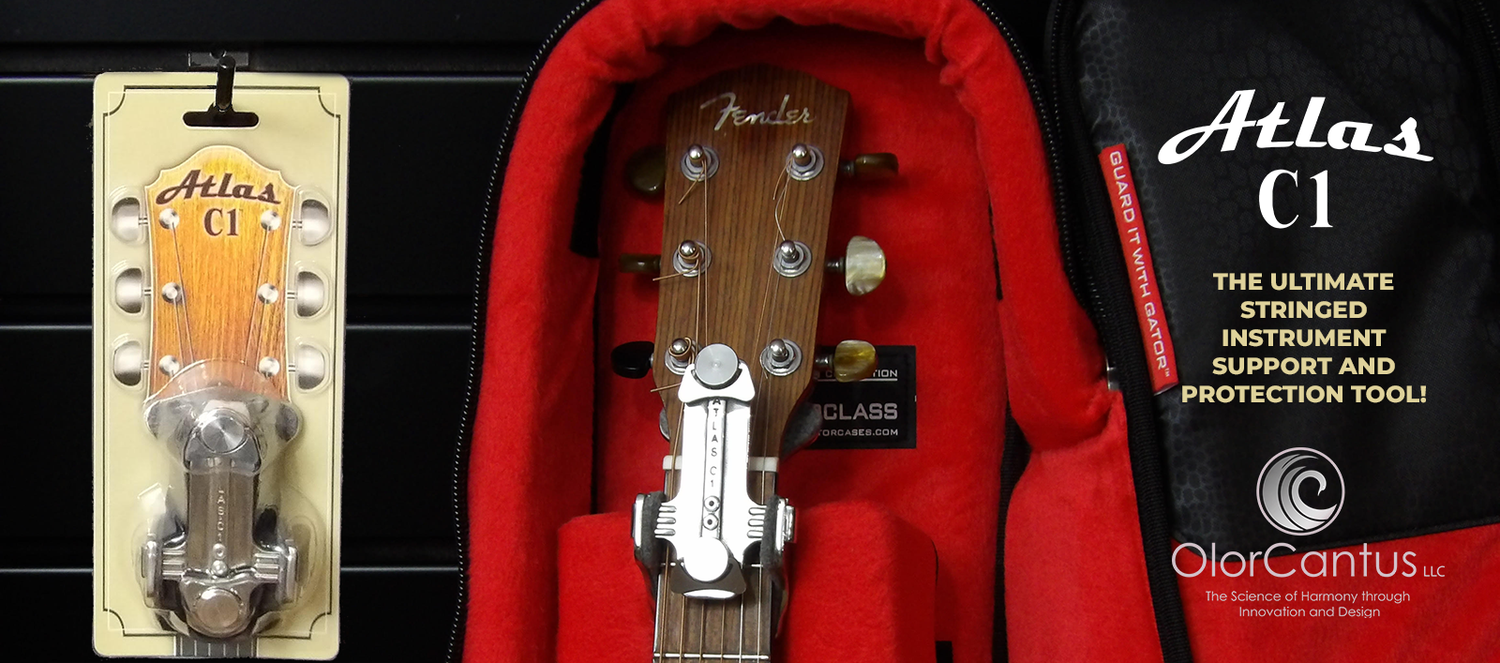
The Atlas C1 headstock repair jig stands out because it's engineered as a multi-function tool. It protects your guitar during travel and shipping by counteracting the 130+ pounds of string pressure tension that pulls at the headstock-neck junction. When you need to repair a break, the same tool serves as a pre-aligned repair jig, eliminating the guesswork of clamping and alignment. The U.S. patent-protected design targets the exact vulnerable point where most headstock damage occurs.
For occasional home repairers, a universal jig that doubles as protection makes more sense than buying separate tools for each task. You get travel protection as a bonus, which means your investment pays dividends even if you never break a headstock.
Broken Guitar Headstock Repair Tools and Techniques
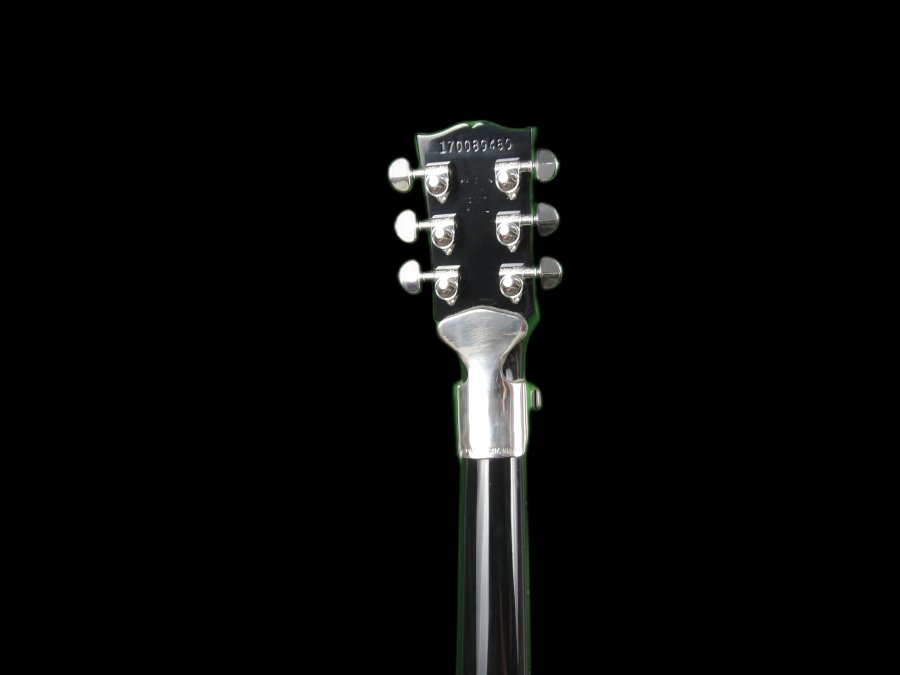
When a headstock actually breaks, the repair process demands three things: perfect alignment, adequate clamping pressure, and a way to hold the pieces steady while glue cures. Improvising with clamps and wooden cauls works, but alignment errors are common and expensive to fix later.
A proper headstock repair jig positions the break under controlled pressure, holds the neck at the correct angle, and prevents rotation during curing. Generic clamps can't do this reliably because they apply force at unpredictable angles. Specialty jigs are built with this specific problem in mind.
The repair process itself is straightforward: clean the break, apply epoxy or hide glue, clamp with your jig, and wait. Where most DIY repairs fail is in the clamping step. Too much pressure can crush the wood. Too little leaves gaps. Uneven pressure causes misalignment. A well-designed jig removes these variables by applying balanced force exactly where it's needed.
This is why the Atlas C1 tool has become popular among touring musicians and collectors. Its pre-aligned design means you can't accidentally clamp the headstock at the wrong angle. The tool does the precision work for you.
Guitar Neck Repair Clamp Solutions for Different Headstock Angles
Different guitar designs demand different clamping approaches. A Gibson-style angled headstock sits at roughly 13 degrees from vertical. A Fender-style straight headstock is, well, straight. A PRS headstock angle falls somewhere between. Each geometry creates different stress points and requires different support angles during repair.
Generic bar clamps don't account for these angles. You end up using shims, spacers, and trial-and-error to get the geometry right. This is where a universal tool designed for multiple headstock angles becomes practical.
The Atlas C1 is engineered to handle Gibson-style angled headstocks, Fender-style straight headstocks, and everything in between. The universal design means you buy once and repair any guitar in your collection. For collectors with mixed brands, this eliminates the need for multiple specialized jigs.
When you're clamping a repair, the angle of force application matters as much as the amount of force. Apply pressure at the wrong angle and you're fighting against the wood grain instead of with it. A tool that accounts for headstock geometry does the thinking for you.
Headstock Repair with Splines: A Strengthening Alternative
Some luthiers reinforce headstock repairs with wooden splines, strips of matching wood glued into slots routed across the break line. This adds mechanical strength beyond what glue alone provides, especially for severe breaks or repeat offenders.
Spline reinforcement requires precision routing equipment and careful grain matching. It's not a beginner technique, and mistakes are expensive. The payoff is a repair that's genuinely stronger than the original wood.
For valuable guitars or frequent travelers, spline reinforcement is worth considering. It's more labor-intensive than a simple glue-and-clamp repair, but the long-term durability is superior. Combined with a protective tool like the Atlas C1 that prevents future breaks, splines give you peace of mind that your repair will last.
The trade-off is time and skill. Splines add weeks to a repair timeline because routing, fitting, and finishing must be done carefully. For guitars that are constantly in transit or stored in variable conditions, this extra reinforcement can be the difference between a repair that holds and one that fails under stress.
Repurposing Hardware and Automotive Tools for Guitar Repair
Many effective guitar repair tools started life as something else. This approach works well for basic setup and maintenance but has real limits when precision matters.
Automotive feeler gauges measure string action. Machinist's straightedges check neck relief. Bar clamps from any hardware store apply clamping pressure. Precision vises designed for metalwork hold necks steady during fretwork. These tools are cheap, durable, and often more accurate than their luthier-branded equivalents.
Where this approach breaks down is in specialized tasks. A fret-crowning file needs specific geometry and tooth pattern. A fret-slotting blade must cut precise widths. A headstock repair jig must account for the exact angles and stress points of guitar construction. Generic tools can't replicate this precision.
The practical rule: use generic tools for measurement and basic clamping. Invest in purpose-built tools for tasks that demand specialization. A $15 straightedge is fine for checking neck relief. A $200 headstock repair jig is worth it because there's no generic equivalent that does the job as well.
Comparing Tool Quality, Accuracy, and Long-Term Value
Tool quality matters, but not always in the way people assume. An expensive tool isn't automatically better than a cheaper one. What matters is whether the tool solves your specific problem with adequate precision and durability. The gap most guides leave open is task-specific: which measurements actually need tight tolerances, and where a generic substitute is genuinely safe.
Here is a category-by-category breakdown of what each tool must do, the tolerance that matters, and whether a generic alternative holds up.
| Tool Category | Generic Alternative | Specialty Tool | Critical Specification | Best Choice For |
|---|---|---|---|---|
| Straightedge | Machinist's straightedge | Luthier straightedge | Flatness within 0.001" over 18" | Generic, identical accuracy |
| Feeler Gauge | Automotive set | Guitar-specific set | Leaf thickness marked in thousandths of an inch | Generic, same measurement |
| Radius Gauge | Hardware store set | Luthier set | Matches fretboard radius in inches (7.25", 9.5", 12", 16") | Generic, same function |
| Fret Crowning File | Hardware store file | Luthier crowning file | Tooth pattern and safe-edge geometry | Specialty, different geometry required |
| Fret Slotting Saw | Japanese pull saw | Luthier slotting saw | Kerf width matched to fret tang (typically 0.023"-0.025") | Specialty, kerf tolerance critical |
| Headstock Repair Jig | Clamps + cauls | Purpose-built jig | Pre-aligned angle support for 13°-17° headstocks | Specialty, no generic equivalent |
Accuracy and quality control. For setup work, the tolerances are forgiving. Neck relief is measured in thousandths of an inch, and a $15 machinist's straightedge from a hardware store is flat enough to read it. Feeler gauges are stamped to standard thicknesses, so an automotive set measures string action just as accurately as a luthier-branded set. Radius gauges are cut to standard fretboard radii, and a generic set covers the common sizes.
Fretwork is where tolerances tighten. A crowning file must have a safe edge that won't cut the fretboard and a tooth pattern that shapes the crown without flattening it. A slotting saw must cut a kerf that matches the fret tang; too wide and the fret won't hold, too narrow and the fretboard chips. These are not commodity items, and generic substitutes rarely match the required geometry.
Durability. Measurement tools last decades if they are stored flat and kept clean. Clamping tools wear at the threads and pads; a cheap bar clamp may slip under sustained pressure, while a purpose-built jig is designed to hold force for the hours a glue-up requires. For occasional use, generic clamps are fine. For repeated repairs, the failure point is usually the clamp, not the wood.
The long-term value calculation. A generic straightedge, feeler gauge, and radius gauge together cost less than a single specialty file. That leaves budget for the tools where precision is non-negotiable: fret crowning, fret slotting, and headstock alignment. For headstock protection and repair specifically, the Atlas C1 represents the specialty-tool category. It is engineered for a task that generic clamps cannot handle reliably, with a U.S. patent-protected design and multi-function capability, protection during travel plus pre-aligned repair jig, that make it a long-term value proposition rather than a single-purpose expense.
Protecting Your Investment: When DIY Tools Make Sense
The decision to invest in DIY repair tools hinges on three questions: How often do you repair guitars? How valuable are the guitars you own? And which repairs are you actually attempting? Most guides mention different user types but never give a clear framework. Here is one.
Beginner or casual player. You own one or two guitars, change strings and adjust action a few times a year, and have never attempted a structural repair. Buy the commodity tools: a machinist's straightedge, an automotive feeler gauge set, and a radius gauge. Skip specialty files and jigs. If a headstock breaks, the repair bill is real, but the odds of needing a jig are low. A protective tool that prevents the break is a more sensible first purchase than a repair jig you may never use.
Hobbyist or serious collector. You own several guitars, do your own setups, and are willing to learn fretwork. Add a fret crowning file and a fret slotting saw, and practice on a cheap neck before touching a valuable instrument. At this level, a multi-function tool that protects during storage and travel and doubles as a repair jig starts to pay for itself. The Atlas C1 fits this category: it counteracts string pressure tension during travel and provides pre-aligned repair capability if damage occurs, so it earns its place even if you never break a headstock.
Touring musician or professional luthier. You travel frequently, repair often, and cannot afford downtime. Specialty tools are not optional. A purpose-built headstock repair jig removes the alignment guesswork that causes most DIY repairs to fail. For touring musicians who fly or bus with their guitars 100+ days yearly, headstock damage is a real risk, and a single prevented repair can cover the cost of the tool.
Safety and tool limitations. Improvised tools are appropriate for measurement and basic clamping. They are not appropriate for fret slotting, fret crowning, or structural headstock repair. A hardware store file can flatten a fret crown and cut into the fretboard. A bar clamp can crush wood or apply force at the wrong angle. If a repair requires precision alignment or controlled pressure, use a purpose-built tool or hand the job to a professional.
The long-term math. One prevented repair pays for a protective tool. One successful DIY repair using the right equipment saves money versus professional shop rates. After that, it is pure protection and peace of mind. The Atlas C1 is designed for the middle and upper tiers of this framework: musicians and collectors who want travel protection and repair capability in a single precision-engineered tool, with a U.S. patent-protected design that handles both angled and straight headstocks.
Frequently Asked Questions
What are the best alternatives to StewMac for guitar repair tools?
Alternatives range from repurposed hardware-store tools (precision clamps, straightedges, feeler gauges) to specialized options designed specifically for guitar repair. The best choice depends on your repair type and skill level. For headstock protection and repair, multi-function tools offer both prevention and repair capability. For setup work, generic precision measurement tools often perform as well as brand-name versions at lower cost. Professional luthiers often combine both approaches, using affordable generic tools alongside specialized equipment.
What tools do I need to repair a broken guitar headstock?
A headstock repair requires a guitar headstock repair jig to hold the break in alignment, clamps to maintain pressure, a straightedge to verify alignment, and feeler gauges to check precision. For spline repairs, you'll also need a saw or router and matching wood. Many DIY repairers start with basic clamps and measuring tools, then add a dedicated repair jig once they understand their specific headstock angle and break pattern. The jig is critical because it pre-aligns the break, preventing misalignment that weakens the repair.
Can I repair a broken guitar headstock at home?
Yes, straightforward headstock breaks can be repaired at home with the right tools and patience. The key is proper alignment during glue-up, which is where a guitar headstock repair jig becomes invaluable. Straight headstocks (like Fender styles) are simpler to align than angled designs (Gibson-style). Complex breaks, breaks near tuning posts, or repairs on valuable vintage instruments are better left to professionals. Home repair saves money but requires accurate clamping and the discipline to let glue cure fully without disturbing the alignment.
How do you clamp a broken guitar headstock during a repair?
A guitar neck repair clamp holds the break closed while glue sets. The clamp applies even pressure across the break line without crushing the wood. A pre-aligned repair jig positions the clamp correctly, preventing the headstock from shifting during curing. For angled headstocks, the jig angles the clamp to match the neck angle, which is critical for proper alignment. Most repairs require 24 hours of clamping time. Uneven pressure or misalignment during this period can result in a weak repair that fails under string tension.