
Table of Contents
- Why Peace of Mind During Guitar Travel and Shipping Matters
- Understanding Precision Case Fabrication for Guitar Protection
- How to Pack a Guitar for Shipping: Essential Steps
- Preventing Headstock Damage During Transit
- Beyond Protection: Repair and Maintenance Benefits
- Long-Term Value and Cost Savings
- Conclusion: Invest in Protection That Lasts
- Frequently Asked Questions
Last Updated: October 3, 2026
Why Peace of Mind During Guitar Travel and Shipping Matters
Touring musicians know the feeling: you're loading your guitar into a van or onto a plane, and that moment of uncertainty hits, the need for peace of mind shipping is real. Your instrument represents years of investment, irreplaceable tone, and sometimes genuine financial value. One wrong bump, one shift in cargo hold pressure, and your headstock could snap. That's not just an inconvenience, it's a potential career interruption.
The reality is that headstock damage during travel and shipping is one of the most common, most costly problems guitarists face. A professional repair can be costly, especially for vintage instruments. But more than the money, there's the downtime. If you're a touring musician, a broken headstock means canceled gigs. If you're a collector, it means watching the value of a treasured piece drop.
Peace of mind shipping through precision case fabrication isn't a luxury, it's essential insurance. It means knowing your instrument arrives intact, whether you're flying across the country or shipping a vintage Les Paul to a buyer. We'll walk you through exactly how to protect your guitar, what standards matter, and why the right approach to packing and support can save you thousands in repairs and heartache.
Understanding Precision Case Fabrication for Guitar Protection
Precision case fabrication starts with a simple principle: your guitar needs more than just a hard shell. It needs intelligent engineering designed specifically to absorb shock, distribute weight evenly, and cradle the instrument's most vulnerable points.
ATA Case Manufacturing Standards and What They Mean
ATA (Air Transport Association) specification cases set the standard for what "protective" actually means. An ATA-compliant case meets rigorous testing requirements for impact resistance, pressure changes, and environmental protection. These cases are tested to withstand drops, stacking weight, and the temperature and pressure fluctuations of aircraft cargo holds.
When you invest in an ATA-spec case, you're buying a tool designed by engineers who understand what happens to cargo in real-world transit. The case must protect against shock absorption from drops up to a certain height, resist moisture and dust infiltration, and maintain structural integrity under load. For touring musicians and high-value instruments, ATA compliance isn't optional, it's the baseline.
The specification matters because it's measurable. A case either meets ATA standards or it doesn't. There's no marketing spin, no "pretty good protection." This is why professional touring musicians and luthiers specify ATA cases. The standard exists because instruments have been damaged in transit, and the industry built a framework to prevent it.
Custom Foam Inserts and Impact Resistance
Inside that hard shell, custom foam inserts do the real work. The foam isn't just padding, it's precision engineering. A properly designed foam insert uses different densities in different areas. Denser foam supports the body's weight and resists compression. Softer foam in high-impact zones absorbs shock before it reaches the instrument.
The best foam inserts are cut to the exact contours of your guitar. Generic foam that vaguely fits your instrument leaves air gaps. Those gaps mean your guitar can shift during transit, which means impact forces transfer directly to the body and headstock. Custom foam eliminates movement. Your guitar sits in a cradle that knows exactly where every part of the instrument needs support.
Vibration dampening happens passively, the foam absorbs energy that would otherwise transmit through the case into your guitar. When a case gets dropped or shifted in a cargo hold, the foam compresses gradually, slowing the deceleration of the instrument inside. That difference between sudden impact and gradual deceleration is the difference between a safe arrival and a broken headstock.
How to Pack a Guitar for Shipping: Essential Steps
Packing a guitar for shipping requires methodical preparation. This isn't about wrapping it in bubble wrap and hoping for the best. Every step serves a specific protective purpose.
Preparing Your Instrument
Start by assessing your guitar's current condition. If there's any existing damage, a crack in the finish, a loose brace, or a headstock that's already showing stress, address it before shipping. Shipping a damaged instrument can turn a small problem into a catastrophic one. The vibrations and pressure changes of transit can open existing cracks or worsen structural issues.
Loosen your strings by a half-step to a full step. This reduces tension on the neck. A guitar under full string tension is under constant stress, roughly 130 pounds of pressure pulling on the headstock and neck. That tension makes the instrument more vulnerable to damage during transit. Loosening the strings doesn't eliminate that vulnerability, but it reduces the load on the weakest points.
Clean the instrument before packing. Dust and debris can work into crevices during shipping. More importantly, you want to inspect the entire guitar for any issues you might have missed. Look at the headstock-neck junction, this is where most damage occurs. Check for any existing cracks, separation, or signs of stress.
Securing the Case and Adding Protection Layers
Once your guitar is inside the case with the foam inserts supporting every part of the instrument, your job isn't done. The case itself needs protection during handling and transport.
Wrap the case in a protective layer, bubble wrap, moving blankets, or foam padding. This outer layer absorbs minor bumps and abrasions that might otherwise damage the case exterior. More importantly, it signals to handlers that this is a fragile item worth careful treatment.
Use quality packing tape to secure all seams and closures. A case that pops open during handling defeats every protective measure inside. Reinforce corners and edges with additional tape. This isn't about making the case look professional, it's about ensuring it stays closed through multiple transfers, cargo holds, and baggage systems.
If you're shipping via a carrier, consider additional external protection. A cardboard shipping box around the case adds another layer of shock absorption. The box protects the case from being crushed by other cargo and absorbs impact before it reaches the case itself. Many carriers offer shipping options when you use proper protective packaging.
Label the package clearly as fragile. Place labels on multiple sides so handlers see the warning regardless of how the package is oriented. Include "This Side Up" labels if the package has a clear top and bottom. These simple steps don't guarantee careful handling, but they increase the probability.
Preventing Headstock Damage During Transit
The headstock is the most vulnerable part of your guitar during travel and shipping. It's the thinnest, most protruding section of the instrument, and it bears all the string tension. When a case gets dropped or shifted, the headstock absorbs the impact first.
The Vulnerable Headstock-Neck Junction
The headstock-neck junction is where the instrument is most likely to break. This area combines three stressors: the structural weakness where the headstock meets the neck, the constant 130+ pounds of string tension pulling on that junction, and the fact that headstocks are often the first point of contact in an impact.
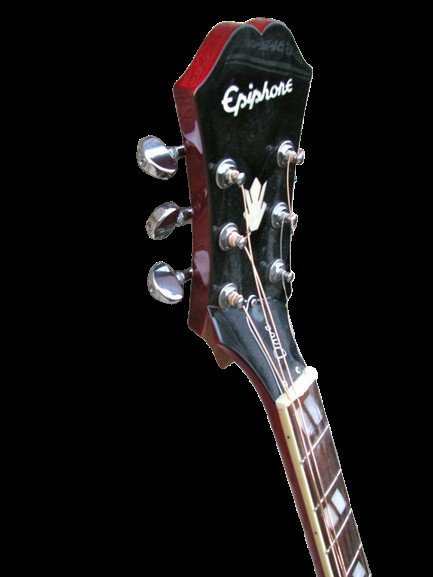
A Gibson-style angled headstock is particularly vulnerable. The angle itself creates a stress concentration point. The wood grain doesn't run straight through the junction, it angles, which means the grain structure is weaker in that exact spot. When impact occurs, that's where the break happens.
Even straight headstocks on Fender-style guitars are at risk. While the straight design distributes some stress differently, the headstock is still the thinnest, most protruding part of the instrument. In a collision, it's the first casualty.
The real protection comes from supporting that junction before impact occurs. If the headstock is cradled and can't move during a collision, the impact force distributes through the entire case rather than concentrating at that weak point.
Support Solutions for Angled and Straight Headstocks
Different headstock designs need different support strategies. An angled headstock like a Gibson Les Paul or SG needs support that accounts for the angle. Generic padding often doesn't fill the space correctly, leaving the headstock free to move during impact.
A precision-engineered support tool designed for headstock protection works by providing a custom contact point that matches the headstock's shape. Rather than relying on foam that might compress unevenly, a rigid support structure holds the headstock in place. The tool counteracts string tension and prevents the headstock from moving during transit.
For straight headstocks, the principle is similar but the geometry is different. A Fender Telecaster or Stratocaster headstock still needs support, but the support surface should match the straight angle. The right support tool will have been engineered to work universally, adjusting to both angled and straight headstocks without modification.
The best protection tools do double duty. Beyond protecting your guitar during shipping, they work as pre-aligned repair jigs if damage ever does occur. This means you're not just buying insurance for travel, you're investing in a tool you'll use for the lifetime of your instrument collection.
Beyond Protection: Repair and Maintenance Benefits
A quality headstock support tool serves purposes beyond just packing and shipping. When a headstock break does occur, whether from an accident, a fall, or environmental stress, having the right repair jig makes the difference between a professional-quality repair and an amateur attempt.
A pre-aligned repair jig holds the broken pieces in exact position while the glue cures. This alignment is critical. A headstock break that's reassembled even slightly out of alignment will never feel or play the same. The neck angle will be off, the tuning will be unstable, and the instrument will never return to its original playability.
With a precision-engineered jig, you can hold the break in perfect alignment for the entire cure time. This means you can either do the repair yourself if you have experience, or you can hold the pieces together while a professional luthier completes the work. Either way, the alignment is guaranteed.
This dual-purpose design is what separates a one-time packing solution from a lifetime investment. You're buying a tool that protects your guitar during the risky moments of travel and shipping, and then becomes part of your instrument maintenance toolkit for decades.
Long-Term Value and Cost Savings
The financial case for precision case fabrication extends far beyond a single repair scenario. A comprehensive lifecycle cost analysis reveals that the true value of proper protection compounds over years of ownership and use.
The Direct Cost of Headstock Damage
A professional headstock repair can be costly, depending on the severity of the break and the instrument's value. But these figures capture only the direct repair cost.
Hidden Costs That Compound
Downtime is the invisible cost that most musicians don't quantify. A touring musician with a broken headstock faces canceled gigs, lost performance fees, and potential breach of contract penalties. A single week of canceled dates can quickly exceed the repair cost itself. For session musicians or studio professionals, a broken instrument means lost income until the repair is complete.
Resale value depreciation is another hidden cost. A guitar with a repaired headstock, even a professional repair, loses 15-30% of its market value compared to an identical instrument without damage history. A guitar with a repaired headstock might sell for less. That loss in resale value is a real cost of the original damage.
Insurance implications matter too. Many musicians' equipment insurance policies include damage exclusions or charge higher premiums for instruments with repair history. A claim for headstock damage might increase your annual premium, compounding annually for years.
Lifecycle Cost Framework
Consider a touring musician who travels 80 days per year with a guitar valued at $2,500. Over a 10-year ownership period:
-
Risk of damage without proper protection: A single headstock break costs $1,000 in direct repair, $3,000 in lost performance income (assuming one canceled week), and $600 in resale value depreciation. Total: $4,600 for one incident. The probability of at least one significant damage event over 10 years of frequent travel is substantial, industry estimates suggest 15-25% of frequently-traveled instruments experience damage serious enough to require professional repair.
-
Cost of proper protection: An ATA-compliant case, custom foam inserts, and a precision headstock support tool represent a one-time investment in comprehensive protection. Additional shipping protection (external padding, reinforced boxes) adds modest costs per shipment. Over 10 years of frequent travel, the cumulative investment in protection is substantially less than the cost of a single damage incident.
-
Net calculation: Even accounting for the full cost of protection, avoiding a single damage incident saves thousands in net costs. For musicians who travel frequently, the ROI is immediate. For collectors with high-value instruments, a single prevented break justifies the entire investment.
Sustainability and Long-Term Environmental Value
Beyond financial ROI, precision case fabrication offers an environmental advantage that's often overlooked. A well-protected guitar that avoids damage has a longer functional lifespan, which means fewer instruments end up in landfills or requiring replacement manufacturing.
A guitar that's damaged and repaired multiple times, or that's damaged beyond economical repair, becomes waste. Manufacturing a replacement instrument requires raw materials, energy, and transportation. By investing in proper protection upfront, you extend the life of your instrument and reduce the environmental footprint of your music career.
Quality foam inserts and cases made from recyclable or biodegradable materials (increasingly common in precision case manufacturing) further reduce environmental impact. A case that lasts 20+ years and is eventually recycled represents a far smaller environmental cost than a damaged guitar that's replaced every 5-7 years.
The Compounding Benefit for Collections
For collectors with multiple instruments, the value proposition multiplies. A collector with 5-10 guitars faces proportionally higher risk of damage across the collection. Proper protection for each instrument means each piece maintains its value, playability, and condition. Over decades, that's the difference between a collection that appreciates (or holds value) and one that depreciates due to accumulated damage and repair history.
A precision-engineered headstock support tool and ATA-compliant case are one-time investments that protect against risk for the lifetime of your instrument collection. You use them every time you travel with a guitar. You use them if you ever need to repair a break. The cost-per-use drops with every flight, every shipment, every time you pack a guitar knowing it's fully protected. For professional musicians, collectors, and anyone with instruments valued above $1,500, the lifecycle cost analysis makes the case for protection unambiguous.
Conclusion: Invest in Protection That Lasts
Your guitar isn't just an instrument, it's an investment in your music, your career, and your creative expression. Every time you travel with it, you're taking a risk. That risk compounds with every flight, every shipment, every move to a new venue.
The right protection approach combines three elements: a precision-engineered case with custom foam inserts that meet ATA standards, proper packing technique that eliminates movement and adds external protection layers, and a dedicated headstock support tool that cradles the most vulnerable part of your instrument.
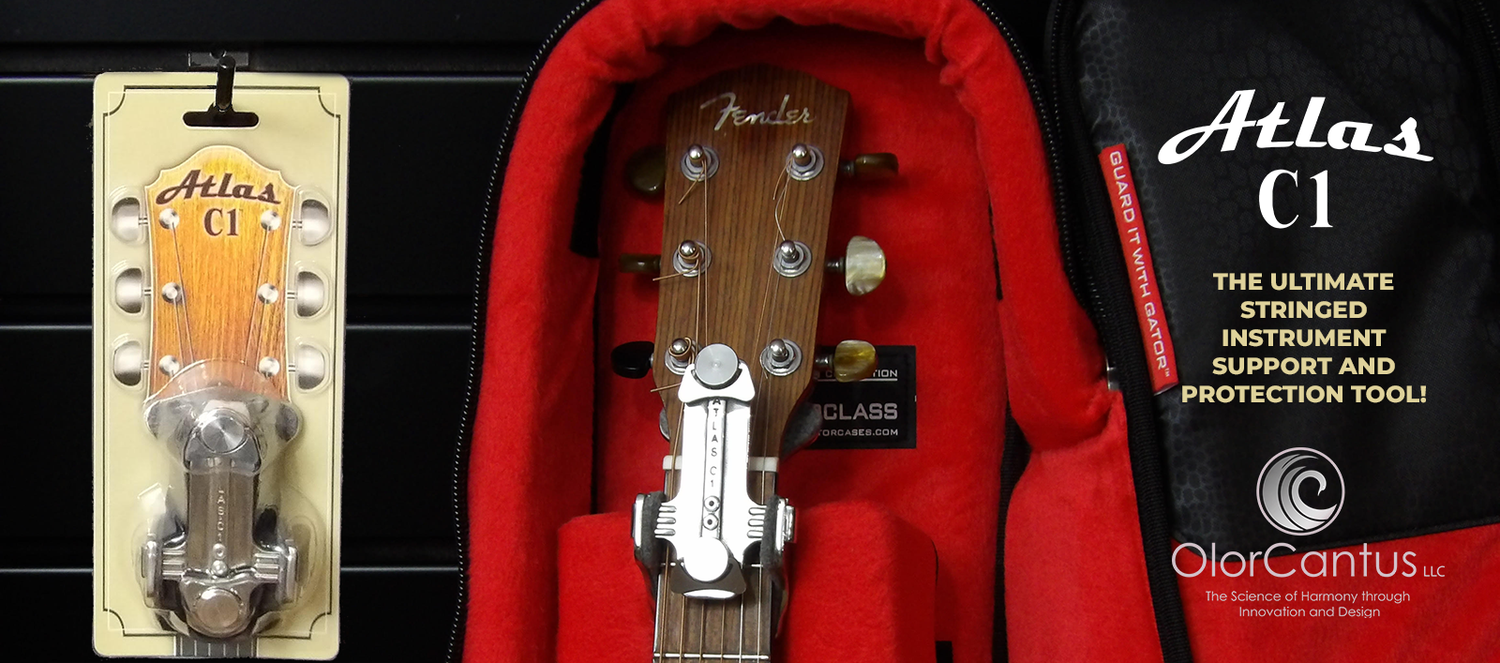
Atlas C1 provides that third element, a U.S. patent-protected, precision-engineered tool designed specifically to protect the headstock-neck junction during travel, shipping, and storage. The tool counteracts 130+ pounds of string pressure tension, works universally with both angled and straight headstocks, and doubles as a pre-aligned repair jig if you ever need it. It's the kind of investment that pays for itself the first time it prevents a break, and then becomes part of your instrument care routine for life. When you order Atlas C1, you'll also receive a 10% product discount and free shipping on your order, making comprehensive headstock protection more accessible than ever.
Frequently Asked Questions
How do ATA-rated cases protect sensitive equipment during transit?
ATA cases meet strict standards for impact resistance, moisture barriers, and structural integrity required by the airline industry. These specifications ensure your guitar withstands the rigors of air and ground transport. The hard-shell construction, precision fabrication, and custom foam inserts work together to absorb shock and vibration, protecting both the body and the vulnerable headstock-neck junction. ATA compliance gives you measurable protection, not just general durability.
Can I use a headstock support tool if I have a straight-headstock guitar like a Fender?
Yes. While the headstock-neck junction is vulnerable on any guitar, straight-headstock designs like Fenders experience different stress angles during transit compared to angled-headstock guitars. A universal support tool designed for precision fabrication can accommodate both headstock types by distributing pressure across the critical junction area. The key is ensuring the tool counteracts the string tension and transit forces specific to your instrument's design.
How much can I save by using a support tool instead of paying a luthier to repair a headstock break?
Professional headstock repairs can be costly, depending on the damage severity and your location. A lifetime-use support tool purchased once eliminates the need for that repair if it prevents damage during travel or storage. Beyond the single repair cost, you avoid the inconvenience of being without your instrument, potential depreciation of a damaged vintage guitar, and the risk of incomplete repairs affecting playability or resale value.
Is a guitar shipping protection tool necessary if I only fly with my guitar a few times a year?
Even infrequent travel poses real risk. A single baggage-handling incident or pressure change during flight can cause expensive headstock damage. If your guitar has sentimental or monetary value, the one-time investment in a precision-engineered support tool provides protection across all transport scenarios, air travel, ground shipping, or even storage at home. For casual players with modest instruments, standard padding may suffice; for collectors or touring musicians, protection is essential.
Peace of mind during travel and shipping for precision case fabrication isn't about eliminating risk, it's about managing it intelligently. With the right case, the right packing technique, and the right support tool like Atlas C1, you can ship your guitar across the country or across the world knowing it will arrive exactly as you packed it. That's the kind of certainty every guitarist deserves.