
Table of Contents
- Why Angled Headstocks Are Vulnerable
- Understanding Structural Integrity at the Neck-to-Headstock Transition
- Shipping a Guitar Safely With Angled Headstock Support
- Using a Guitar Case With Proper Neck Support
- DIY Headstock Protection Methods for Storage
- Using a Guitar Headstock Repair Jig for Damage Control
- Visual Inspection Checklist for Headstock Safety
- Conclusion
- Frequently Asked Questions
Last Updated: September 4, 2026
Why Angled Headstocks Are Vulnerable
Angled headstocks are iconic but vulnerable: the pitch creates a sharper string break angle that improves sustain and tuning stability, but redirects full string tension through a small wood surface at the neck-to-headstock transition.
On straight headstocks, wood grain runs continuously from neck to headstock. Angled headstocks use a scarf joint, a glued seam across the grain, which can fail when string tension and impact stress exploit the seam over time.
Understanding this vulnerability is the first step toward protecting angled guitar headstocks effectively.
Understanding Structural Integrity at the Neck-to-Headstock Transition
Structural integrity depends on scarf joint quality, wood grain orientation, and mechanical stress. A well-built joint withstands decades of play but can fail instantly on impact.
String tension exerts constant pull on the joint. Add the kinetic energy of a fall, and forces multiply beyond what wood can tolerate, explaining why headstock breaks are so common.
Protection must address both static forces (reducing load during storage by detuning) and dynamic forces (managing impact during transport).
Shipping a Guitar Safely With Angled Headstock Support
Shipping safely requires supporting the headstock so impact forces transfer through the case structure, not the neck joint. When a parcel is dropped, the headstock often strikes the case interior.
Standard Parcel Shipping
Loosen strings before shipping to reduce static load. More critical: fill the void around the headstock with crumpled paper, foam blocks, or purpose-built supports so it cannot move inside the case.
Pack the guitar in a hard-shell case with proper headstock support, then place inside a larger outer box with at least 2 inches of cushioning on all sides. Use packing peanuts or foam sheets, not bubble wrap alone. The outer box must be rigid with no flex under moderate pressure. When ordering protective gear or replacement parts online, look for retailers offering free shipping to reduce the cost of keeping your instrument safe.
Air Travel and Touring Protocols
Air travel introduces unique risks: cargo holds experience temperature and humidity swings causing wood movement, and baggage handlers routinely drop luggage from 4-6 feet.
For air travel with an angled headstock guitar:
- Detune strings by a full step or more before the flight. The cabin pressure change and temperature drop in the cargo hold can increase string tension unpredictably. A slightly detuned instrument is safer than one at full tension.
- Use a hard-shell case rated for air travel, not a gig bag. TSA and airline baggage systems assume hard cases can withstand 100+ pounds of pressure. Soft cases offer no protection against crushing.
- Pack the case in your carry-on if possible. Most airlines allow one instrument as a carry-on item in addition to standard luggage. This eliminates the baggage-handling risk entirely. Check your airline's specific policy before booking.
- If checking the case as baggage, wrap the entire hard case in bubble wrap or foam, then place it in a cardboard box. Mark the box "FRAGILE" and "THIS SIDE UP" on all four sides. Some musicians add a note inside the case: "Instrument inside, please handle with care."
- Arrive early and inform gate agents that you are traveling with a musical instrument. Many airlines will gate-check the case at the aircraft door rather than sending it through the baggage system, reducing handling.
Touring and Repeated Transport
Touring musicians face cumulative stress from repeated packing and transport; a guitar surviving one flight may fail on the fifth with inadequate support.
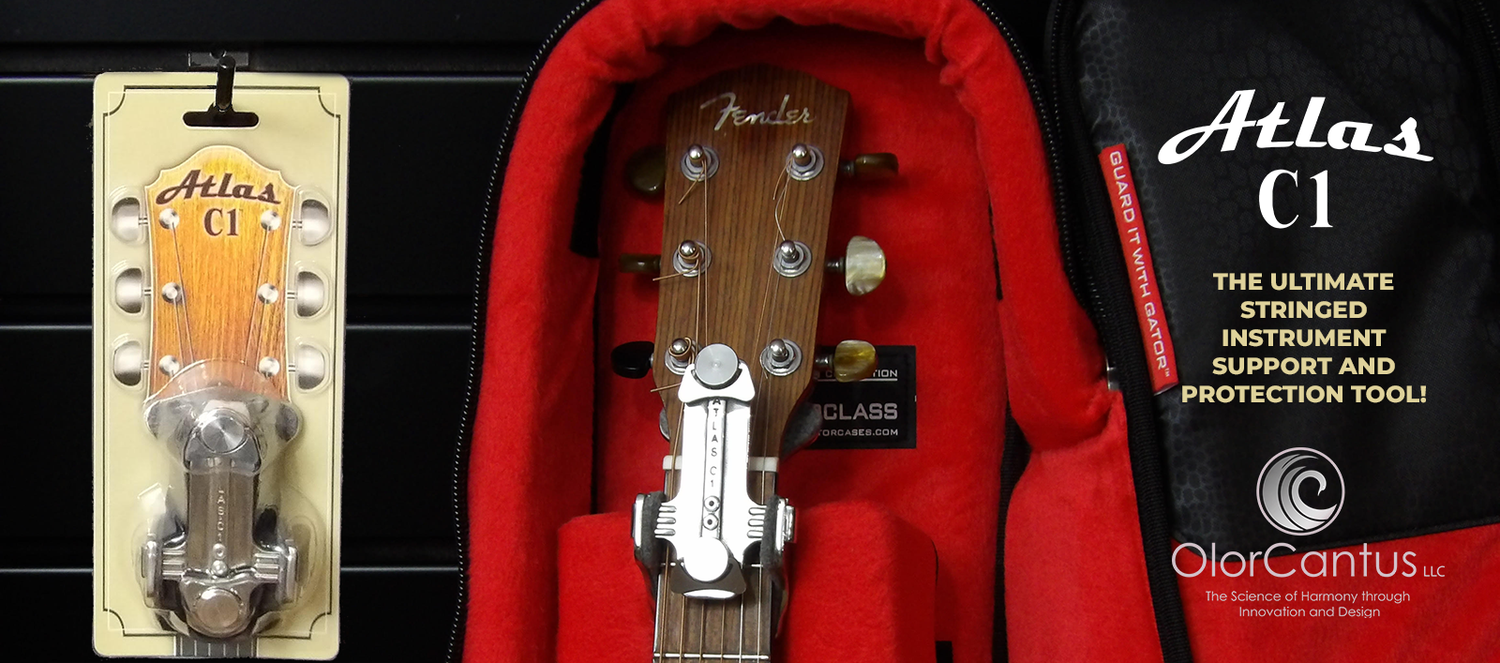
A dedicated headstock support tool installs in seconds and provides rigid support where the neck meets the headstock, preventing flex and stress fractures. Combined with proper case packing, it protects the instrument across multiple trips.
Inspect the headstock-neck junction before and after each tour leg for hairline cracks or movement. Catching early stress prevents costly repairs and missed performances.
Climate Considerations During Shipping
When shipping across different climates, let the guitar acclimate for 24-48 hours before opening the case. Rapid humidity changes stress the scarf joint and glued areas.

Using a Guitar Case With Proper Neck Support
A quality hard-shell case is your first line of defense. The lid should press gently against the headstock, holding it firmly without pressure on the nut or tuning machines. If the headstock rattles when shaken, support is insufficient.
Material Science: Padding Safety for Vintage and Nitrocellulose Finishes
Standard polyurethane foam can off-gas compounds that degrade nitrocellulose finishes over months of storage. This is critical for vintage guitars with hand-applied nitro finishes, which are more porous than modern topcoats.
When selecting or upgrading case padding, material choice matters:
- Closed-cell foam (EVA or neoprene): Chemically inert and safe for all finishes. Does not off-gas. Slightly more expensive but offers the best long-term protection for vintage instruments.
- Open-cell polyurethane foam: Common in standard cases; acceptable for short-term use but can emit volatile organic compounds (VOCs) over extended storage. Avoid direct contact with nitro finishes.
- Microfiber cloth wrapping: A finish-safe layer between any foam and the guitar. Even inexpensive foam becomes safe when separated from the finish by a soft cloth barrier.
- Rubber or silicone padding: Durable and finish-safe, but can trap moisture if not ventilated. Best used in climate-controlled environments.
If your case uses standard foam, wrap the headstock with microfiber cloth before padding to eliminate finish degradation risk. For nitro finishes stored long-term, upgrade to closed-cell foam or add a cloth barrier.
Headstock Support Geometry
Padding shape and placement directly affect protection. The case lid should contact the headstock at two points, the back plate and the angle transition, to distribute pressure evenly and prevent rocking motion.
If your case has single-point contact, add a foam wedge or cloth pad at the second contact point. The headstock should feel locked in place with no movement when shaken.

DIY Headstock Protection Methods for Storage
Store guitars in their case with the lid latched to protect against dust, temperature changes, and knocks. Guitars on stands are exposed to tipping hazards.
For long-term storage, detune strings by a half-step or full step to reduce pull on the neck joint and relieve pressure on the truss rod and nut.
Look for hairline cracks around the headstock joint, check tuning machine alignment, and inspect the string retainer for pulling. Catching early stress prevents costly repairs and missed performances.
Using a Guitar Headstock Repair Jig for Damage Control
When a headstock break does occur, the quality of the repair depends heavily on the tools used. A guitar headstock repair jig aligns the broken pieces precisely so that glue can create a strong, lasting bond. Without proper alignment, even a well-executed glue joint will fail again under string tension.
Traditional repair jigs are bulky and expensive. The Atlas-C1 serves double duty as both a protection tool and pre-aligned repair jig, making professional-grade repairs accessible without shipping to a specialist.
Clean break surfaces, apply wood glue sparingly, and clamp using the jig for alignment. Allow 24 hours for cure before restringing. A properly repaired headstock can be as strong as the original.
Visual Inspection Checklist for Headstock Safety
Regular inspection is the cheapest insurance. Examine the neck-to-headstock transition when changing strings, looking for finish cracks and checking for movement under gentle pressure.
- Inspect the scarf joint area for hairline finish cracks
- Check the nut and string retainer for signs of lifting or movement
- Verify tuning machines are seated flush against the headstock
- Apply light pressure to the headstock and listen for creaking sounds
- Examine the headplate veneer for bubbles or separation
- Test the case lid to confirm the headstock is held firmly in place
If any of these checks reveal a problem, address it before the next performance or transport. Small issues caught early rarely become major repairs. The same inspection routine applies whether you are a touring professional moving gear weekly or a collector storing instruments long-term.
Conclusion
Protecting angled guitar headstocks requires understanding why they break, then applying consistent protection at every stage of the instrument's life. The physics of the scarf joint and string tension are unforgiving, but they are also predictable. By managing static tension during storage, providing proper support during transport, and inspecting regularly, you can prevent the majority of headstock failures before they start.
When damage does occur, having the right tools on hand turns a costly repair into a manageable project. The Atlas-C1 Guitar Headstock Support and Protection Tool addresses both sides of this equation. It is a protection device that supports the vulnerable neck junction during travel and storage, and it converts into a pre-aligned repair jig when you need it most. With a U.S. patent and a lifetime of reliable use, it is the investment that pays for itself the first time it prevents a break. Take advantage of a 10% product discount when you order the Atlas C1, and enjoy free shipping on your purchase to keep your instrument safe for the long haul.

Frequently Asked Questions
Why are angled headstocks more prone to breaking than straight ones?
Angled headstocks experience greater mechanical stress at the neck-to-headstock transition because the break angle of strings creates downward pressure on the headplate. This stress concentrates at a single point rather than distributing evenly, making the junction vulnerable to stress fractures. The grain orientation in this area also plays a role, wood grain that runs perpendicular to the break angle is weaker under tension. When a guitar is dropped or experiences impact, the kinetic energy releases suddenly, and that concentrated stress point is where the neck snaps first.
What is the difference between using padding alone versus a dedicated guitar headstock repair jig?
Padding protects against bumps and minor impacts during storage and travel, but it doesn't prevent stress fractures from string tension or provide structural support during a break. A guitar headstock repair jig, by contrast, counteracts the 130+ pounds of string pressure that constantly pulls on the neck-to-headstock junction. It stabilizes the joint, prevents movement, and if a break occurs, a pre-aligned jig ensures the headstock resets to its original angle and geometry.
How should I destring my guitar before long-term storage to protect the headstock?
Detuning strings reduces the constant mechanical stress on the neck-to-headstock transition. Lower the string tension gradually over several days rather than all at once to avoid shocking the neck. For extended storage (months or more), loosen all strings fully or remove them entirely. This removes the 130+ pounds of break angle tension that normally stresses the headstock. When you return the guitar to use, retune gradually and monitor the neck for any new stress fractures or movement at the junction.
Can I use my angled headstock guitar with a straight-headstock case, or do I need specialized neck support?
A straight-headstock case is not ideal for angled headstocks because the neck cradle won't align with your instrument's pitch. This creates uneven pressure on the headstock and neck, increasing stress at the junction during transport. A case with adjustable or angled neck support distributes pressure evenly along the break angle. If you must use a straight case temporarily, add extra padding around the headstock and use a neck support block to angle the headstock correctly inside the case.
This article was written using GrandRanker