
Table of Contents
- Why Fender Guitars Need Dedicated Neck Support
- Guitar Headstock Protection: Materials That Keep Finishes Safe
- How to Protect Angled Guitar Headstocks During Repairs
- Choosing the Right Neck Cradle for Fret Leveling and Setup Work
- Stability, Non-Slip Features, and Bench Ergonomics
- DIY Neck Rest Solutions vs. Purpose-Built Supports
- Frequently Asked Questions
Last Updated: September 12, 2026
Why Fender Guitars Need Dedicated Neck Support
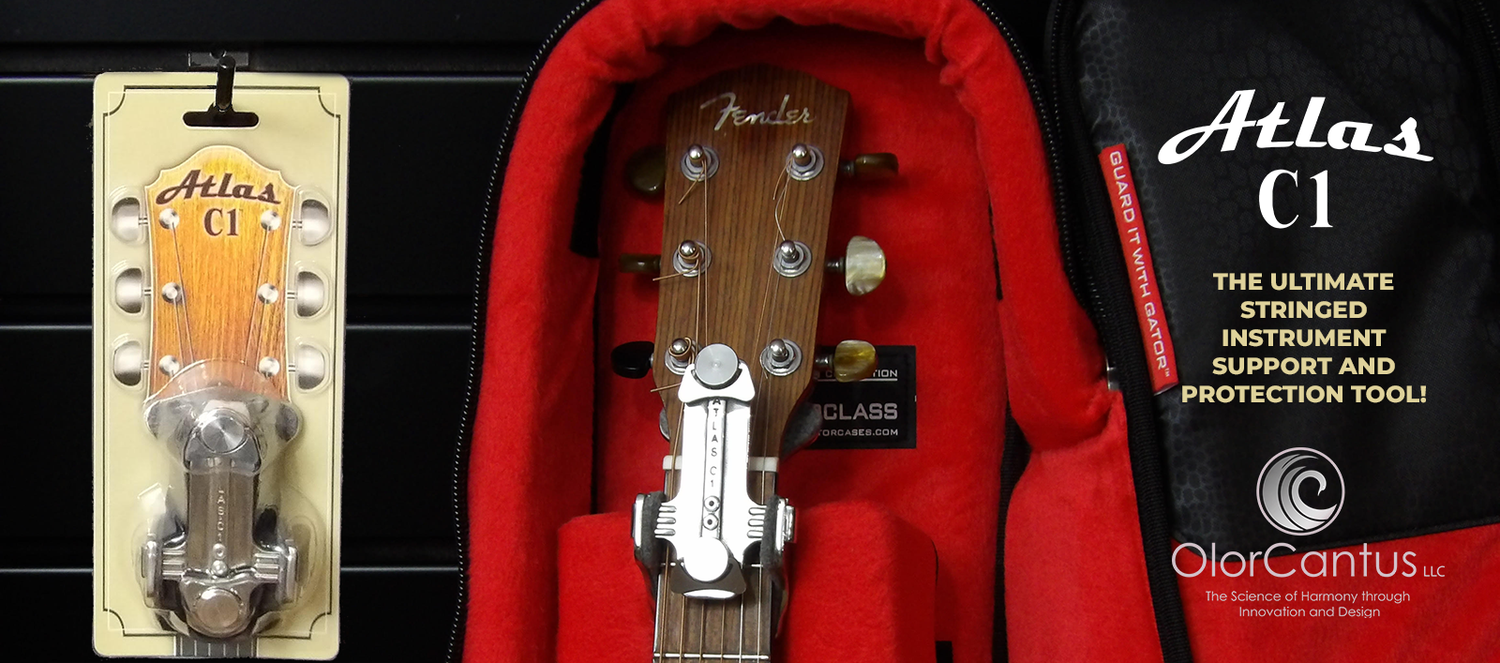
A Fender's bolt-on neck creates a specific structural vulnerability that generic padding never addresses: the headstock sits at the end of a long lever arm, and any impact travels straight down to the neck joint. This guide from Atlas C1 covers why that matters and how the right guitar neck support for fender guitars prevents damage before it happens.
Fender's straight-pull headstock is often described as stronger than Gibson's angled design. That's only half true. The headstock itself is less prone to snapping, but the four-bolt neck pocket absorbs forces a set-neck guitar never sees. Drop a Stratocaster in a gig bag and the shock loads the heel, the pocket screws, and the truss rod anchor simultaneously.
The Unique Challenge of Bolt-On Necks
Bolt-on construction means the neck is a removable part under constant tension. Six strings at pitch pull with substantial force against a joint held by four screws and a thin heel. When a case takes a hit, that joint becomes the pivot point.
A common mistake is assuming a hard case alone solves this. It doesn't. Cases stop puncture damage; they don't stop the neck from shifting inside the cavity. Purpose-built support holds the neck and headstock in a fixed position so impact energy has somewhere to go besides the joint.
Guitar Headstock Protection: Materials That Keep Finishes Safe
Guitar headstock protection comes down to padding material, because the wrong material can damage a finish as surely as a drop. Nitrocellulose lacquer, still used on many vintage and reissue Fenders, reacts with certain plastics and rubbers over time. This is the single most overlooked risk in neck support, and most buying guides never mention it.
Why Nitrocellulose Reacts to the Wrong Padding
Nitrocellulose lacquer is a evaporative finish that stays slightly permeable for years. Flexible PVC and vinyl padding contains plasticizers that migrate out of the plastic and into the lacquer on contact. The result is a permanent soft spot, a dull ring, or a sticky patch that cannot be polished out. The reaction can take weeks or months, so damage often appears long after the support was used.
Finish-Safe Materials Ranked by Mechanism
| Material | Why It Is Safe or Unsafe | Shock Absorption | Best For |
|---|---|---|---|
| Cork | Chemically inert; no plasticizers to migrate | Moderate | Vintage and nitro finishes |
| Hardwood | No chemical interaction; rigid reference surface | Low | Fret leveling and setup jigs |
| TPE rubber | No plasticizers; closed-cell structure | High | Repair benches and cradles |
| Felt | Safe if wool; synthetic felt may contain dyes | Low | Light storage |
| Vinyl / PVC | Plasticizers migrate into lacquer | High | Never on nitro finishes |
| Gel pads | Safe if polyurethane; some gels contain plasticizers | High | Travel and shipping |
Cork has been the luthier's default for a century because it is chemically inert and will not react with lacquer. Wood gives you a rigid reference surface, which matters when you are measuring neck relief. Gel pads absorb impact but can compress unevenly under load, and not all gels are formulated the same. TPE rubber, a newer option, combines chemical neutrality with shock absorption, which is why it is replacing gel in professional repair benches.
How to Test a Support Before It Touches Your Finish
If you are unsure whether a pad is safe, test it on an inconspicuous area or on a spare piece of nitro-finished wood. Place the pad in contact with the finish, apply light pressure, and leave it for 48 hours in a warm room. If the finish dulls, softens, or sticks, the pad is not safe. Most practitioners find that TPE and cork pass this test, while vinyl and some gels fail.
What to Look for on a Product Label
Look for terms like "nitro-safe," "plasticizer-free," or "TPE." Avoid vague descriptions like "soft rubber" or "protective foam" unless the manufacturer specifies the material. When in doubt, contact the maker and ask directly whether the padding is safe for nitrocellulose. A support that costs a little more but carries a clear finish-safety claim is cheaper than a refinish.
How to Protect Angled Guitar Headstocks During Repairs
Protecting an angled headstock during repair is mostly about eliminating movement. Once a neck is off the body or a crack is glued, any flex at the headstock-neck junction reopens the break.
The sequence that works:
- Remove string tension completely before any clamping
- Support the headstock at the same height as the fretboard plane
- Clamp the neck, not the headstock, to avoid crushing tuner posts
- Check alignment with a notched straightedge before glue cures
What most guides miss is step two. If the headstock hangs unsupported while the neck is clamped, gravity pulls the headstock down and opens the repair line. A pre-aligned jig solves this by holding the headstock at a fixed angle throughout the glue-up. A pre-aligned jig solves this by holding the headstock at a fixed angle throughout the glue-up.
Choosing the Right Neck Cradle for Fret Leveling and Setup Work
A neck cradle is a padded, usually C-shaped rest that holds the neck steady while you work on frets, the nut, or the truss rod. The right cradle keeps the neck flat and immobile so your file or leveling beam cuts evenly.

For fretwork, rigidity beats softness. A cradle that flexes under hand pressure will let the neck rock, and you'll file a crown into frets that should be flat. Look for a cradle with a hardwood or dense-core base and a nitro-safe top layer. Height adjustment matters too: the cradle should bring the fretboard to a comfortable working height so you're not hunched over the bench for hours.
Stability, Non-Slip Features, and Bench Ergonomics
Bench stability determines whether your support stays put when you apply pressure. A cradle that slides mid-stroke ruins a leveling pass and can scratch a finish. But stability is only half the equation. For long-duration repairs, the height and angle of your support affect your accuracy as much as your tools do.
Non-Slip Bases: What Actually Grips
Non-slip bases matter most on smooth benchtops. TPE rubber feet grip laminate and lacquered surfaces far better than bare wood or felt. If your bench has a vise, consider a support that clamps in rather than relying on friction alone. A common pattern is to use a cradle with a wide, weighted base for fretwork and a clamp-on support for repairs where you need both hands free.
Height Adjustment by Bridge Type
The right working height depends on your bridge and your seating position. The goal is to bring the fretboard to a comfortable working height so you are not hunched over the bench for hours. Use this as a starting point:
| Bridge Type | Typical Fretboard Height Above Bench | Why |
|---|---|---|
| Hardtail / fixed bridge | 4 to 5 inches | Lower profile; neck sits closer to body plane |
| Synchronized tremolo | 5 to 6 inches | Tremolo block adds depth to the body |
| Floyd Rose / floating tremolo | 6 to 7 inches | Deep rout and spring cavity raise the body |
| Semi-hollow / thinline | 4 to 5 inches | Shallower body depth |
These are starting points, not rules. Adjust until your wrist stays neutral and your elbow is slightly above the fretboard. Most practitioners find that a 1-inch change in height makes a noticeable difference in hand fatigue after two hours.
Ergonomics for Long-Duration Repairs
Luthiers who work on necks for six-hour stretches report that bench height and support angle affect their accuracy as much as their tools do. A support that lets you keep your wrist neutral and your back straight pays for itself in fewer reworks. Three adjustments matter most:
- Seat height: Set your chair so your elbows are at or slightly above the bench surface.
- Support angle: A slight tilt toward you reduces wrist extension during fretwork.
- Footrest: A footrest takes pressure off your lower back and keeps your hips level.
Stability for Travel and Gigging
If you move gear constantly, look for a support with a collapsible or low-profile design that fits inside a gig bag or case. A support that doubles as headstock protection in transit solves two problems at once. Avoid bulky cradles that cannot be secured; a loose support inside a case can become a projectile during transport.
DIY Neck Rest Solutions vs. Purpose-Built Supports
DIY neck rests work fine for storage and light maintenance. A rolled towel, a foam pool noodle cut to length, or a cork-lined wooden block will hold a neck steady for string changes and basic cleaning.
Where DIY falls short is precision work and travel. A towel compresses unevenly, so it can't hold a headstock at a fixed angle during a repair. Foam degrades and sheds particles that end up in your tuners. And none of these options survive being thrown in a tour bus.
Purpose-built supports earn their place in three scenarios: fretwork that demands a rigid reference surface, headstock repairs that need a fixed angle, and constant transport where the support doubles as protection inside the case. If you're changing strings twice a year at home, a towel is fine. If you're a guitar tech working on other people's instruments, or a touring player moving gear constantly, the math changes fast. And if you're ordering one, it helps to know that Atlas C1 offers free shipping.
Frequently Asked Questions
What is the best guitar neck support for Fender guitars?
The best guitar neck support for Fender guitars depends on your task. For string changes and light maintenance, a C-shaped cradle with cork or TPE rubber padding works well. For fret leveling and repairs, look for a support with adjustable height and non-slip feet. Universal designs that accommodate both bolt-on and set-neck profiles give you the most flexibility across a collection.
Can improper guitar neck support damage a guitar finish?
Yes. Supports with bare wood, hard plastic, or aged foam can react with nitrocellulose finishes and cause marring or chemical burns over time. Always choose padding materials labeled nitro-safe, such as cork or specific TPE rubber blends. If you own a vintage Fender with a nitro finish, test any new support on a small area first or wrap the contact points with a soft cotton cloth.
How do I protect angled guitar headstocks during string changes?
Angled headstocks, common on Gibson-style guitars, are vulnerable at the neck junction when string tension releases. Support the neck at two points: under the nut and under the heel. Use a padded cradle that keeps the headstock elevated off the bench. Never let the headstock rest directly on a hard surface, and always detune gradually rather than cutting all strings at once.
Is a universal neck support compatible with all Fender headstock shapes?
Most universal neck supports fit standard Fender headstock shapes, including Stratocaster, Telecaster, and Jazzmaster profiles. The challenge is the body shape and neck angle, not the headstock. Look for a support with adjustable width or a V-groove that centers the neck automatically. If you own offset models or short-scale guitars, check the cradle's minimum and maximum neck width before buying.