
Table of Contents
- Guitar Center vs Sweetwater Repair Tools: Quick Comparison
- Quality and Durability of Professional Tools at Both Retailers
- Price vs. Value: Cost-of-Ownership Analysis for Repair Tools
- Best Guitar Repair Tools for Beginners: Starter Kits and Essentials
- Metric vs. Imperial Measurement Standards in Luthier Tools
- How to Fix Broken Guitar Headstock: Tools and Jigs Available
- Warranty, Reliability, and Technical Support Compared
- Specialized Luthier Tools vs. General Hardware: What to Buy Where
- Frequently Asked Questions
Last Updated: September 20, 2026
Guitar Center vs Sweetwater Repair Tools: Quick Comparison
The choice between Guitar Center and Sweetwater for repair tools comes down to a simple trade-off: immediate access versus depth of specialized inventory. Guitar Center wins on same-day availability and hands-on inspection, while Sweetwater wins on staff expertise and a catalog built for serious technicians. This guide from Atlas C1 breaks down both retailers across durability, cost of ownership, measurement standards, and support so you can buy once and buy right.
Here's the part most buyers miss: neither retailer manufactures the tools it sells. What you're really choosing is a supply channel, and the channel determines what you can actually get your hands on when a repair is on the clock.
Sweetwater's guide to guitar setup and maintenance and Guitar Center's repair and maintenance department both publish useful overviews, but neither gives you a neutral, side-by-side read on tool quality. That's what follows.
The table below summarizes where each retailer actually wins.
| Factor | Guitar Center | Sweetwater |
|---|---|---|
| In-store tool access | Strong, 300+ locations | Limited, few showrooms |
| Specialized luthier inventory | Moderate | Deep |
| Sales staff expertise | Mixed | Consistently trained |
| Shipping speed | Same-day pickup | Fast, free on most orders |
| Return window | Standard retail policy | Extended, no-hassle |
| Best for | Emergency buys | Planned, precision purchases |

Quality and Durability of Professional Tools at Both Retailers
Tool quality at both retailers tracks the brand, not the storefront. A hardened steel fret file from a reputable maker performs the same whether it ships from a warehouse or comes off a wall hook. The difference is curation: Sweetwater tends to stock the professional-grade tier, while Guitar Center carries a wider mix that includes entry-level options.
For touring musicians, durability is the whole game. A tool that rounds over after twenty fret jobs costs you more in replacements than a better one costs up front. Look for hardened steel cutting edges, machined (not cast) bodies, and replaceable components.
What most guides miss is that the store's own house brands are often rebadged versions of tools sold elsewhere under different names. Check the specifications, not the label.
Technical Specification Comparison: What Actually Separates Professional-Grade Tools
Most forum discussions reduce tool quality to brand loyalty. A structured look at the specifications tells a different story. The table below compares the technical attributes that separate professional-grade luthier tools from entry-level alternatives, attributes you can verify on a spec sheet or with a bench test.
| Specification | Entry-Level Tools | Professional-Grade Tools | Why It Matters |
|---|---|---|---|
| Cutting edge hardness | 40-50 HRC (Rockwell C) | 58-62 HRC | Higher hardness resists dulling across more fret jobs and nut slots |
| Body construction | Cast or stamped | Machined from billet | Machined bodies hold tolerance under load and resist flex |
| Precision tolerance | ±0.005 in | ±0.001 in or tighter | Tighter tolerance means fret files and nut files cut to the intended gauge |
| Material composition | High-carbon steel, sometimes coated | HSS (high-speed steel) or carbide-tipped | HSS and carbide retain edge geometry at higher temperatures and wear rates |
| Replaceable components | Rare | Common (blades, files, tips) | Replaceable parts extend the tool's service life and lower long-term cost |
| Warranty terms | 90 days to 1 year | Limited lifetime against defects | A lifetime warranty signals the maker's confidence in material and heat treatment |
Hardness ratings are the single most useful number on a spec sheet. A fret crowning file rated at 60 HRC will outlast a 45 HRC file by a wide margin, even if both feel identical in the hand. The trade-off is brittleness: very hard edges can chip if dropped or used at the wrong angle, which is why machined bodies and proper technique matter as much as the steel itself.
Tolerance matters most for nut slotting files and fret files. A file advertised as 0.010 in that actually cuts 0.013 in will leave slots too wide for the intended string gauge, causing buzz and tuning instability. Professional-grade manufacturers publish their tolerances; entry-level brands often do not.
Tool Compatibility by Instrument Model and Hardware
A tool that works perfectly on one instrument can damage another. The variables that matter most are bridge type, fret wire material, and truss rod nut size.
- Fret wire material: Nickel-silver fret wire is softer and forgiving; stainless steel fret wire is significantly harder and will destroy a standard fret file in a few passes. Stainless steel requires carbide or diamond-coated tooling. If you work on modern instruments with stainless frets, confirm the tool is rated for it before buying.
- Bridge type: Floyd Rose and other locking tremolo systems require metric hex keys for saddle and nut clamps on most imported models, while vintage-style six-screw bridges on domestic builds typically use imperial sizes. A mixed collection needs both.
- Truss rod nut size: Common sizes include 5/16 in, 1/4 in, 8mm, and 5mm. Using the wrong size rounds the nut and can require a costly extraction. Measure before you buy a wrench.
- Nut slotting files: Gauged files are sized to specific string diameters. A set that covers 0.010-0.046 in handles most electric guitars; acoustic instruments with heavier gauges need additional sizes.
A common pattern among working techs is to keep a dedicated set of files for stainless steel work and a separate set for nickel-silver, so cross-contamination and premature wear do not shorten the life of either set. That approach costs more up front but eliminates the most common cause of unexpected tool failure.
Price vs. Value: Cost-of-Ownership Analysis for Repair Tools
Cost of ownership for repair tools is not the sticker price. It's the purchase price divided by the number of jobs the tool completes before it fails or needs replacing. A cheaper file that dulls after ten nuts can cost more per job than a professional-grade file that lasts years.
Both retailers run frequent promotions, and both price-match against major competitors on identical SKUs. The real savings come from buying the right tool once. Here's how to run the math:
- Estimate how many jobs per year you'll use the tool for
- Divide the tool's price by that number over its expected lifespan
- Add in replacement cost for consumable parts like files and blades
- Compare that per-job figure across your options, not the shelf price
For casual players, a modest kit covers nearly everything. For working techs, the per-job math almost always favors professional-grade.
Running the Numbers: A Structured Cost-of-Ownership Model
Abstract formulas are easy to nod along to and hard to apply. The table below walks through a representative cost-of-ownership comparison for a fret crowning file, one of the most frequently replaced tools on a repair bench. The figures are illustrative ranges based on common market patterns, not quotes from any single retailer.
| Cost Factor | Entry-Level File | Professional-Grade File |
|---|---|---|
| Purchase price | Lower up-front cost | Higher up-front cost |
| Expected lifespan (nickel-silver frets) | 10-20 fret jobs | 100-200 fret jobs |
| Expected lifespan (stainless steel frets) | 1-3 fret jobs | 10-30 fret jobs |
| Replacement frequency | High | Low |
| Cost per fret job (nickel-silver) | Higher per job | Lower per job |
| Cost per fret job (stainless steel) | Very high per job | Moderate per job |
| Warranty coverage | Short or none | Limited lifetime against defects |
The pattern is consistent across tool categories. A professional-grade file costs more at the register but spreads that cost across five to ten times as many jobs. The gap widens dramatically on stainless steel fret work, where entry-level tooling fails almost immediately.
The Consumable Replacement Cycle
Files, blades, and abrasive components wear out even on professional-grade tools. The cost-of-ownership model has to account for that cycle, not just the initial purchase.
- Fret files and nut files: These are the highest-wear items on the bench. Professional-grade files can be resharpened in some cases, but most are replaced. Budget for replacement based on fret material and job volume.
- Saw blades and slotting blades: Used for fret slotting and nut work. Carbide-tipped blades last longer but cost more per unit. The per-job math still favors them at moderate to high volume.
- Measuring tools: Calipers and gauges do not wear out from use the way cutting tools do, but they drift out of calibration. Periodic checking against a known standard is part of the ownership cost.
- Clamps and jigs: These are durable goods. A well-made clamp or jig can last a career. This is where buying professional-grade once pays off most clearly.
A common pattern among working techs is to track replacement dates on a bench log. After a year, the log shows exactly which tools are costing the most per job and which are worth upgrading. That data beats any general recommendation.
When the Math Favors the Cheaper Option
Professional-grade is not always the right call. The cost-of-ownership model favors entry-level tools in three situations:
- Low job volume. If you perform one setup per year, a professional-grade file will never pay for itself through extended lifespan.
- Nickel-silver fret work only. Entry-level files handle nickel-silver acceptably. The lifespan gap narrows when the material is forgiving.
- Tools you are still learning to use. A beginner learning proper file technique on an expensive tool risks damaging it through inexperience. Starting with a mid-tier tool and upgrading once technique is solid is a defensible path.
The decision rule is straightforward: buy professional-grade for tools you use often, tools that touch stainless steel, and tools where precision directly affects the instrument's playability. Buy entry-level for tools you use rarely, tools where technique matters more than the tool, and tools you are still learning.
StewMac's free trade secrets and repair guides publishes detailed breakdowns of tool lifespans that are worth reading before you commit to a kit.
Best Guitar Repair Tools for Beginners: Starter Kits and Essentials
The best guitar repair tools for beginners are a focused set of setup tools, not a giant kit. You need the ability to adjust action, intonation, and relief before you need anything exotic. Both retailers sell starter kits, and both will let you build your own piece by piece.
A practical beginner kit includes:
- Truss rod wrench sized to your instrument
- Feeler gauges for measuring relief and action
- Steel ruler with fine graduations
- Hex key set in both metric and imperial
- Nut slotting files, at minimum a few common gauges
- String winder and cutter
- Capo and a clean, low-nap cloth
Buy the truss rod wrench first. It's the tool you'll reach for most often, and using the wrong size rounds the nut.
What most beginners get wrong is buying a 50-piece kit where 40 pieces never leave the case. Start with the eight tools above, then add as specific jobs demand.
Metric vs. Imperial Measurement Standards in Luthier Tools
Metric versus imperial is the single most common source of beginner frustration in luthier work. Most instruments built in the United States use imperial hardware, while many imported instruments use metric. Mixing the two strips screws and rounds nut slots.
The fix is simple: identify your instrument's origin and buy the matching measurement system. A truss rod that takes a 5/16-inch wrench will not accept an 8mm wrench cleanly, even though the sizes look close.
| Instrument Origin | Common Standard | Typical Hardware |
|---|---|---|
| Domestic builds | Imperial | Fractional inches |
| Imported builds | Metric | Millimeters |
| Mixed or custom | Check each part | Varies |
Keep both systems on the bench if you work on a range of instruments. The cost of a duplicate set is far less than the cost of a stripped truss rod.
How to Fix Broken Guitar Headstock: Tools and Jigs Available
Fixing a broken guitar headstock requires three things: clean alignment, clamping pressure, and patience. The break almost always happens at the headstock-neck junction, the weakest point on an angled design. Both retailers stock the clamps, glue, and jigs you need, but the alignment step is where most home repairs fail.
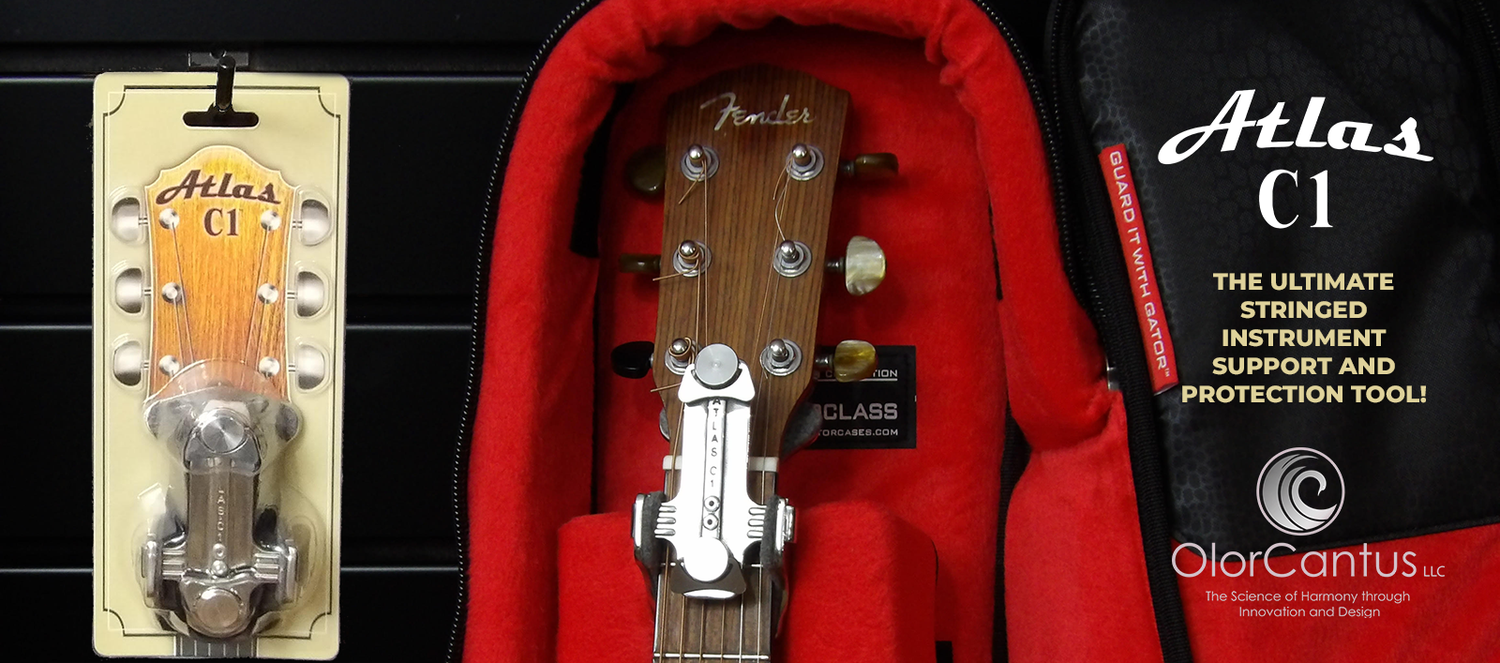
A pre-aligned jig solves that problem. Atlas C1 makes a universal multi-function tool that protects the headstock-neck junction during travel and doubles as a pre-aligned repair jig when a break does happen. It counteracts the 130+ pounds of string pressure tension.
The repair process itself is straightforward:
- Dry-fit the break and check alignment before any glue
- Clean old glue and loose fibers from both surfaces
- Apply wood glue and clamp with the joint aligned
- Let it cure fully, usually 24 hours
- Restring gradually and check tuning stability
For a vintage instrument, the alignment step matters most. A joint that cures a fraction out of true will never hold tune.
Premier Guitar's repair and maintenance coverage has reviewed the Atlas C1 and covered headstock repair technique in depth.
Warranty, Reliability, and Technical Support Compared
Warranty and support are where Sweetwater pulls clearly ahead. Sweetwater assigns every customer a dedicated sales engineer and offers an extended return window, so if a tool doesn't suit your bench, you send it back without a fight. Guitar Center's support is more transactional, with standard retail return terms and staff knowledge that varies by location.
For tool reliability, the warranty that matters is the manufacturer's, not the retailer's. Most professional-grade luthier tools carry a lifetime guarantee against defects. Consumables like files and blades typically don't.
If you're buying a single high-value item, Sweetwater's support is worth the wait. If you need a tool today and you know exactly what you want, Guitar Center is the faster path.
Specialized Luthier Tools vs. General Hardware: What to Buy Where
Specialized luthier tools and general hardware serve different jobs, and knowing which is which saves money. General hardware covers anything that isn't instrument-specific: hex keys, screwdrivers, calipers, clamps, and rulers. Specialized luthier tools cover fretwork, nut slotting, and setup work where the geometry is unique to stringed instruments.
Buy general hardware wherever it's cheapest. Buy specialized tools from the retailer with the deeper luthier catalog. Whichever route you take, it's worth checking whether the retailer offers free shipping, since that can tip the math on smaller orders.
- General hardware: hex keys, screwdrivers, digital calipers, spring clamps, steel rulers
- Specialized luthier tools: fret files, nut slotting files, fret crowning files, radius gauges, truss rod wrenches
- Instrument hardware: tuners, bridges, nuts, saddles, strap buttons
For repair shop work, the specialized tier is where your money goes. For a hobbyist doing occasional setups, general hardware plus a few key luthier tools covers nearly everything.
the American Society for Quality on measurement tool calibration explains why calipers and gauges need periodic checking, which applies directly to bench measuring instruments.
A headstock break costs far more than any tool you'll ever buy, and the repair is always harder than the prevention. Atlas C1 was built for exactly that gap: a patent-protected, universal tool that supports the headstock-neck junction during travel, shipping, and storage, then doubles as a pre-aligned repair jig when a break happens anyway. It counteracts 130+ pounds of string tension, works on both angled and straight headstocks, and is designed to last a lifetime. Get started with Atlas C1 and stop paying for repairs you could have prevented.
Frequently Asked Questions
Does Guitar Center sell professional guitar repair tools?
Guitar Center carries a mix of professional-grade and entry-level repair tools, including fret files, nut slotting gauges, and truss rod wrenches. Their inventory varies by location, but online they stock specialized luthier tools from brands like StewMac and Ernie Ball. For advanced fretwork or precision setup, you may need to order from a dedicated luthier supplier. Guitar Center is a convenient option for common maintenance kits and measuring instruments.
Does Sweetwater offer specialized luthier tools for home repair?
Sweetwater focuses more on instruments and audio gear, but they do carry a selection of guitar repair tools, including string action gauges, intonation tools, and maintenance kits. Their inventory leans toward beginner and intermediate needs rather than advanced fretwork jigs. For specialized jigs like a headstock repair jig, you may need to look at dedicated luthier suppliers. Sweetwater's strength is their technical support and free shipping on most orders.
What are the essential tools needed for basic guitar maintenance?
A basic guitar maintenance kit should include a truss rod wrench, string action gauge, feeler gauges, a capo, and a set of hex keys. For fretwork, add a fret file and polishing compounds. Nut slotting files are helpful for adjusting string height at the nut. Many beginners start with a pre-assembled kit from Guitar Center or Sweetwater, then add specialized jigs like the Atlas C1 for headstock protection and repair.
Is it better to buy guitar repair tools from a specialty luthier shop or a big-box retailer?
It depends on your needs. Big-box retailers like Guitar Center and Sweetwater offer convenience, competitive pricing, and easy returns, but their selection of professional-grade luthier tools is limited. Specialty luthier shops provide expert advice and hard-to-find items like precision jigs and calibration tools. For beginners, a big-box starter kit works well. For advanced fretwork or headstock repair, a specialty shop or a universal tool like Atlas C1 is a better investment.